


What Is CAR-T Cell Therapy?
CAR-T cell therapy (chimeric antigen receptor T-cell therapy) is a cutting-edge form of immunotherapy that empowers a patient’s own immune system to fight cancer. Traditional cancer treatments such as chemotherapy or radiation target cancer cells more broadly. In contrast, CAR-T therapy involves genetically modifying a patient’s immune T cells in a laboratory so they can better recognize and attack cancer cells.
This approach has been used in many developed countries for several years and is considered one of the most sophisticated and effective treatments for certain types of blood cancers, particularly acute lymphoblastic leukemia (ALL).
The First CAR-T Success Case In Vietnam
On September 16, 2025, doctors at the Ho Chi Minh City Blood Transfusion and Hematology Hospital announced that they had successfully treated a 12-year-old girl diagnosed with high-risk acute B-cell lymphoblastic leukemia using CAR-T cell therapy — the first time this highly advanced treatment method has been applied to a patient from Vietnam with this outcome.

After initial rounds of chemotherapy and a half-matched bone marrow transplant from her father failed to prevent relapse, the medical team pursued the CAR-T approach in collaboration with specialists abroad.
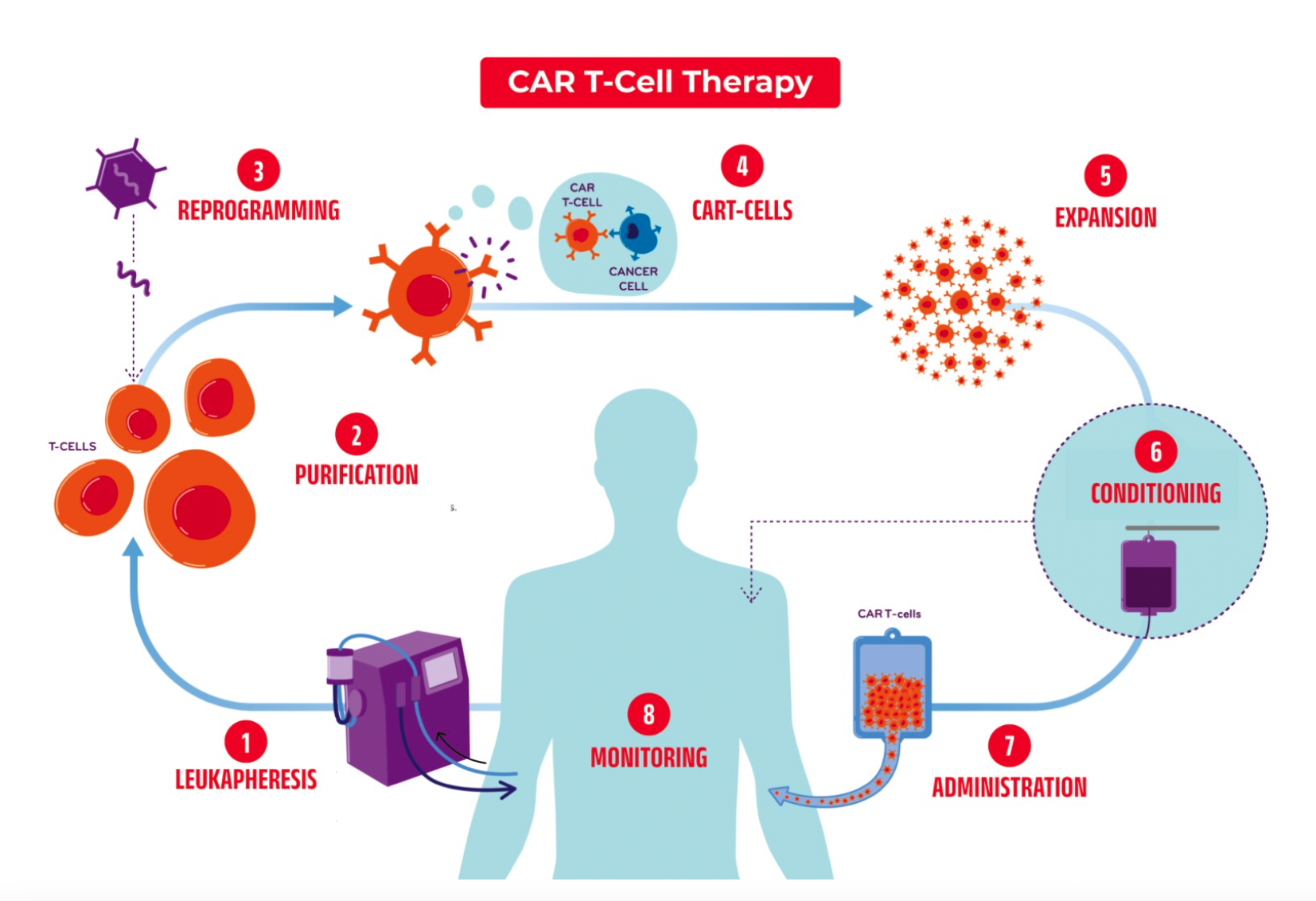
The process involved extracting the patient’s own T cells and sending them to a laboratory where experts genetically modified them to recognize cancer cell markers. These engineered “CAR-T cells” were then reinfused into the patient’s bloodstream, where they sought out and destroyed the cancerous cells.
After more than a year of follow-up and continued monitoring, the young patient has remained healthy and free of detectable cancer, representing a landmark success in the use of CAR-T therapy for pediatric leukemia in Vietnam.
How CAR-T Therapy Works: A Closer Look
To understand the significance of this breakthrough, it helps to see how CAR-T therapy works in practice:
-
Collection: Doctors harvest a patient’s T cells from the bloodstream — critical cells of the immune system.
-
Engineering: These cells are genetically modified in a specialized lab to express chimeric antigen receptors (CARs), which boost their ability to identify cancer cells.
-
Expansion: The CAR-modified T cells are multiplied in number to create a powerful army of anti-cancer fighters.
-
Reinfusion: The engineered cells are returned to the patient’s body and begin seeking out cancer cells to destroy.
-
Immune Response: The modified T cells continuously patrol the body, recognizing and attacking cancer cells with high precision.
This method transforms the patient’s own immune system into an effective anti-cancer weapon and represents a shift from broad-spectrum treatments to precision immunotherapy.

Vietnam’s Healthcare Collaboration And Global Context
In this case, Vietnamese doctors worked closely with medical experts from Taiwan to produce and administer the CAR-T cells. Due to the highly specialized nature of the genetic engineering involved, much of the laboratory processing was carried out in a partner facility abroad before the cells were returned to Vietnam for infusion.
This collaboration highlights an important aspect of modern medicine: advanced therapies often rely on international cooperation, especially when countries are building their own capabilities in emerging fields like cell and gene therapy.
Globally, CAR-T therapy has already been shown to improve survival and quality of life for patients with certain blood cancers. Countries in North America, Europe, and parts of Asia have actively used this technology for patients who failed standard treatments, achieving significant responses.
Notable Follow-Up And Future Prospects
Following this milestone, medical institutions in Vietnam are preparing to produce CAR-T cells domestically, with the goal of reducing costs and expanding access for patients. According to recent reports, the Ho Chi Minh City Blood Transfusion and Hematology Hospital is building infrastructure and training personnel to manufacture CAR-T cells within the country, potentially making this advanced treatment more affordable over time.
Domestic production could significantly lower costs, which currently remain very high when performed abroad due to complex technology and specialized equipment requirements.
Clarifying The Scope: Treatment, Not A Universal Cure
While this success story is truly remarkable, it is important to understand the scientific context. The term “remission” is generally used when a treatment eliminates detectable disease, but it doesn’t guarantee a universal cure for all forms or cases of leukemia or other blood cancers. More research, clinical trials, and real-world data are needed to assess long-term outcomes across diverse patient groups.
Vietnam’s case should be viewed as a major therapeutic success and a demonstration that advanced immunotherapy is feasible in the region, not a blanket statement that all blood cancers are now curable.

What This Means For Patients And The Healthcare System
This breakthrough opens up potential new options for patients, particularly:
-
Those with relapsed or refractory leukemia who do not respond to standard therapies.
-
Families seeking advanced treatments that offer durable responses.
-
The broader medical community working to integrate cutting-edge therapies into national health systems.
If CAR-T therapy becomes more accessible through local production and training, Vietnamese patients may benefit directly from reduced treatment costs and shorter wait times compared to traveling abroad for care.