



Da Nang is expanding its digital finance pilot to cover more of Central Vietnam’s major tourism destinations, making it easier for eligible users to convert cryptocurrency into Vietnamese dong (VND). The program, operated through the Basal Pay application, has increased its approved coverage from three initial locations to 10 key areas, including Da Nang International Airport, Hoi An, Ba Na Hills, golf courses and resorts.
The expansion follows more than a year of controlled testing and reflects the city’s efforts to explore how financial technology could improve the travel experience for international visitors while supporting its growing digital economy.
From Software Parks To Major Tourism Destinations
Basal Pay received approval for pilot operation in August 2025, becoming Vietnam’s first application authorized under a controlled testing framework to facilitate the conversion of digital assets into traditional currency.
Initially, the service was available at three locations associated with Da Nang’s technology and innovation ecosystem: Da Nang Software Park, Da Nang Software Park No. 2 and the Da Nang Innovation Startup Support Center.
The expanded pilot now covers 10 key tourism areas, extending across the city and into neighboring destinations. These include Da Nang International Airport, central Hai Chau, the An Hai–My Khe–Ngu Hanh Son coastal corridor, Hoi An and Ba Na Hills.
The approved coverage also includes several prominent golf and resort destinations: Legend Danang Golf Resort, Ba Na Hills Golf Club, Montgomerie Links Vietnam, Hoiana Resort & Golf and Vinpearl Golf Nam Hoi An.
For international visitors who hold USDT, a cryptocurrency designed to track the value of the US dollar, the wider network could reduce the need to travel back to central Da Nang specifically to convert digital assets into local currency.
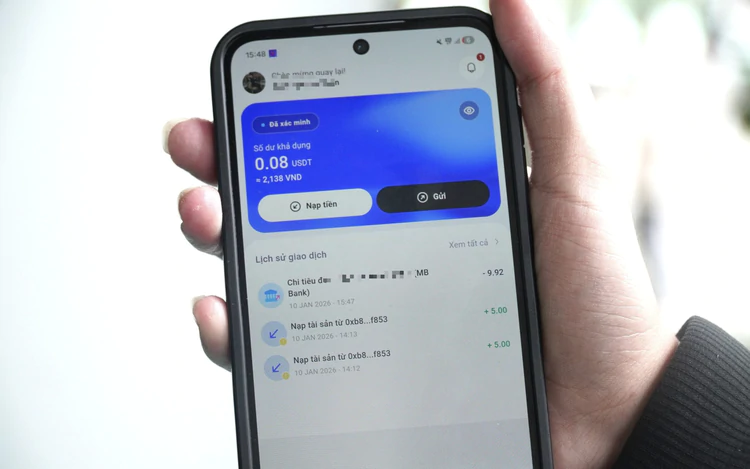 A user converts USDT into Vietnamese dong through the Basal Pay app. Photo: Truong Trung / Tuoi Tre
A Controlled Model With Transaction Limits
The expansion follows reported compliance results from the pilot. Le Son Phong, deputy director of the Da Nang Department of Science and Technology, said transactions conducted through Basal Pay during the trial had complied with anti-money laundering and counter-terrorism financing requirements, in line with international standards and recommendations from the Financial Action Task Force (FATF).
The results provided a basis for expanding the pilot, while the city continues to evaluate additional technology-based financial services. Potential areas for future trials include stablecoins, tourism finance and cross-border settlement.
However, the program does not authorize users to pay merchants directly with cryptocurrency. Instead, eligible digital assets must first be converted into Vietnamese dong, which can then be used for purchases and services. This distinction allows the pilot to explore digital asset conversion while maintaining oversight of transactions.
Under the current limits announced by AlphaTrue Solutions, the company behind Basal Pay, conversions are capped at less than 1,000 USDT per transaction and 30,000 USDT per account each month.

Early Results Point To Growing Interest
During its first year under the controlled testing framework, Basal Pay attracted approximately 10,000 registered accounts and recorded more than 15,000 transactions, according to AlphaTrue Solutions CEO Tran Huyen Dinh. The total value of USDT converted into VND across the three original locations exceeded US$100,000.
The wider rollout comes as Da Nang looks for new ways to accommodate international visitors with different payment habits. For travelers who already hold digital assets, access to an authorized conversion service could offer an additional route to obtaining local currency for everyday expenses.
More broadly, the initiative forms part of Da Nang’s efforts to test emerging technologies within defined regulatory boundaries. By expanding the pilot based on operational experience and compliance performance, the city aims to assess whether digital financial solutions can contribute to a more convenient tourism ecosystem.
As the program develops, its effectiveness will depend on how well the service meets visitors’ needs, integrates with local businesses and continues to operate within the approved framework.