


Da Nang, a rapidly growing city in central Vietnam, is home to many fascinating attractions, and one of its most iconic landmarks is the “Song Han Bridge”. As Vietnam’s first swing bridge, Song Han is more than just a crossing point; it represents the city’s journey towards modernization and its blend of tradition and innovation. For both expats and tourists, this bridge stands as a symbol of Da Nang’s vibrant energy.
Historical Background of Song Han Bridge
The “Song Han Bridge” was officially opened in 2000, a project funded by the local people and government of Da Nang. This bridge holds special importance as it was built by Vietnamese engineers, making it a national pride. It also symbolizes the economic and cultural growth of Da Nang, a city that has transformed into one of Vietnam’s leading urban centers.
What makes this bridge unique is its ability to swing open in the middle, allowing ships to pass through the Han River. This feature not only highlights the bridge’s engineering brilliance but also showcases the city’s forward-thinking infrastructure. The bridge opens daily around midnight, an event that attracts curious tourists and locals alike. Han River Bridge rotation schedule: 11 pm – 11:30 pm, every Saturday & Sunday.

Architectural Features of Song Han Bridge
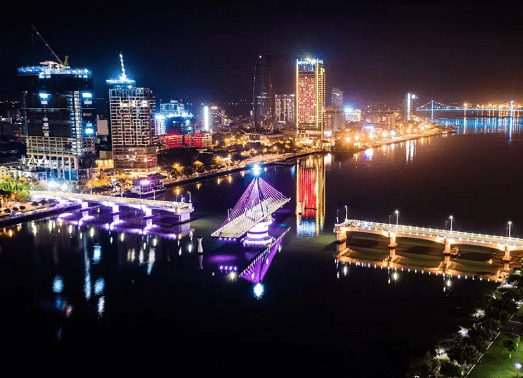
Stretching 487,7 meters in length and 12,9 meters wide, the “Song Han Bridge” is an impressive sight, especially when illuminated at night. The clean, minimalist design complements the surrounding skyline, blending seamlessly with Da Nang’s modern high-rises and the traditional Han River.
Its most unique feature, the rotating swing mechanism, sets it apart from other bridges in Vietnam. The swing happens at around 11:00 PM to midnight, when the bridge rotates 90 degrees to let ships pass along the Han River. For night owls and photographers, this is an excellent time to capture the bridge in motion, surrounded by the city’s sparkling lights.
Cultural Significance and Popularity
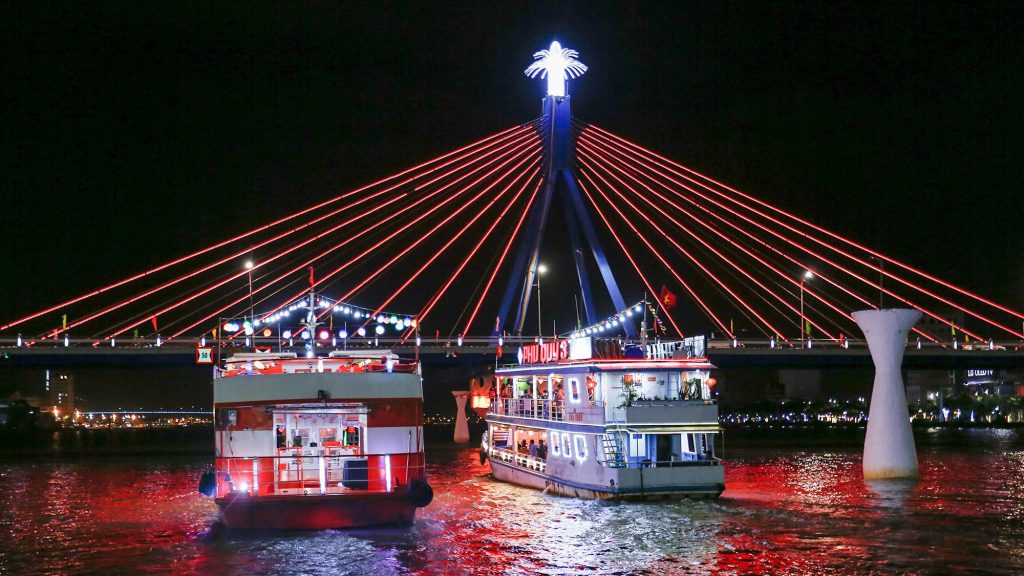
For the people of Da Nang, the “Song Han Bridge” is not just a practical infrastructure piece; it’s a symbol of local pride. It connects the east and west sides of the city, fostering economic growth and community cohesion. Locals often recommend visiting the bridge as part of a nighttime city tour, as it lights up spectacularly against the dark backdrop of the river.
The bridge is also a favorite among tourists, who enjoy strolling along the riverbanks, taking in the vibrant atmosphere of the city. Song Han Bridge’s rotating feature has become a tourist attraction on its own, with many visitors timing their visit to witness the mechanical marvel in action.
Travel Tips for Expats and Tourists
- Best time to visit: The best experience comes at night, especially between 9:00 PM and midnight. This is when the bridge is illuminated with colorful lights, and you can witness its rotation at 11:00 PM or midnight.
- Nearby attractions: Song Han Bridge is close to other famous Da Nang landmarks like the “Dragon Bridge” and the “Love Lock Bridge”. You can explore the Han River area, which is filled with cafes, restaurants, and entertainment spots.
- Getting there: The bridge is located right in the city center, easily accessible by bike, car, or even on foot from many popular tourist areas. Public transportation or ridesharing services like Grab make getting there simple.
Personal Experiences of Song Han Bridge
Many expats and tourists rave about their experience at Song Han Bridge. “I couldn’t believe how beautiful the bridge looks at night,” says Jessica, an expat living in Da Nang. “Watching it rotate was a surreal experience!” For many, the bridge is not only an engineering marvel but also a place of tranquility where the beauty of Da Nang comes alive.

Whether you’re a first-time visitor or a seasoned expat, Song Han Bridge is a must-see landmark that combines history, culture, and innovation in one. As you plan your trip to Da Nang, make sure to include this iconic bridge in your itinerary, and enjoy its charm—day or night. It’s a true reflection of Da Nang’s heart and progress, connecting people and places, just as it connects both sides of the Han River.