


Vietnam is a multicultural nation proudly home to 54 ethnic groups, each with its own language, traditions, costumes, and cultural identity. The diversity of the ethnic groups in Vietnam continues to shape the country’s unique cultural landscape.
In this article – Part 2 of our series on the 54 ethnic groups – we explore the next 10 communities and highlight their history, language, geographic distribution, religion, festivals, costumes, and economic life. Through these stories, readers gain deeper insight into the traditions of ethnic groups in Vietnam and their enduring contributions to national heritage. Explore more at danang365!
11. Ede Ethnic Group – A Matrilineal Community in the Central Highlands
Among the many ethnic groups in Vietnam, the Ede are well known for their matrilineal social system and strong cultural identity. As one of the 54 ethnic groups, they have lived in the Central Highlands for generations and continue to preserve their traditions.
History
The Ede people have resided in the Central Highlands for a long time. Their origins appear in epic tales, folk art, and traditional longhouses. Oral literature plays a key role in preserving their history.

The community maintains a matrilineal system. Children carry the mother’s family name, and the youngest daughter inherits family property. Customary laws regulate village life and reinforce this structure.

Language
The Ede language belongs to the Malayo-Polynesian branch of the Austronesian language family. It differs clearly from Vietnamese.

Epic chanting known as “khan” represents a distinctive literary tradition. Elders pass the language to younger generations through storytelling and rituals. Many Ede people also speak Vietnamese today.
Geographic Distribution
The Ede mainly live in Dak Lak Province. They also reside in southern Gia Lai, western Phu Yen, and parts of Khanh Hoa.

Their villages, called “buon,” form independent community units. Traditional houses stand on stilts and resemble long boats. Each longhouse contains a communal space and private family sections.
Religion And Beliefs
The Ede believe that all things have souls. They worship agricultural and nature-related deities.

Important gods include Ae Die and Ae Du, the Creators, along with Yang Lan, the God of Earth, and Yang Mdie, the God of Rice. Families perform rituals throughout life to pray for health and prosperity. Offerings during major ceremonies increase social prestige.
Festivals
The Ede celebrate Tet after the harvest season. Each village chooses its own date.
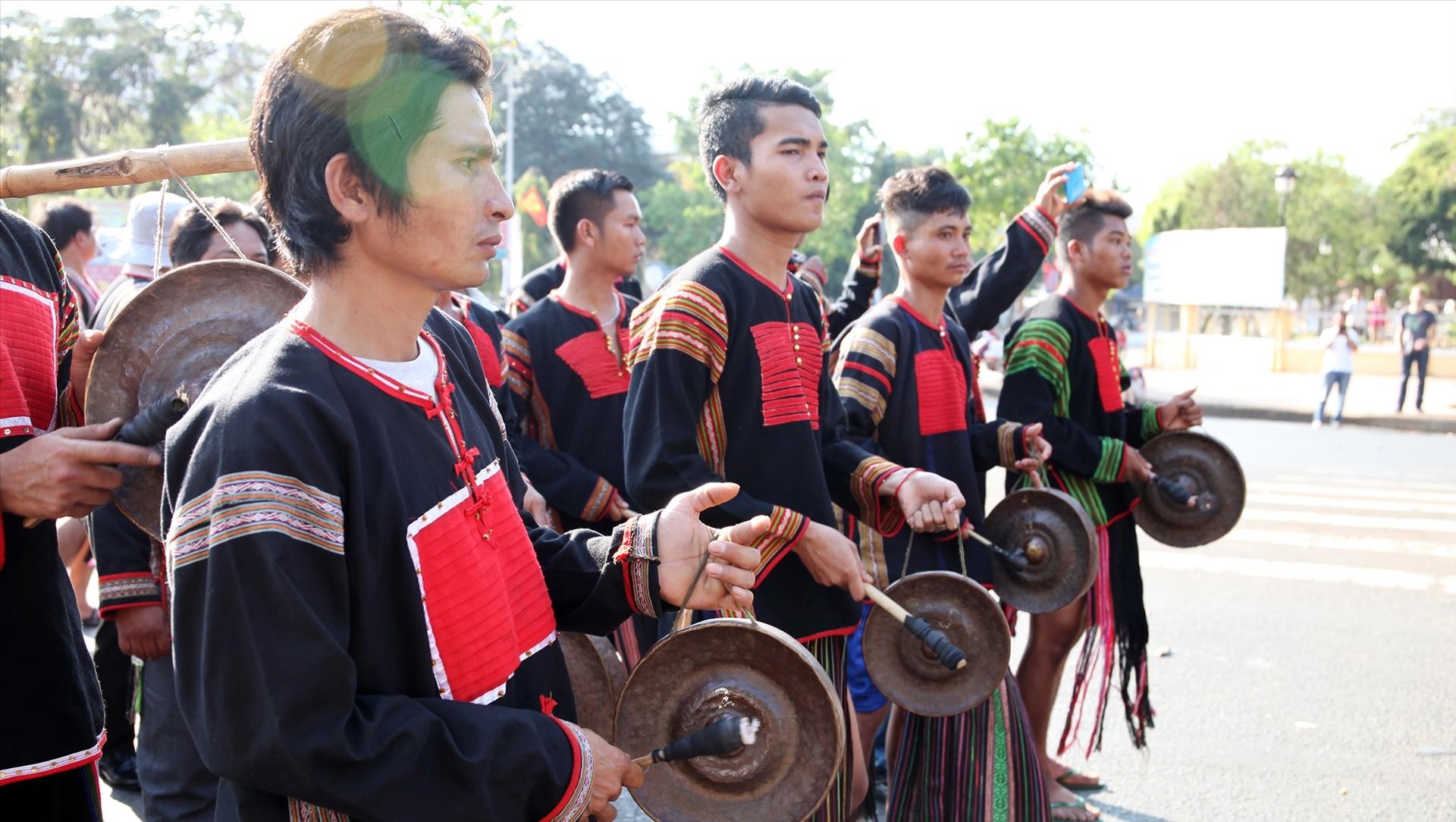
They also observe the “hma ngat” and “mnam thun” festivals to honor the rice season. During large celebrations, families may offer buffaloes or pigs to express gratitude for a good harvest. Gong performances create a lively festival atmosphere.


Costumes
Ede women traditionally wear long skirts and short vests. Men wear loincloths and simple tops.
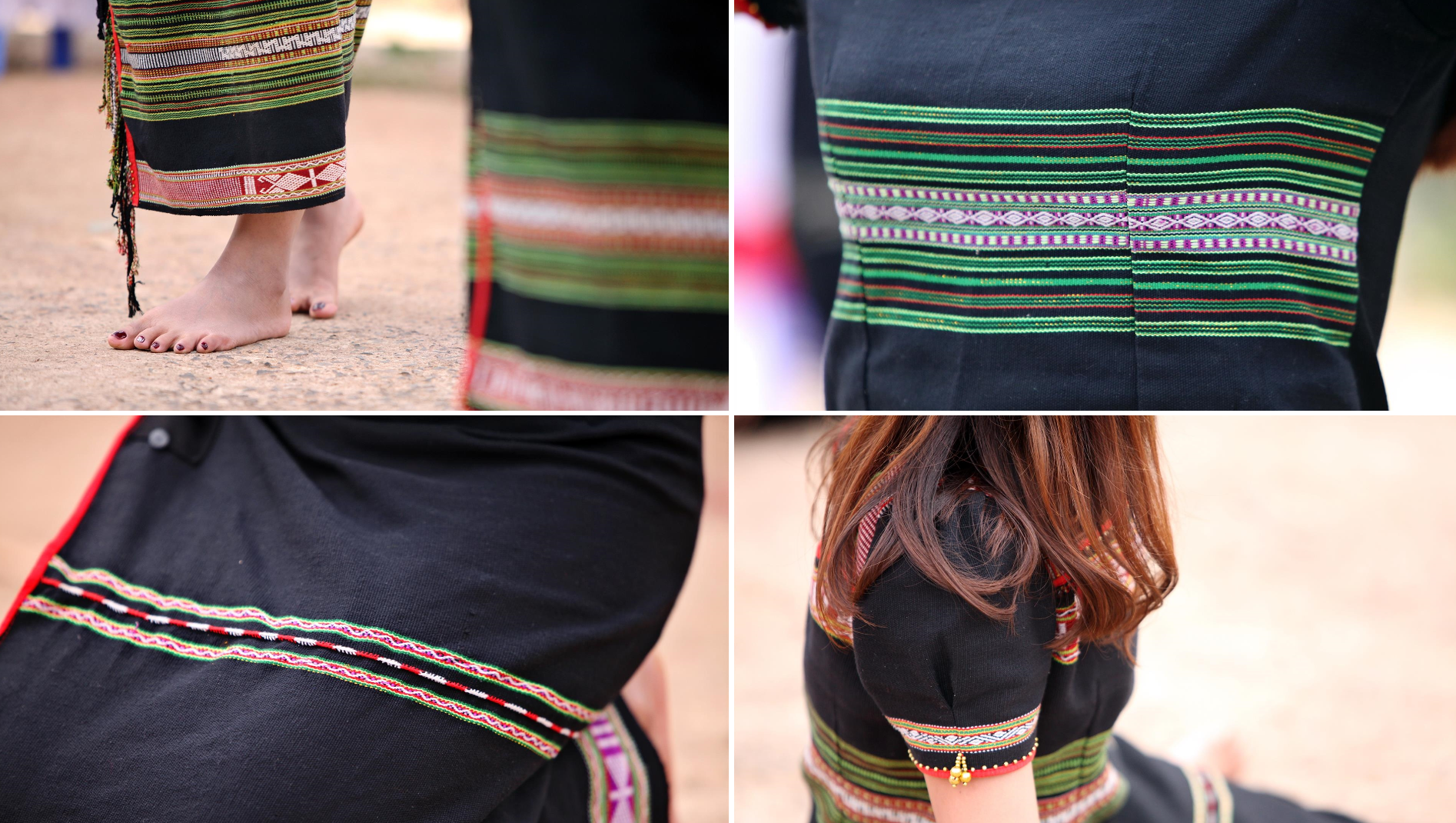

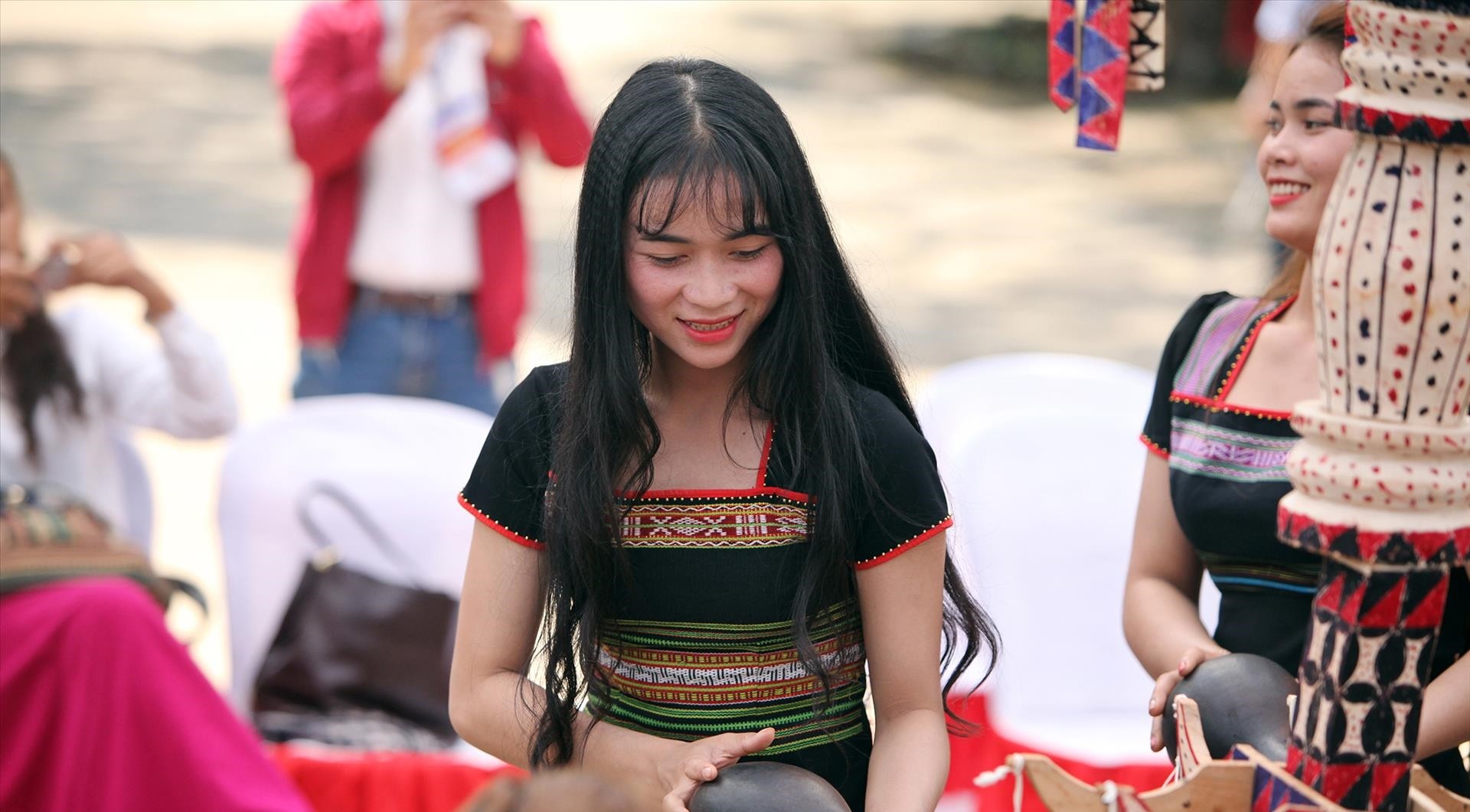
Both men and women decorate themselves with beaded necklaces and metal rings. Turbans and blankets appear during special occasions. Traditional dress remains visible during rituals and festivals.

Economic Conditions
Agriculture forms the foundation of Ede life. They practice upland rice cultivation using shifting farming methods. Families also grow vegetables, raise livestock, and brew traditional jar wine. In recent decades, some households have expanded into coffee farming and small trade. However, rice cultivation remains central to their livelihood.
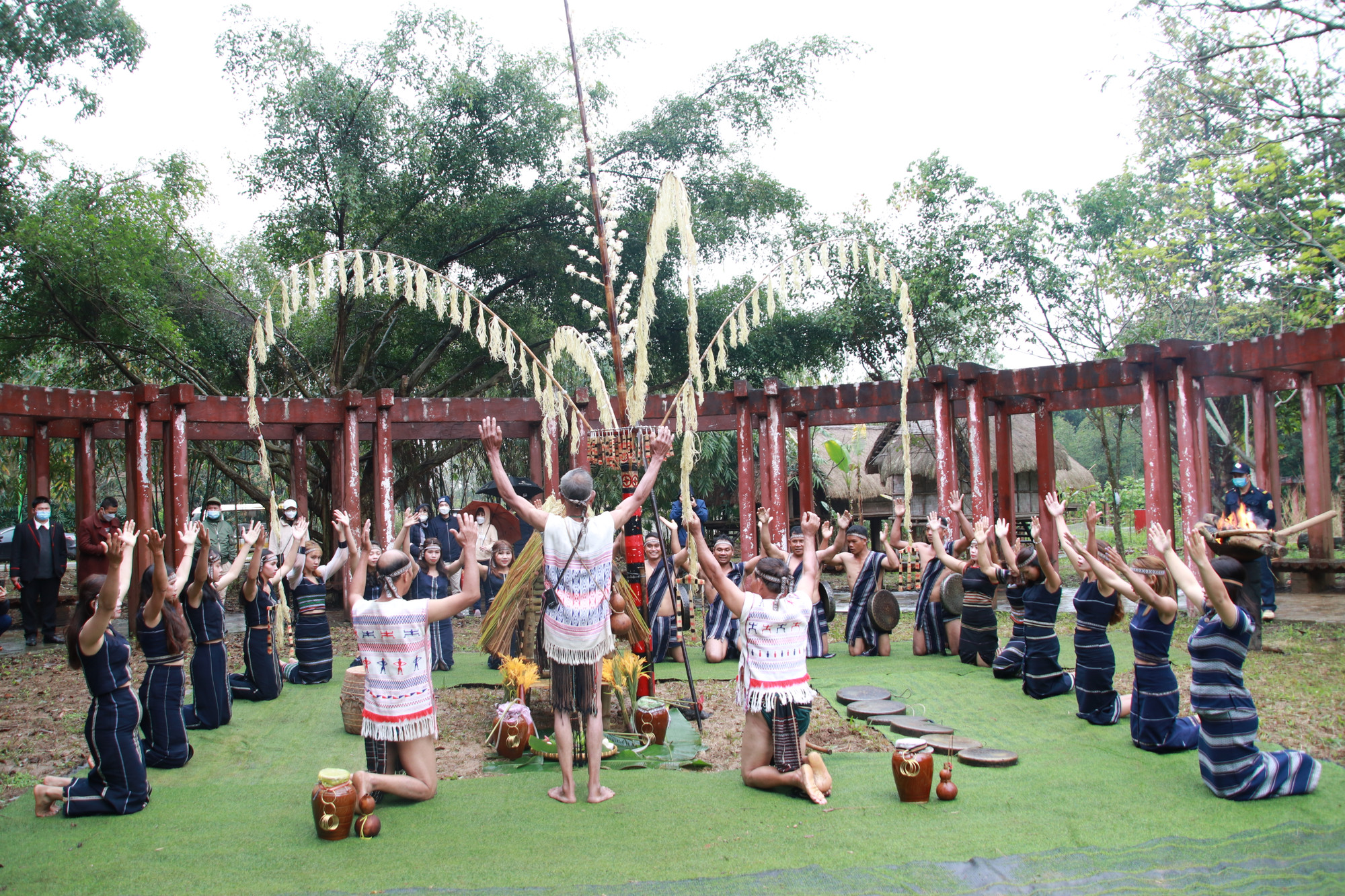
 The Rice Soul Ceremony of the Ede people before the rice plants start to bloom
12. Bahnar Ethnic Group – A Mountain Community Among the Ethnic Groups in Vietnam
History
The ancestors of the Bahnar people lived under Mang Yang Mountain and along both banks of the Ba River. They gradually expanded eastward toward the plains bordering Binh Dinh Province. Over time, migration led them westward to the Ayun and Dak Bla river basins and present-day Kon Tum.
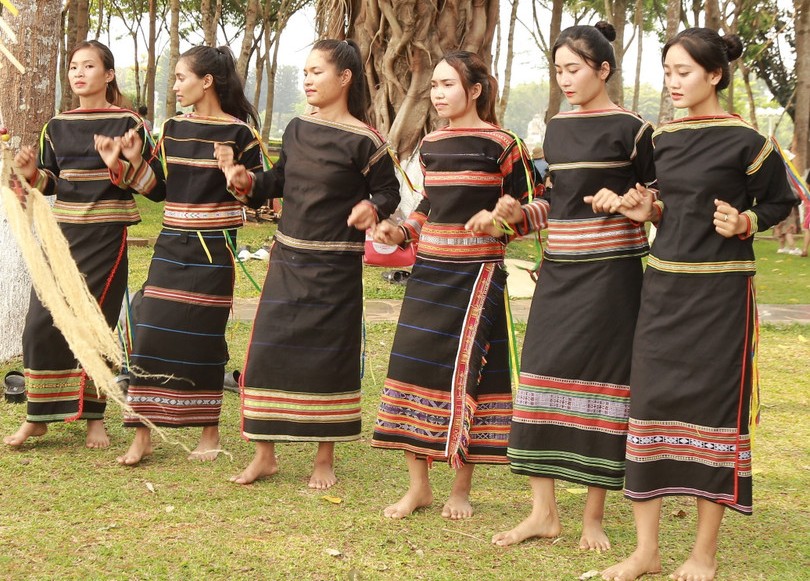
Their historical movement closely connects with the development of other Central Highlands communities. The Bahnar play an important role in shaping the cultural landscape of highland ethnic groups in Vietnam.
Language
The Bahnar language belongs to the Mon-Khmer branch of the Austroasiatic language family. It represents one of the largest Mon-Khmer language communities in the Central Highlands.
The language functions as a key identity marker in village life. Elders transmit oral traditions, customary laws, and ritual knowledge through spoken narratives. Many Bahnar people also speak Vietnamese for communication outside their villages.
Geographic Distribution
The Bahnar reside mainly in Gia Lai and Kon Tum provinces. They also live in western areas of Binh Dinh, Phu Yen, and Khanh Hoa.
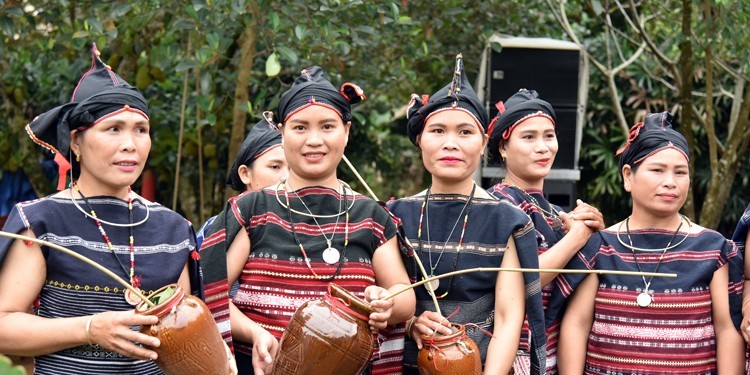
Their villages, known as “plei,” often stand near rivers or relatively flat land. Each plei forms a tight-knit social unit. At the center of every village stands the “nha rong,” a tall communal house built in the most solemn location. The nha rong hosts meetings, festivals, and traditional education.
Religion And Beliefs
The Bahnar believe that gods, called “yang” govern the universe. They see life as an arrangement made by divine forces.
 The Ba Na people’s ritual for cotton yarn/fiber
The supreme god couple, Bok Kei Dei and Yă Kuh Keh, create and protect all living beings. The Bahnar also worship the forest god (yang Bri), the earth god (yang The), the rock god (yang Tmo), and the mountain god (yang Kong). Ritual ceremonies honor these deities and seek blessings for crops and community health.
Festivals
In the past, the Bahnar celebrated their traditional Tet after the harvest season. Today, most communities celebrate the Lunar New Year following the national calendar.
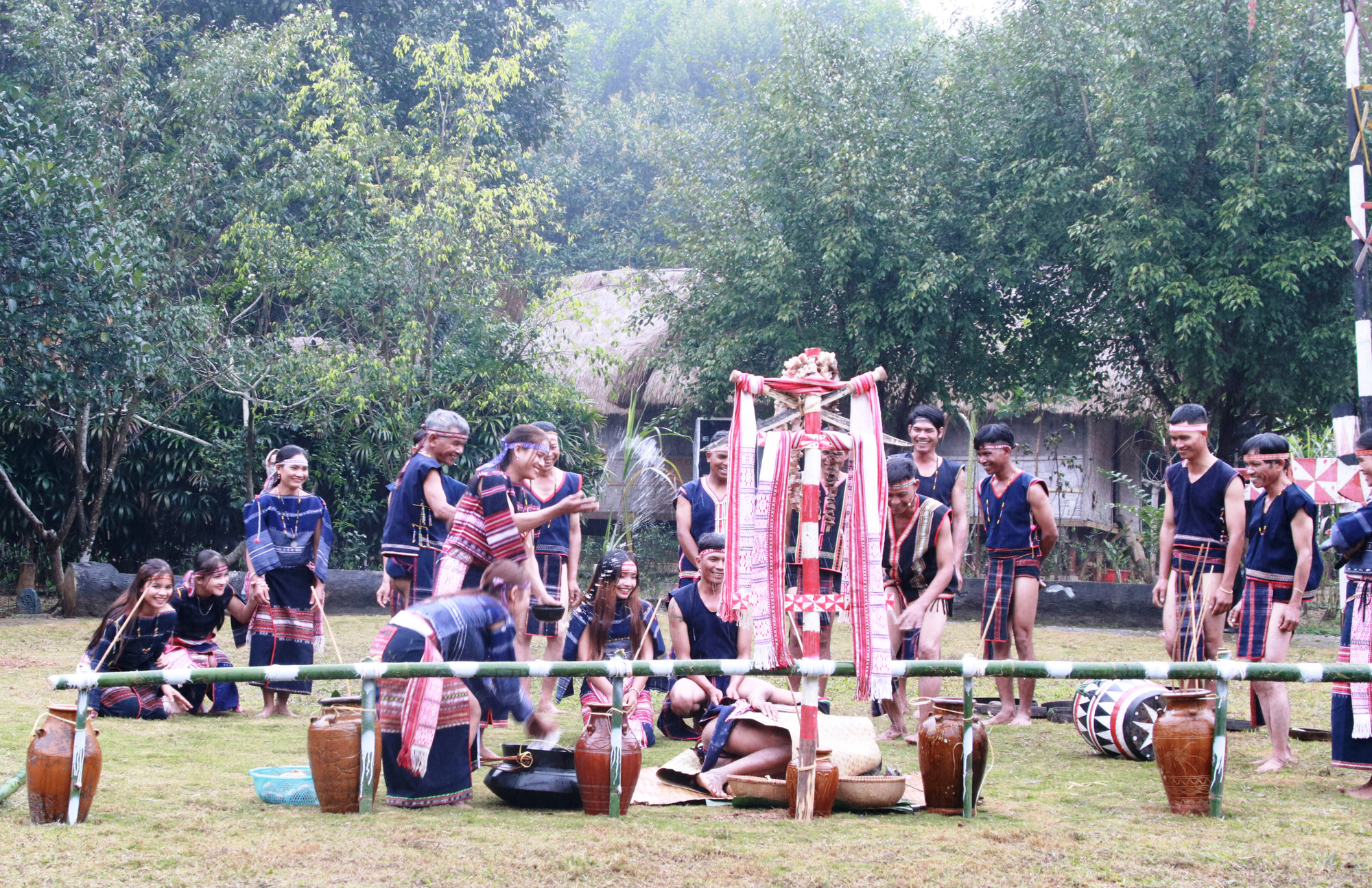
Village festivals often take place at the nha rong. These gatherings strengthen social ties and preserve the traditions of ethnic groups in Vietnam. Ritual music, jar wine, and communal meals create a vibrant festive atmosphere.

Costumes
On normal days, Bahnar men wear loincloths and remain half-naked. During festivals, they add shirts and head scarves. Women wear skirts, fitted tops, and head coverings.
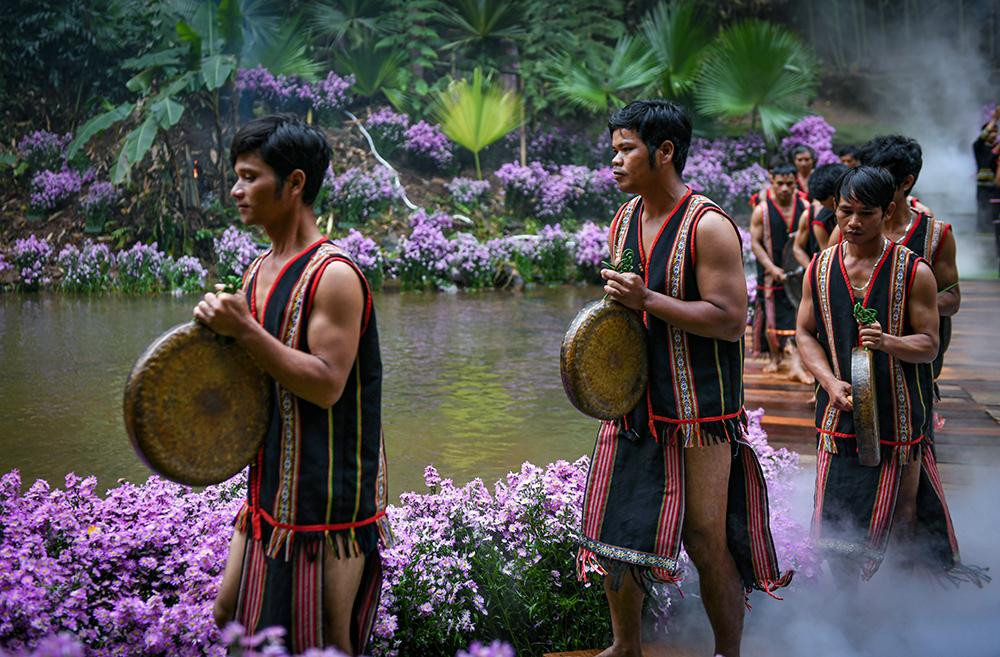
Traditional attire appears most clearly during ceremonies and cultural events. The simple yet symbolic clothing reflects highland identity and practical living conditions.

Economic Conditions
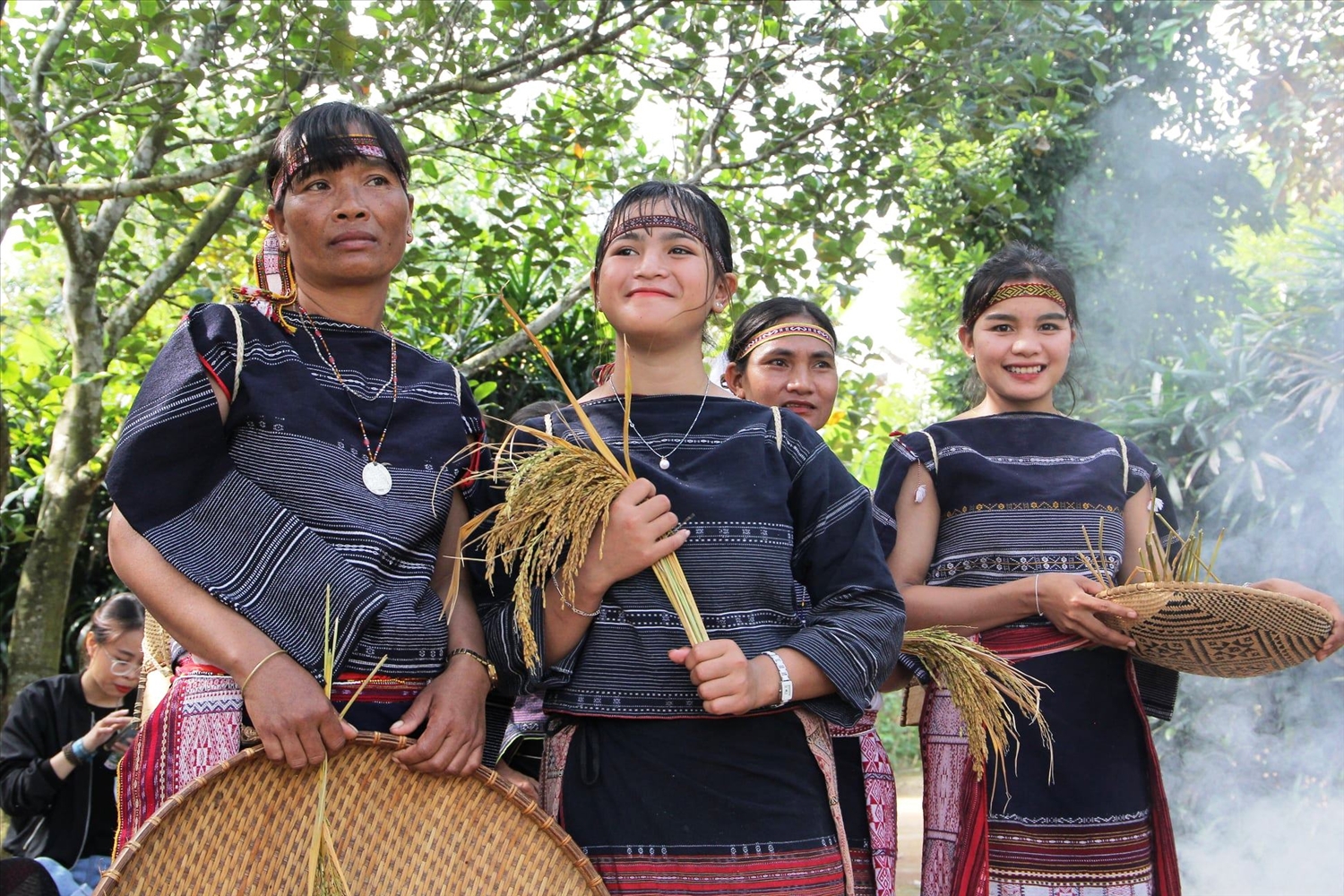
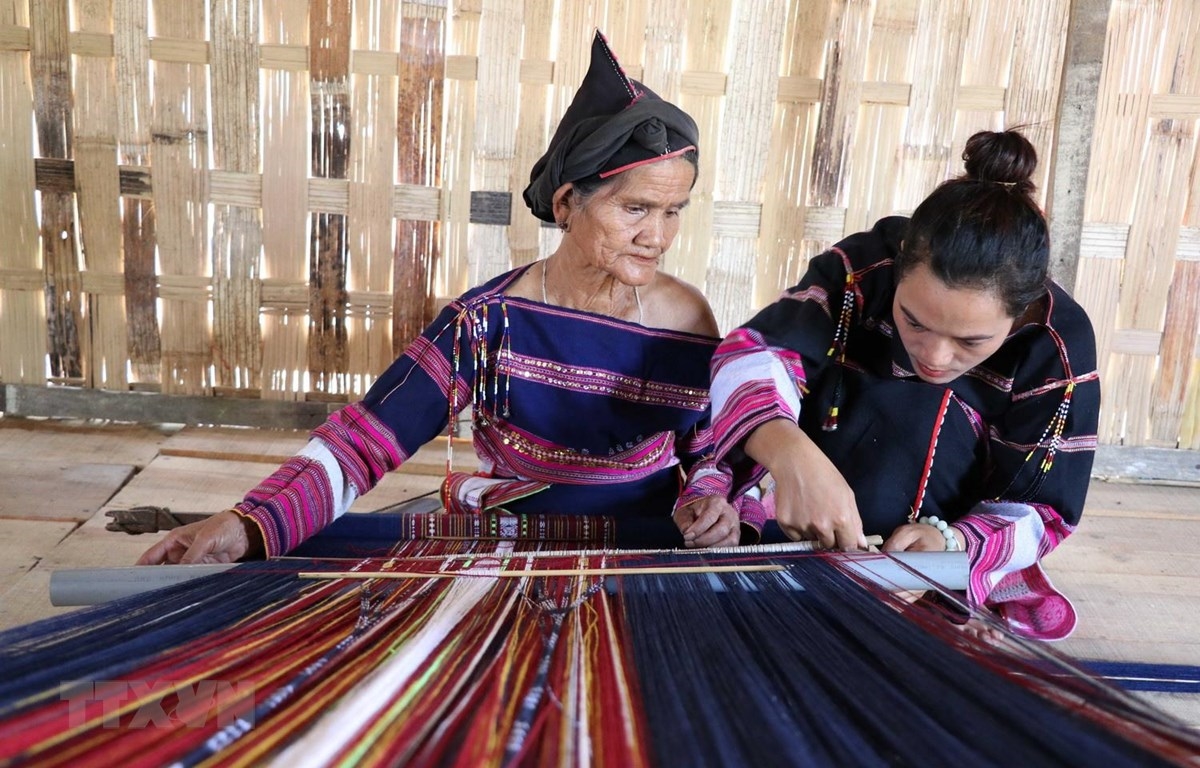
Agriculture forms the foundation of Bahnar life. They practice shifting cultivation and also work in wet and dry rice fields. Many families grow long-term crops suited to the highland climate. Besides farming, households raise poultry and livestock. Handicrafts such as weaving, knitting, blacksmithing, pottery, and wood carving support daily life. Weaving plays an especially important role in producing clothing and trade goods.
13. San Chay Ethnic Group – Cultural Diversity Within the Ethnic Groups in Vietnam
The San Chay are one of the culturally distinctive communities among the ethnic groups in Vietnam. Although they live scattered among other minorities, they maintain a strong cultural identity through language, folk songs, and traditional customs. As part of the 54 ethnic groups, the San Chay preserve many practices that reflect both agricultural life and community harmony.
History
The San Chay people migrated to Vietnam from China around 300–500 years ago, during the late Ming and early Qing dynasties. Over time, they settled in northern mountainous regions and gradually formed stable communities.

Despite migration and interaction with neighboring groups, they retained their own traditions, social customs, and cultural expressions. Their history reflects broader population movements that shaped many northern ethnic groups in Vietnam.
Language
The San Chay consist of two main local groups: Cao Lan and San Chi. Each group speaks a different language.
The Cao Lan language belongs to the Tay–Nung branch of the Tai-Kadai language family, while the San Chi language belongs to the Sino-Tibetan language family. Oral traditions remain important, especially in folk singing and storytelling. Many San Chay people today also use Vietnamese for education and trade.
Geographic Distribution
The San Chay live mainly in northeastern provinces. Large communities appear in Tuyen Quang, Thai Nguyen, Bac Giang, and Quang Ninh. Smaller populations also reside in Cao Bang, Lang Son, Phu Tho, and Vinh Phuc.
They usually live alongside other ethnic minorities rather than forming isolated settlements. This mixed residence encourages cultural exchange while allowing them to maintain their own identity.
Religion And Beliefs
San Chay spiritual life centers on ancestor worship and respect for natural forces. Families maintain several household altars dedicated to heaven and earth, the Earth God, the Agriculture God, and protective deities.

Altars are simple and sometimes consist only of a bamboo incense holder. Before Lunar New Year, families clean and renew the altar space as a ritual of spiritual renewal and respect for ancestors.
Festivals
Agricultural rituals play an important role in San Chay festivals. One of the most meaningful celebrations is the crop-praying festival, where villagers pray for favorable weather and good harvests.
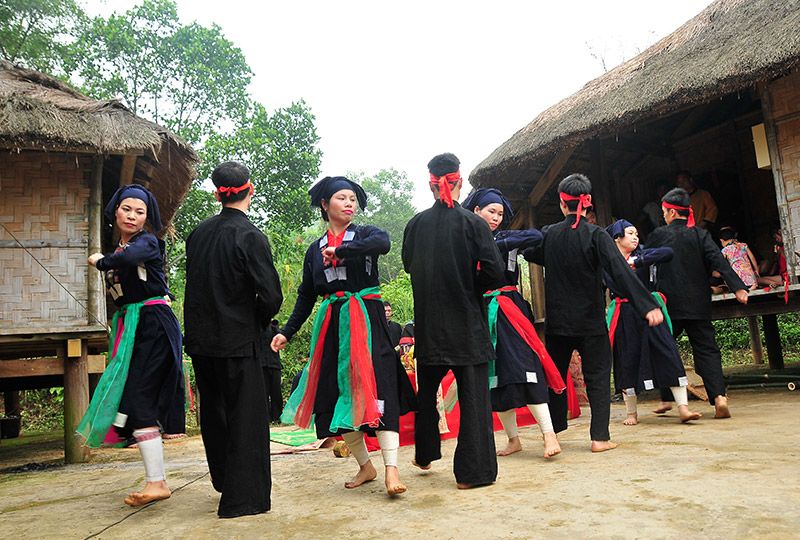
Music and singing accompany most celebrations. The folk song tradition called “Sinh Ca” expresses love, friendship, and daily life. People sing during nighttime gatherings or while traveling to markets, strengthening community bonds.
Costumes
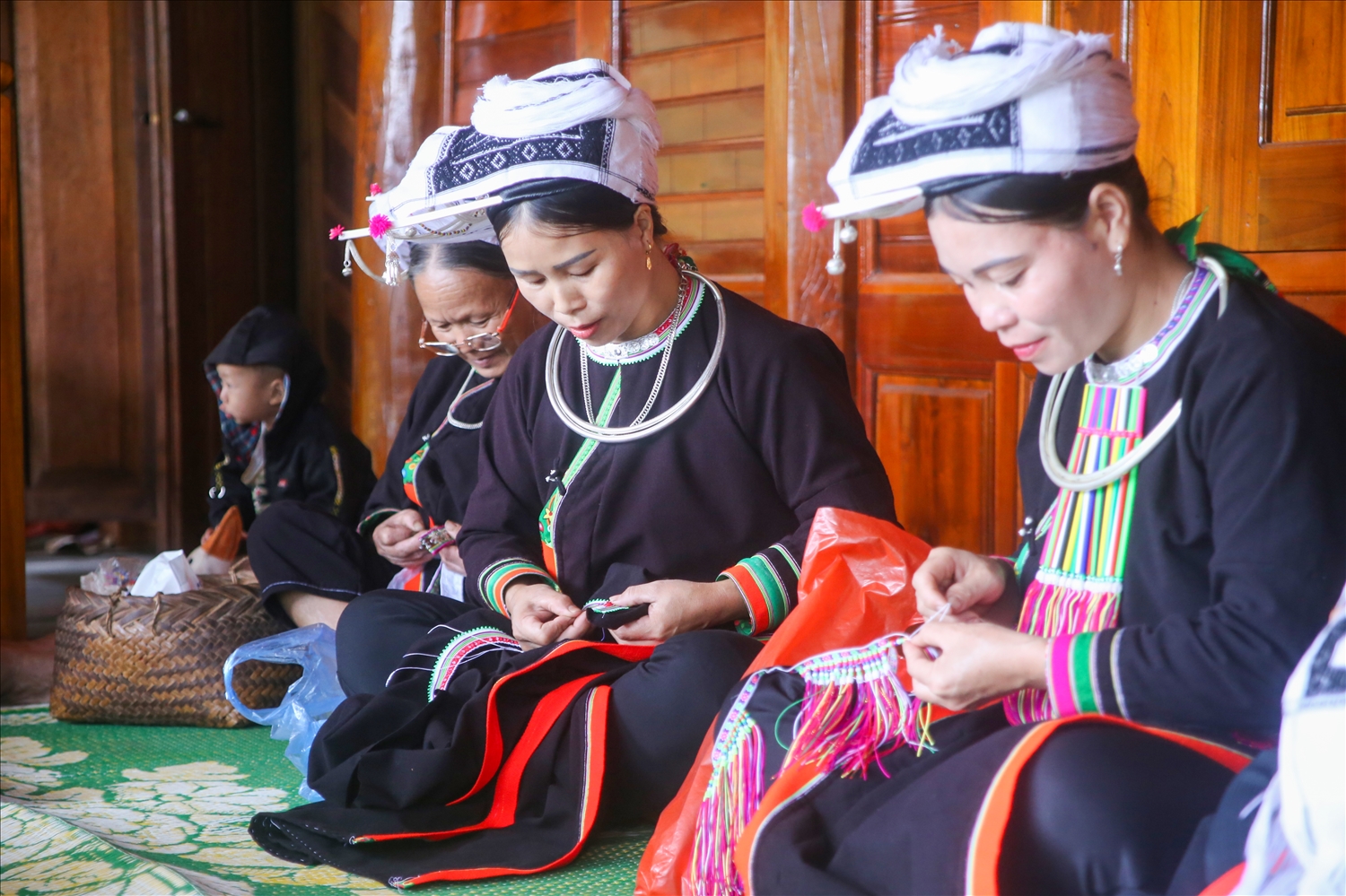
San Chay women traditionally wear long tunics or shirts paired with skirts. Indigo fabric dominates daily clothing, often tied with a simple belt. During festivals, women add colorful silk belts and wear square indigo headscarves.

Men wear indigo shirts with brown or white trousers. Traditional clothing appears most often during ceremonies and cultural performances, preserving visual elements of San Chay identity.
Economic Conditions
The San Chay mainly practice wet rice cultivation, often producing two crops per year. Hill gardening has become increasingly important, with litchi, longan, and persimmon cultivation bringing stable income in several regions, especially Bac Giang.
Families also raise buffaloes, cattle, and poultry for farming and ritual purposes. Fishing methods remain environmentally friendly, helping preserve aquatic resources. In recent years, beekeeping has developed into a promising economic activity that provides reliable household income.
14. Cham Ethnic Group – An Ancient Kingdom Within the Ethnic Groups in Vietnam
History
The Cham have lived on the central coast of Vietnam for centuries. They built the Champa Kingdom, which flourished under strong Indian cultural and religious influence. This kingdom shaped architecture, religion, and maritime trade in the region.
Historically, Cham society developed a class structure similar to ancient Indian systems. Over time, political changes reshaped their settlement patterns, but their cultural identity remains strong in central Vietnam today.
Language
The Cham language belongs to the Malayo-Polynesian branch of the Austronesian language family. It places the Cham among the few Austronesian-speaking communities in mainland Southeast Asia.
The language plays a vital role in preserving rituals, religious texts, and oral literature. Many Cham people today also speak Vietnamese, especially in urban and mixed communities.
Geographic Distribution
The Cham primarily live in Ninh Thuan and Binh Thuan provinces. Smaller communities also reside in An Giang, Tay Ninh, Dong Nai, and Ho Chi Minh City.
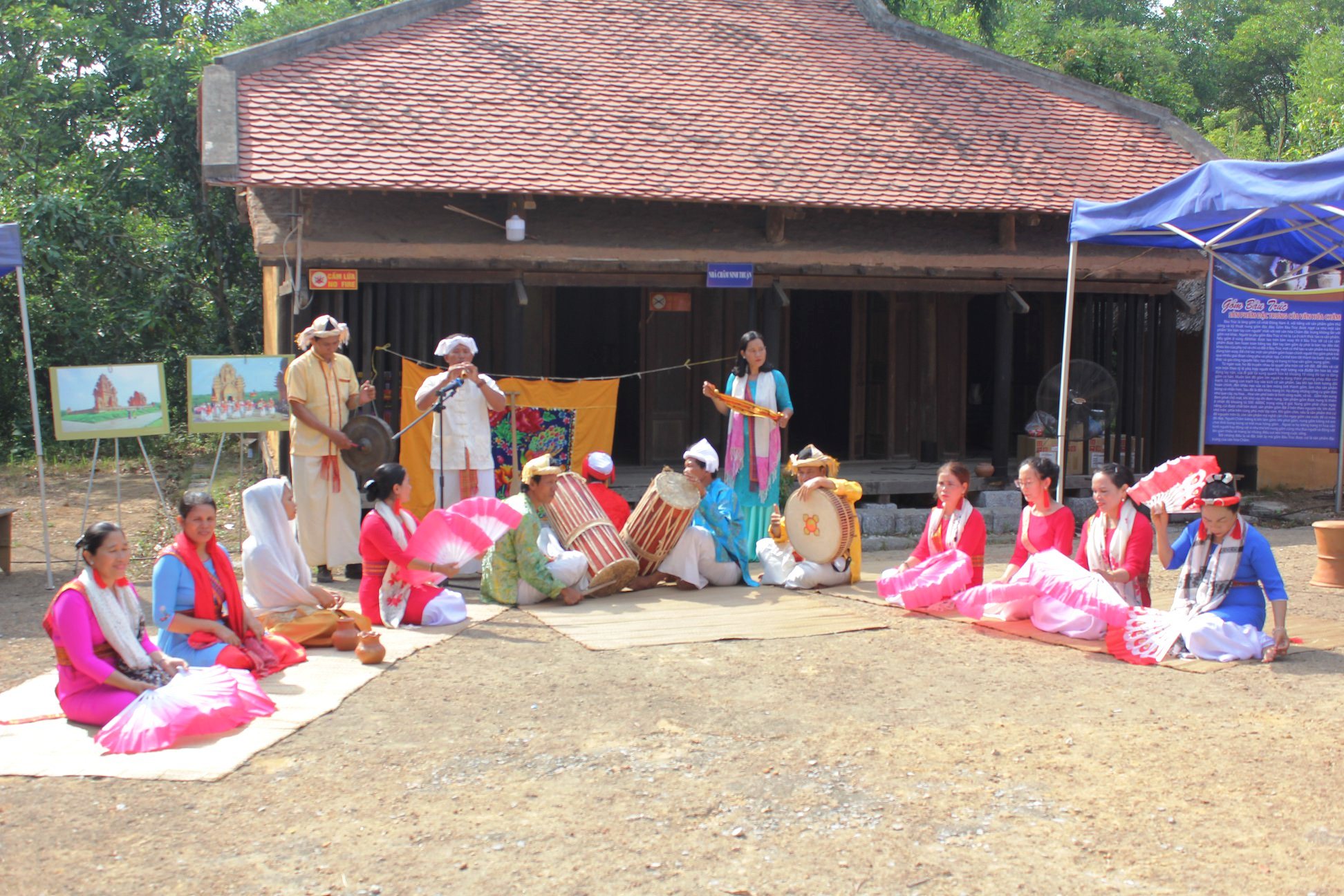
In the central region, most Cham follow Brahmanism, while a minority practice traditional Islam. In southern provinces such as An Giang, Cham communities mainly follow Islam. Religious affiliation influences daily customs and social organization.
Religion And Beliefs
Religion strongly shapes Cham life. Brahmin Cham follow a form of Hinduism influenced by Indian tradition. Muslim Cham practice Islam with distinct local adaptations.
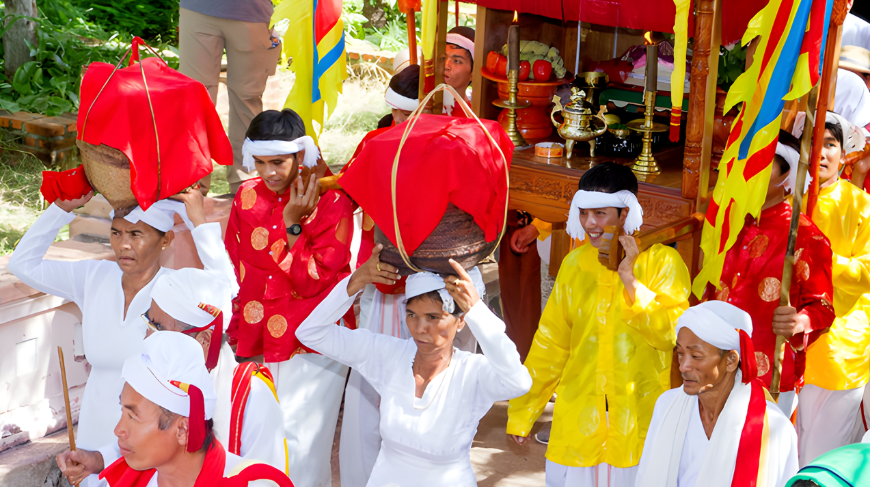
The Cham worship agricultural gods and ancestral spirits. Annual rituals include ceremonies to open irrigation systems, celebrate new rice, and honor farming deities. The Bon Kate Festival, held in the tenth lunar month, is their most important celebration. It takes place at temples and ancient towers.
Festivals
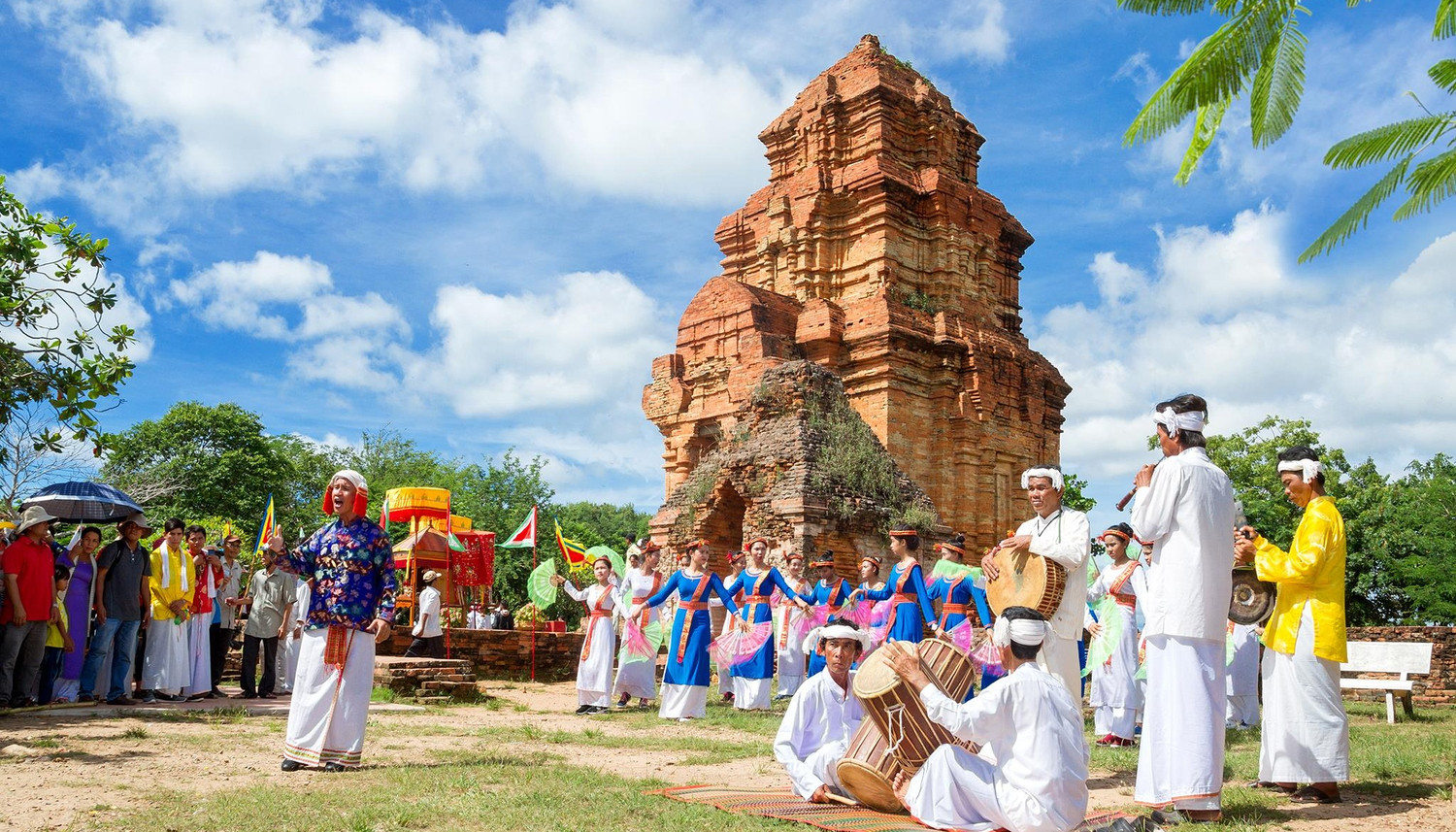
Bon Kate Festival stands as the largest and most symbolic Cham celebration. Communities gather at temple towers to honor deities and national heroes.
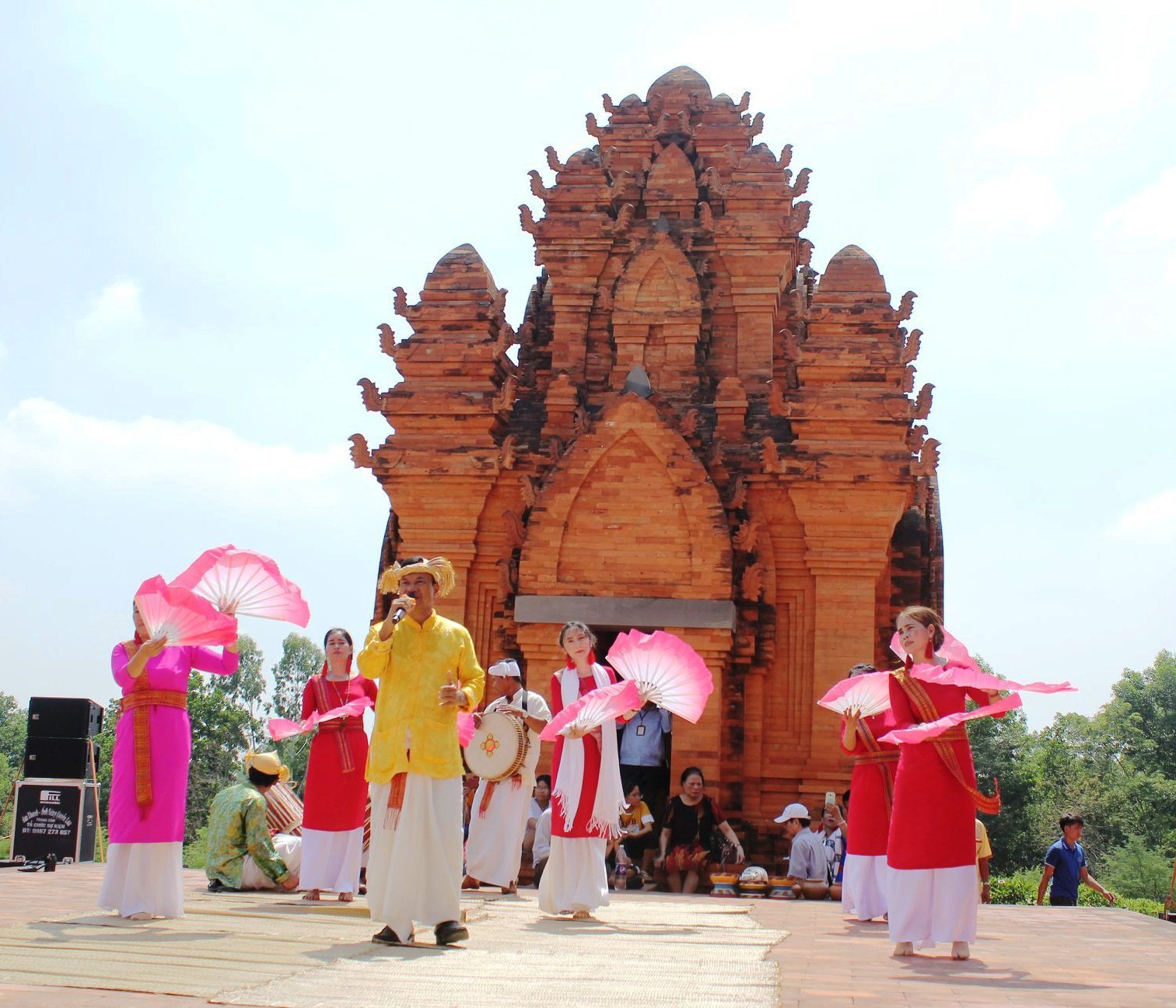
Cham festivals combine music, dance, and ritual offerings. Traditional instruments such as the Paranung drum and xaranai trumpet accompany ceremonial dances. These artistic elements highlight the richness of traditions of ethnic groups in Vietnam.
Costumes
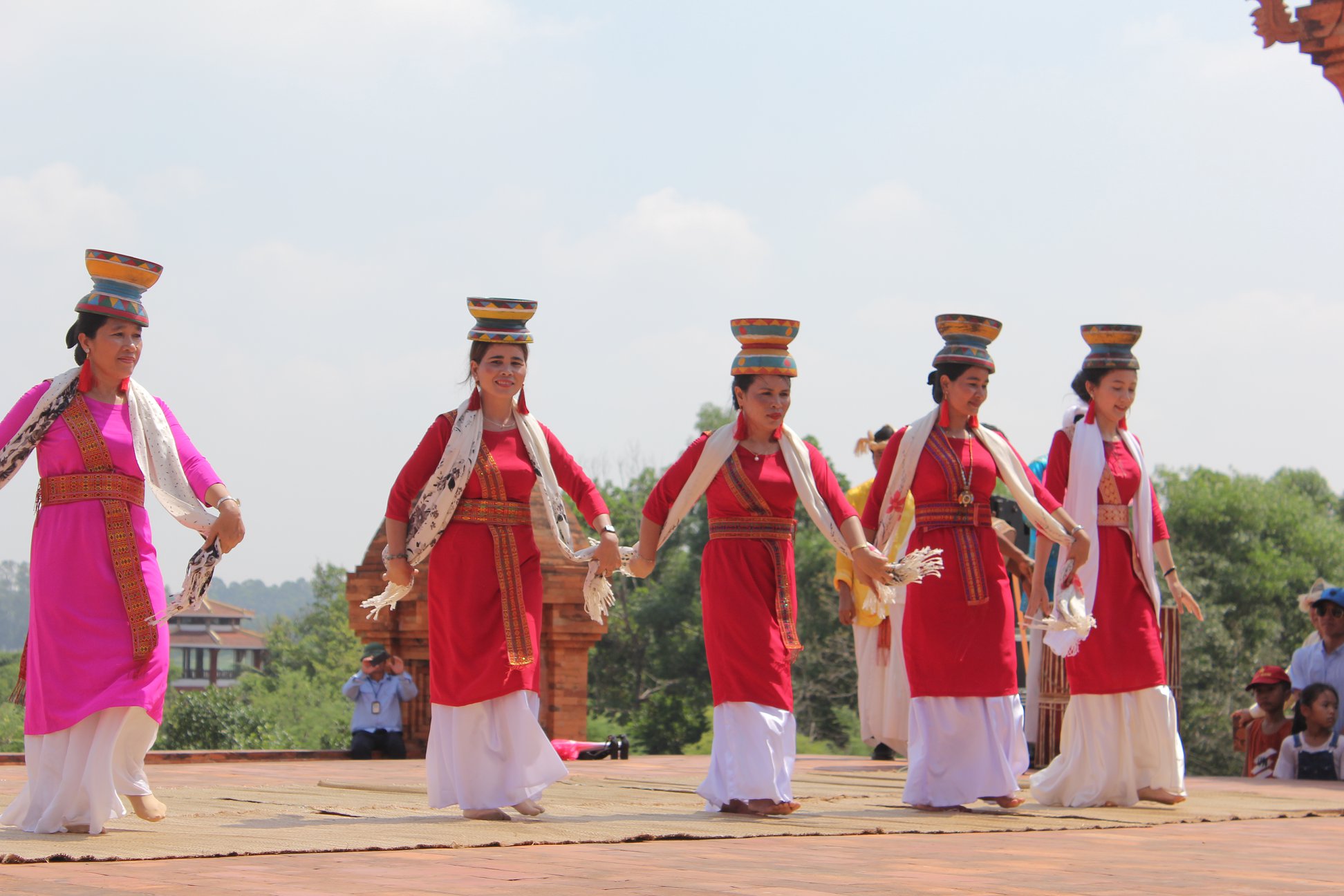
Both Cham men and women traditionally wear wrapped skirts. Men pair their skirts with short buttoned shirts, while women wear long tunics.

White cotton fabric dominates traditional clothing. Today, many Cham dress similarly to other central Vietnamese communities in daily life. However, traditional attire appears prominently during festivals and religious ceremonies.
Economic Conditions
The Cham have long practiced wet-rice agriculture and irrigation farming. They are skilled gardeners and fruit growers. In some areas, they also cultivate dry fields on hillsides.
Cham communities in southern provinces engage in fishing, weaving, and small-scale trade. They are especially famous for silk weaving and handmade pottery fired in open-air kilns. Trade has existed since ancient times, reflecting the Cham’s historic role in maritime commerce.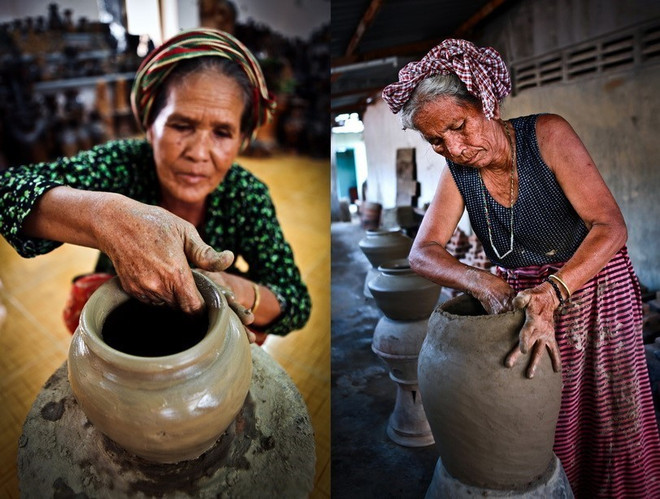
15. Xo Dang Ethnic Group – A Highland Community in the Ethnic Groups in Vietnam
History
The Xo Dang have lived in the North Central Highlands for centuries. They gradually formed stable communities in mountainous areas. Between 1855 and 1885, during political instability in Indochina, they expanded their territory to neighboring regions to protect their villages.

The group is also known by other names such as Xo Deng, Ca Dong, Todra, Hdang, Manam, Ha Lang, Ka Rang, Bri La Teng, and Con Lan. These names reflect internal sub-groups within the community.
Language
The Xo Dang speak the Xo Dang language, which belongs to the Mon-Khmer branch of the Austroasiatic language family. Their language is closely related to Hre, Ba Na, and Gie Trieng.
Today, they use a Latin-based writing system developed in recent decades. Many Xo Dang people also speak Vietnamese, which helps communication with other ethnic groups in vietnam while preserving their mother tongue.
Geographic Distribution
The Xo Dang mainly reside in Kon Tum province. Smaller communities live in Quang Nam, Quang Ngai, Dak Lak, and Gia Lai.

According to the 2019 survey, Vietnam has 212,277 Xo Dang people. Most of them live in rural areas. Villages, called “ploi,” form the center of social life. Extended families often live together in long houses, and the village elder leads community activities.
Religion and Beliefs
The Xo Dang practice animism. They believe spirits control nature and human life. They worship gods related to agriculture, water, and forests.
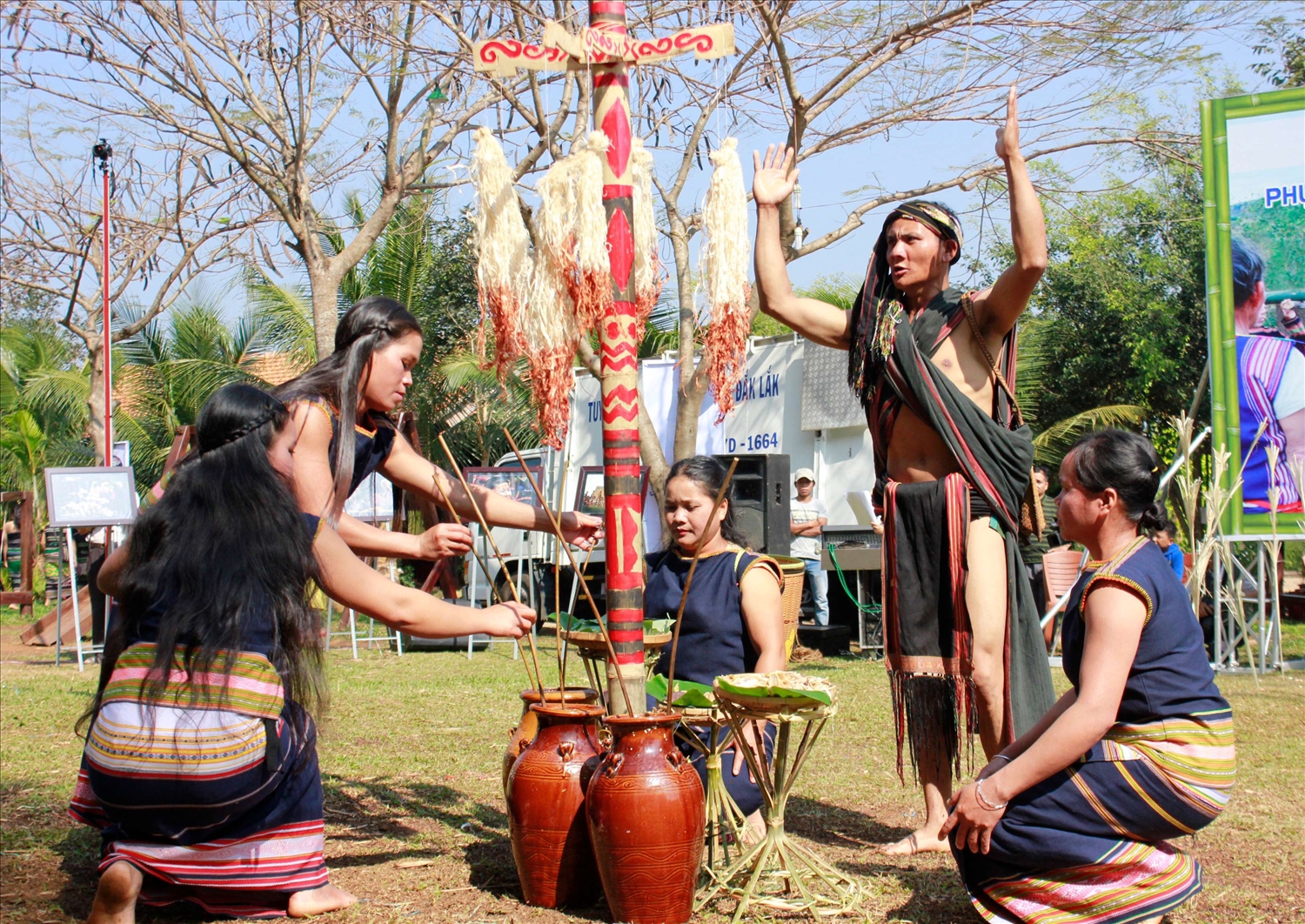
They believe each person has three souls, each with a different spiritual role. Rituals protect health and ensure harmony with nature. These beliefs strongly reflect the traditions of ethnic groups in Vietnam.
Festivals
The Xo Dang celebrate several traditional festivals during the year. The buffalo stabbing ceremony (Ka Po) is one of the most important rituals. It expresses gratitude to the gods and strengthens community unity.

They also celebrate the new rice festival and the water resource worship ritual. Tet is the biggest holiday, when they thank the gods, called “Giang,” for a good harvest.

Costumes
Traditional clothing shows cultural identity. Women wear “ao goh” shirts, “ktac” skirts, and shoulder scarves. Men wear scarves or loincloths called “kpen tich.”
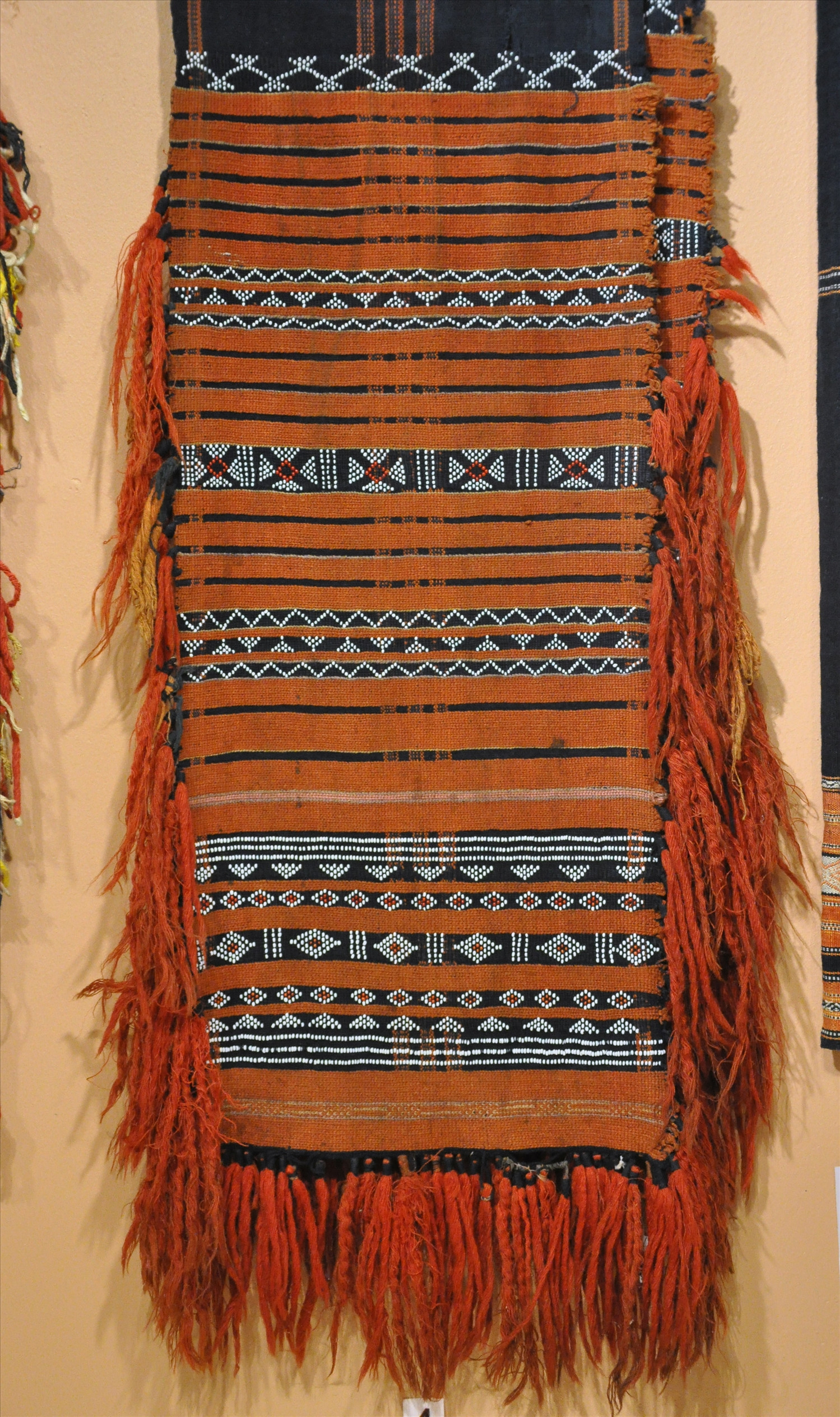
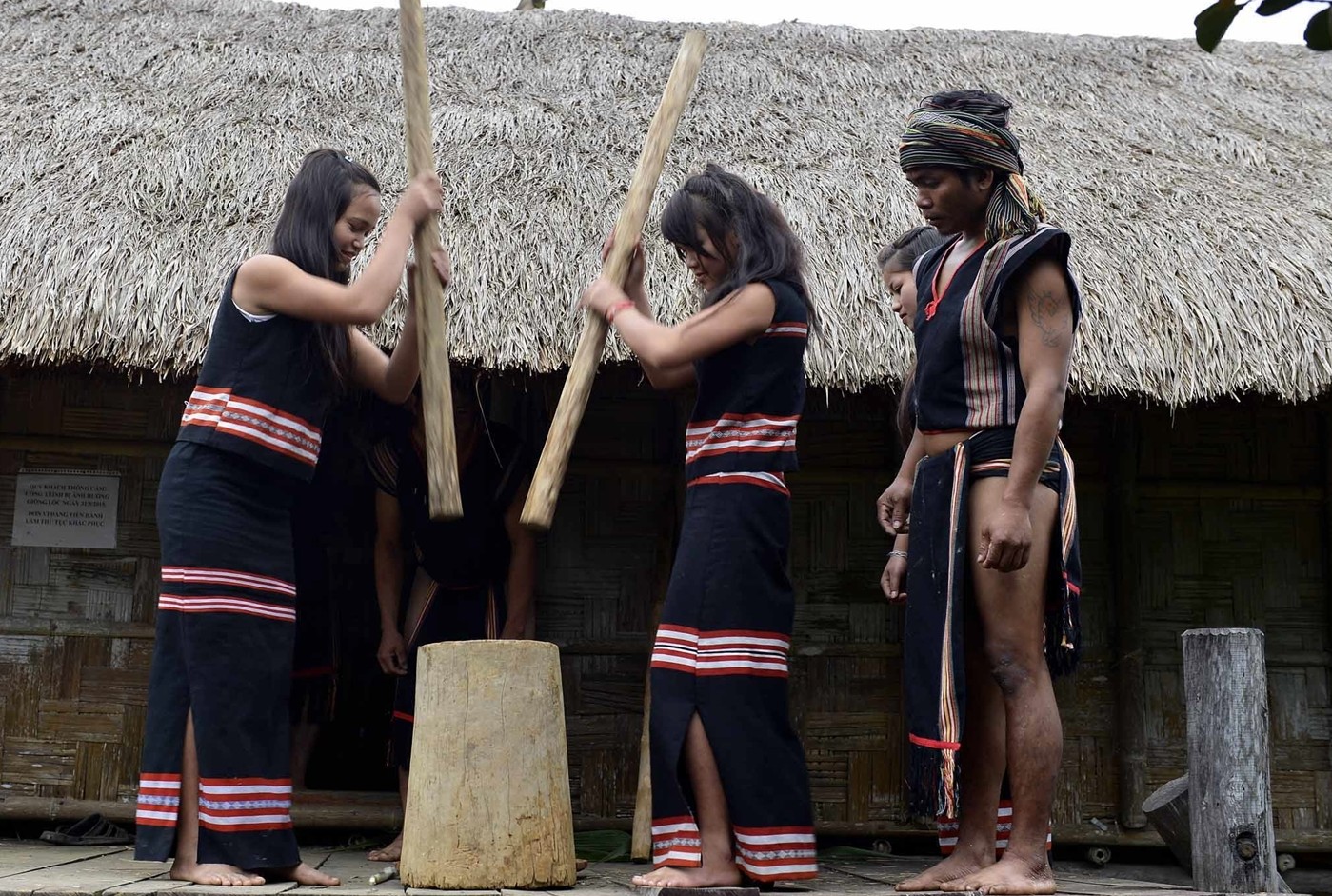
Handwoven patterns decorate many garments. Today, modern clothing is common in daily life, but traditional costumes remain important during festivals and ceremonies.
Economic Conditions
Agriculture is the main livelihood of the Xo Dang. Slash-and-burn farming remains common. They grow rice, maize, cassava, millet, and other crops. Some groups practice wet rice cultivation using traditional methods.
The Xo Dang also weave textiles and forge tools. In some areas, they pan for gold. Today, many families participate in local markets and use money for trade.
16. San Diu Ethnic Group – A Distinct Community Among the Ethnic Groups in Vietnam
History
Many researchers believe the San Diu originated from the Dao ethnic group. Their self-name “Son Dao” suggests this connection. According to historical studies, parts of the Dao community migrated south after facing domination under Chinese feudal rule. The San Diu developed from one of these migrating groups.
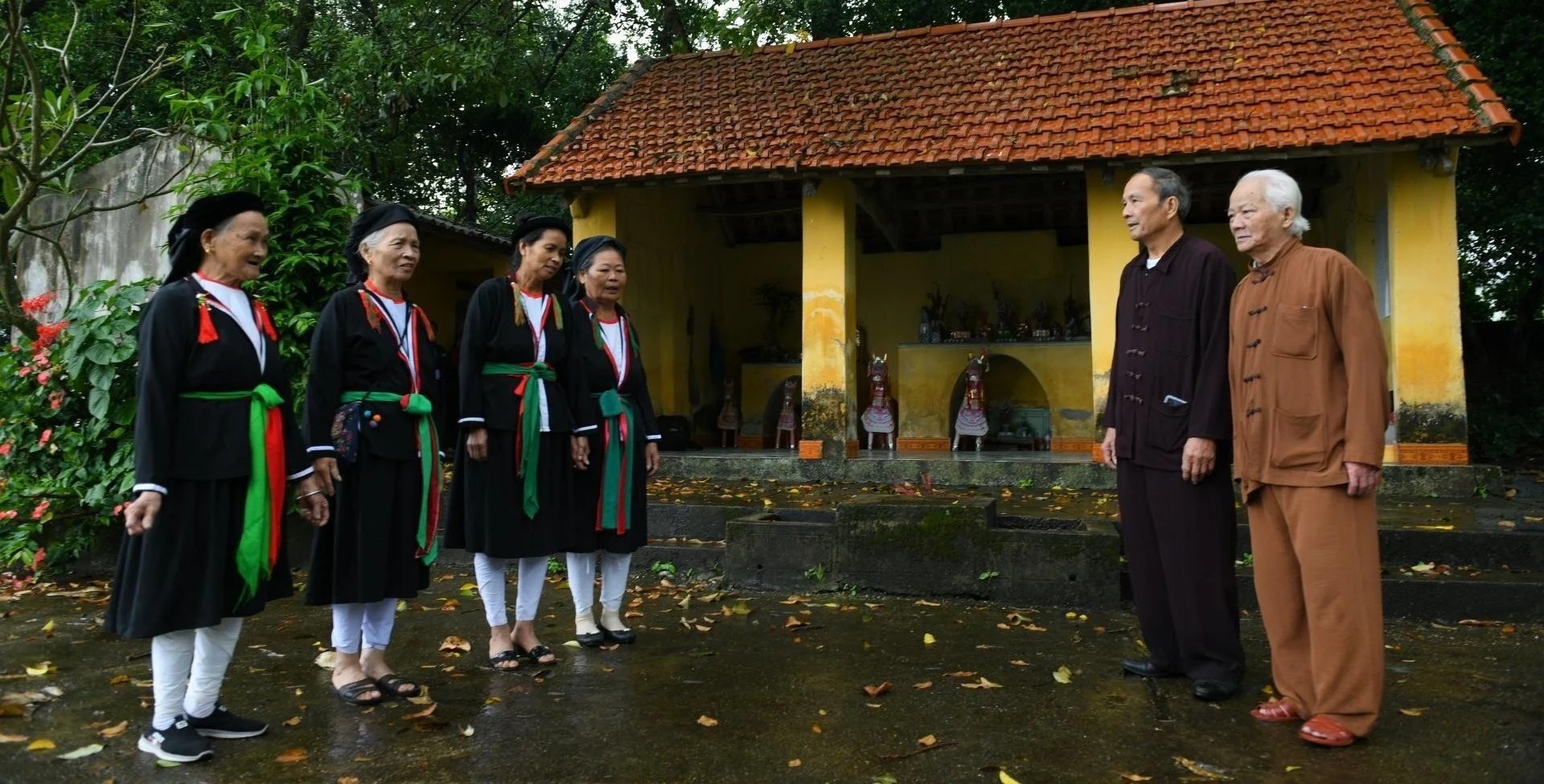
Over generations, they formed stable settlements in northern Vietnam. They gradually built a distinct identity while maintaining historical roots linked to the Dao people.
Language
The San Diu language belongs to the Sino-Tibetan family. Due to long-term contact with Chinese communities, they gradually lost much of their original Dao language. Instead, they absorbed elements of the Cantonese dialect.
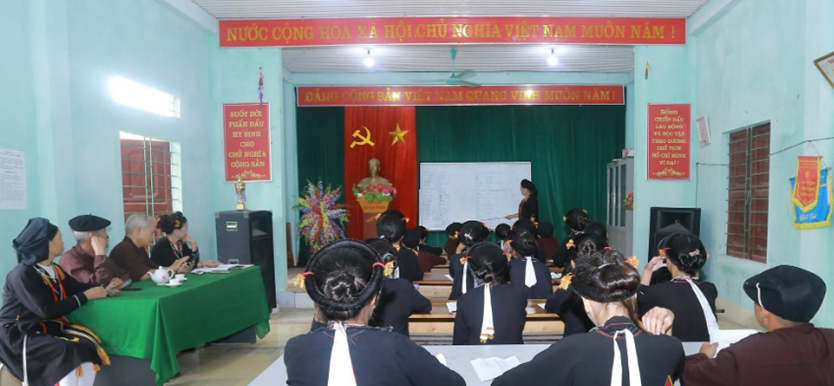
In the past, young men learned Chinese characters to become shamans. Today, very few people can read or write classical Chinese. Most San Diu people now speak Vietnamese in daily life while maintaining elements of their traditional speech.
Geographic Distribution
The San Diu mainly reside in Thai Nguyen, Vinh Phuc, Bac Giang, Quang Ninh, Tuyen Quang, and Hai Duong. They often live in separate village clusters. In some areas, they live alongside Kinh, Tay, Nung, and Chinese communities.
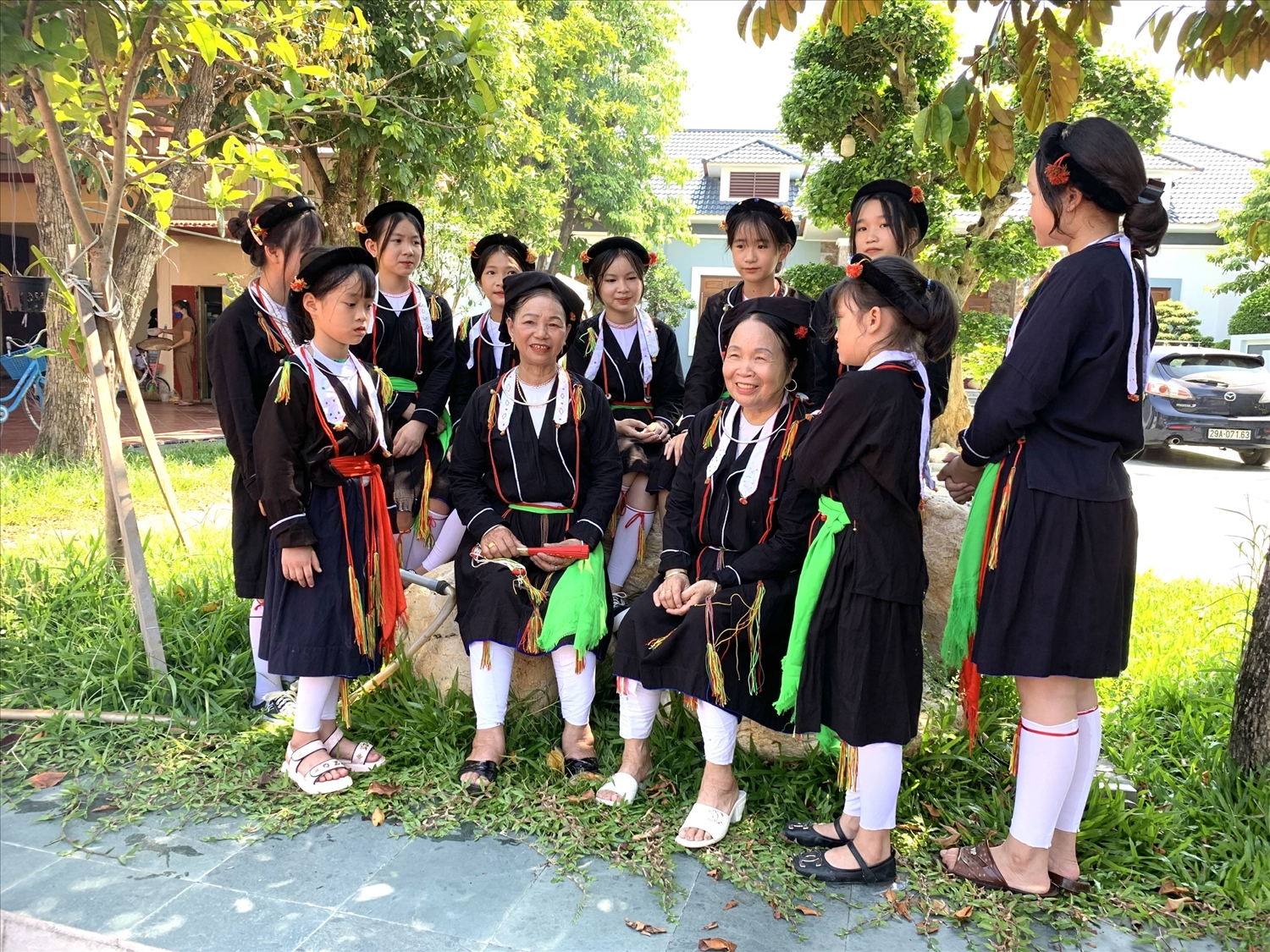
According to the 2019 census of 53 ethnic minorities, the San Diu population is 183,004 people. Most of them live in rural areas. Their settlement pattern reflects strong ties to agriculture and midland landscapes.
Religion and Beliefs
The San Diu worship ancestors, shamans, and the Kitchen Gods (Tao Quan). Most households place three incense bowls on the family altar for these spiritual figures. When someone passes away and has not yet been buried, the family places an additional incense bowl in a lower position.

They also worship the Earth God at the communal house. Spiritual practices play an important role in daily life and express the broader traditions of ethnic groups in Vietnam.
Festivals
San Diu festivals are similar to those of other northern communities. One important celebration is the Dong Chi festival, held during the winter solstice. During this event, families pray for prosperity and children.
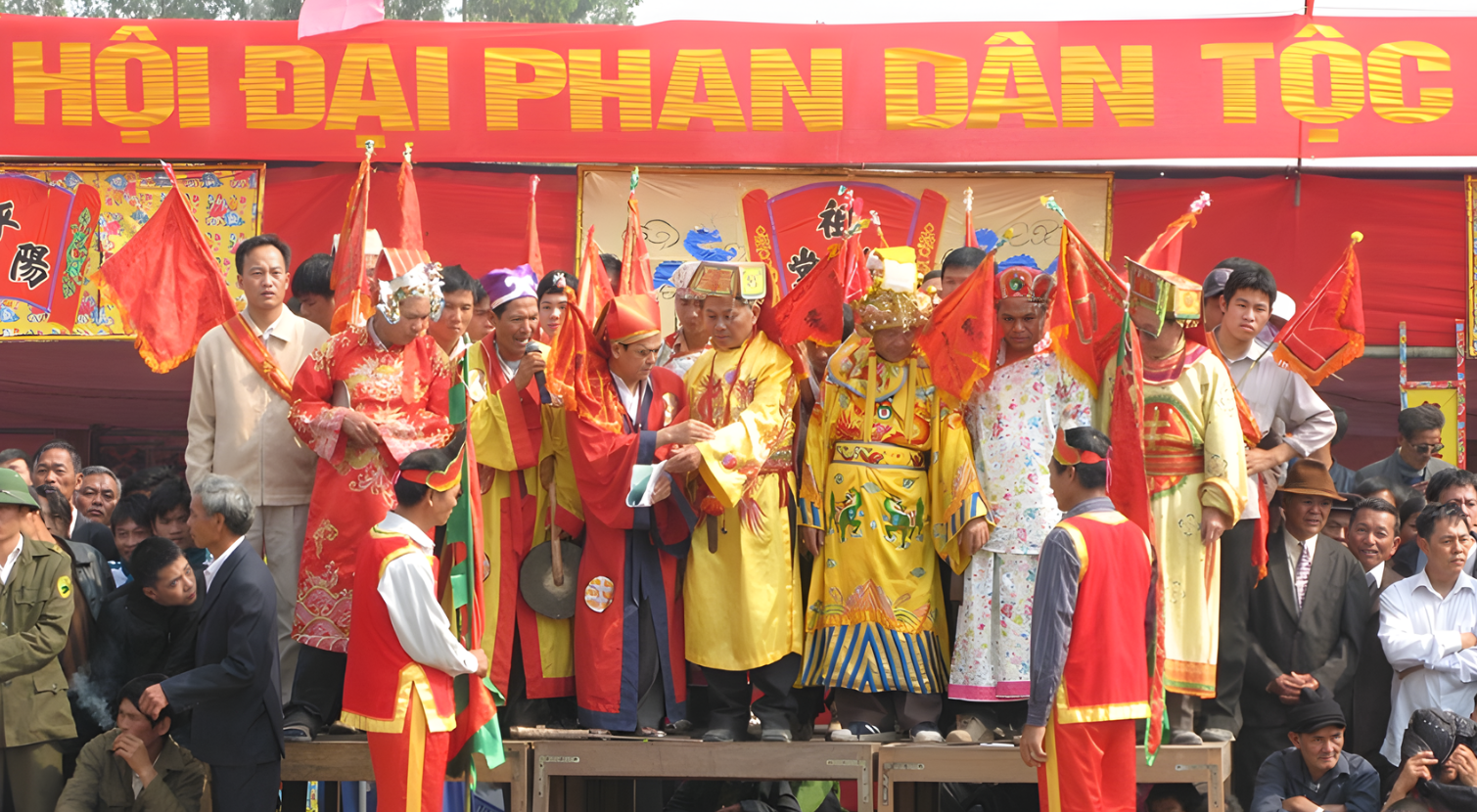
Marriage customs include many rituals. Before the bride leaves her home, families perform a ceremony with wine, boiled eggs, coins, and red thread. Guests share the eggs mixed with wine to celebrate the couple’s happiness. These rituals strengthen family and community bonds. Music also plays a vital role. The San Diu sing “soong co,” a traditional love song performed at night between men and women.
Costumes
San Diu women traditionally wear black headscarves and long dresses. Lined dresses have a white inner layer and an indigo outer layer. Women also wear red bellybands and colorful belts. Silver jewelry such as necklaces, bracelets, and earrings completes the outfit.
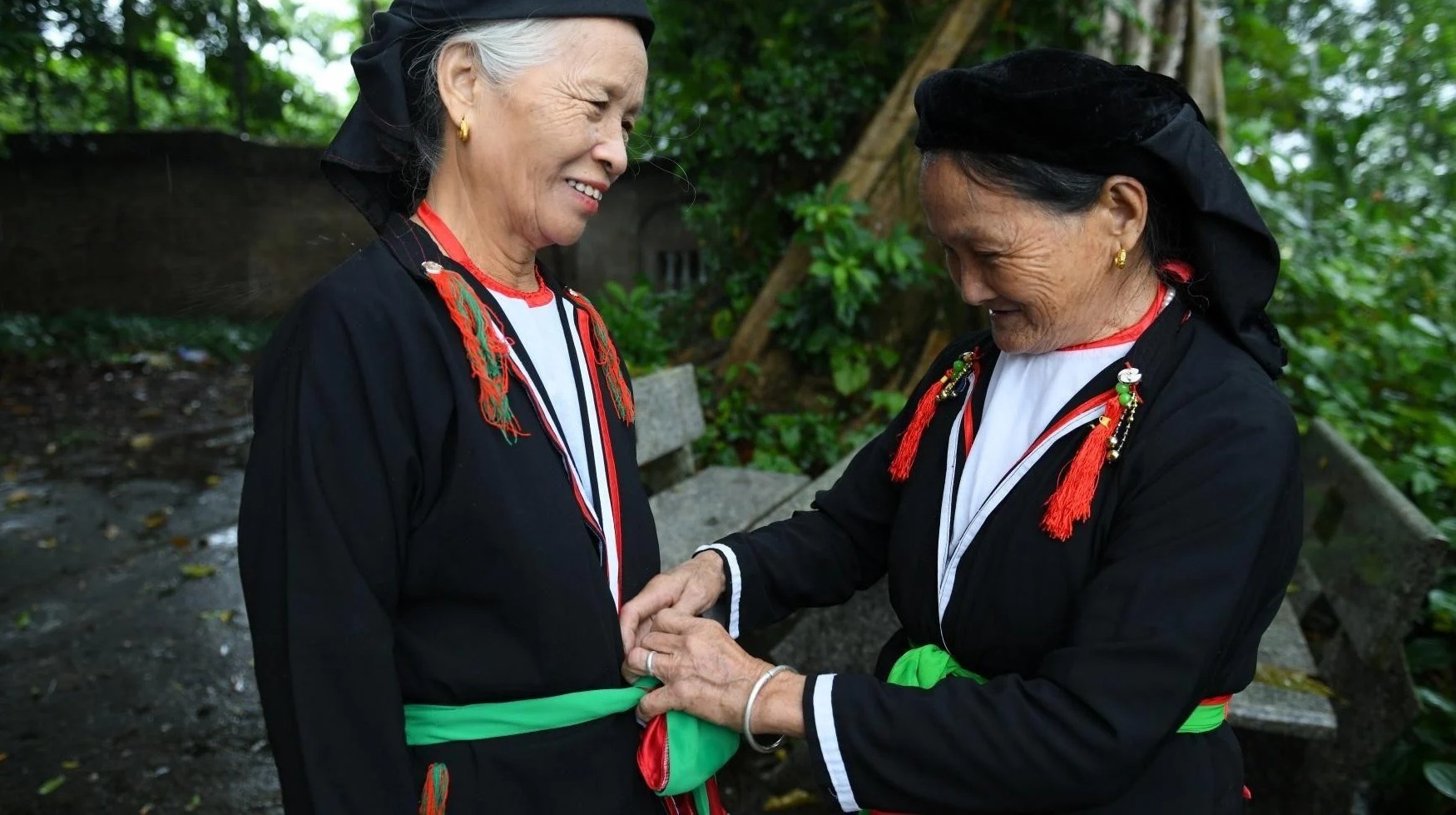

Men dress similarly to the Kinh people. They wear dark long tunics, white trousers, and turbans. Traditional clothing appears mainly during ceremonies and festivals, while modern clothing is common in daily life.
Economic Conditions
Agriculture forms the foundation of San Diu livelihoods. They cultivate rice, maize, cassava, and potatoes on swampy, wet, terraced, and upland fields, adapting to midland terrain despite natural challenges. Animal husbandry supports farming, with families raising pigs, chickens, ducks, and geese for meat, manure, and draft power.
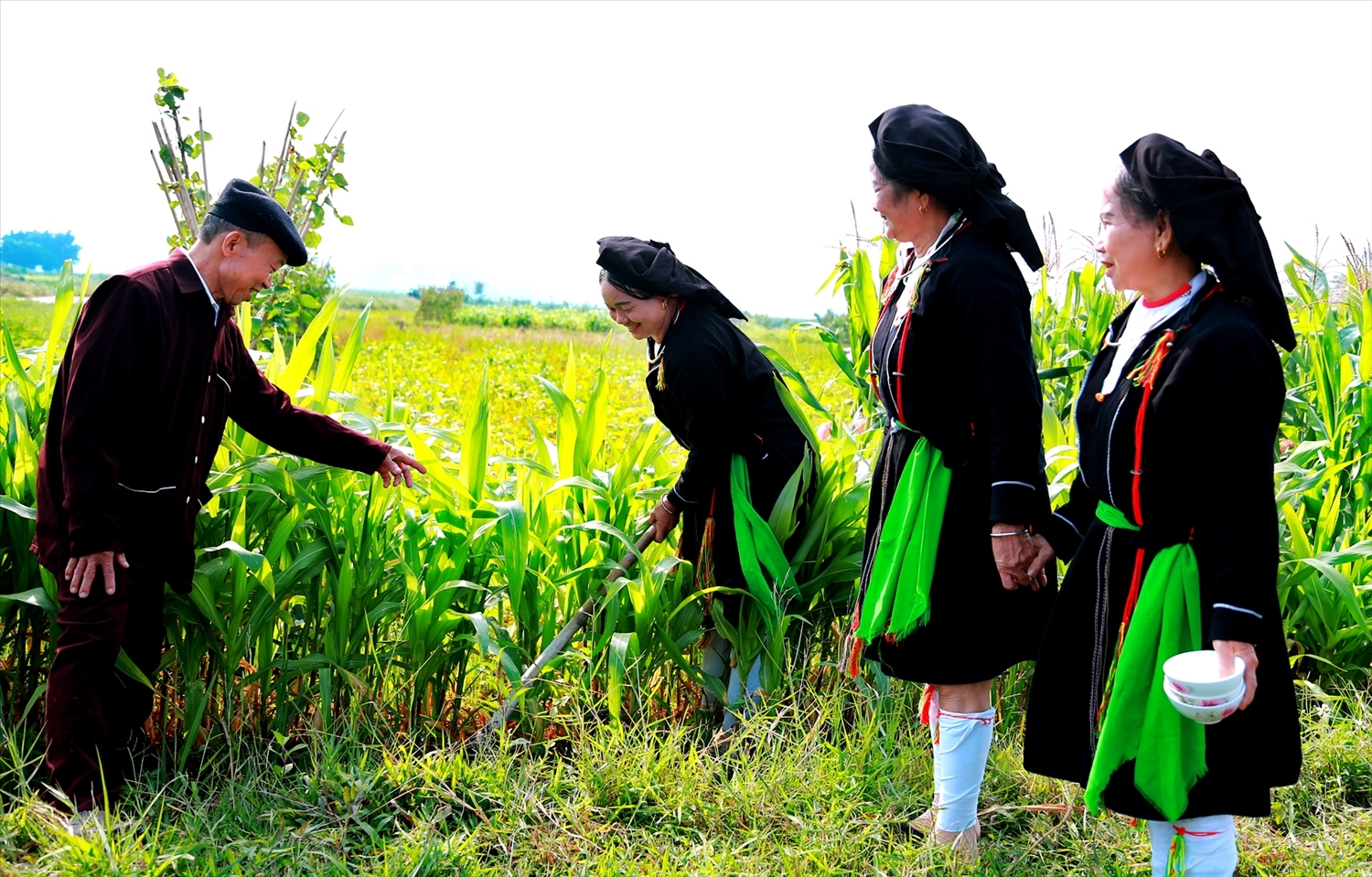
In forested areas, they collect wood, bamboo, medicinal plants, and wild vegetables, and some households develop beekeeping and silkworm cultivation. San Diu communities also practice handicrafts such as weaving, knitting, carpentry, pottery, and blacksmithing. In the past, they produced traditional paper and used Chinese ink to record genealogies and literature.
17. H’re Ethnic Group – A Long-Standing Community Among the Ethnic Groups in Vietnam
The H’re are one of the 54 ethnic groups officially recognized in Vietnam. They have lived for a long time in the Truong Son Mountain range and the Central Highlands. Most H’re people depend on agriculture and maintain strong communal traditions. Their customs contribute to the cultural richness of the ethnic groups in Vietnam.
History
The H’re have resided in the mountainous areas of Central Vietnam for generations. Some scholars suggest that their origin may relate to ancient migration processes after natural disasters such as floods.

The H’re call themselves Hre. They are also known by other names such as Cham Re, Thuong Ba To, Moi Son Phong, Re, and Man Thach Bich. Over time, they formed a stable community with a distinct cultural identity in the Truong Son region.

Language
The H’re language belongs to the Mon-Khmer branch of the Austroasiatic language family. Before 1975, the H’re used a Latin-based writing system. Although this script was once common, it gradually faded from daily use.

Today, most H’re people speak Vietnamese in addition to their native language. This bilingual ability helps them integrate with other ethnic groups in vietnam while preserving their linguistic heritage.
Geographic Distribution
The H’re mainly live in the western districts of Quang Ngai Province, including Son Ha, Ba To, and Minh Long. They also reside in An Lao District of Binh Dinh Province and Kon Plong District of Kon Tum Province.

According to the 2019 survey, Vietnam has 149,460 H’re people. Most of them live in rural areas. Their villages are usually located along mountain slopes and near agricultural land.
Religion and Beliefs
The H’re believe in the existence of souls and a spiritual world. They think that the souls of the dead live in a place called “goong kieesk chok,” or the village of ghosts.

They worship Yang gods, who control harvests, health, and natural forces. The highest Yang is the god of heaven. They also worship gods of earth and water, along with ancestors. These practices reflect the broader traditions of ethnic groups in Vietnam, where nature and spirits play central roles.

Festivals
The H’re organize many agricultural and life-cycle rituals. The worship of the rice god Yeang Sarì is one of the most important ceremonies. This ritual ensures a good harvest and community prosperity.
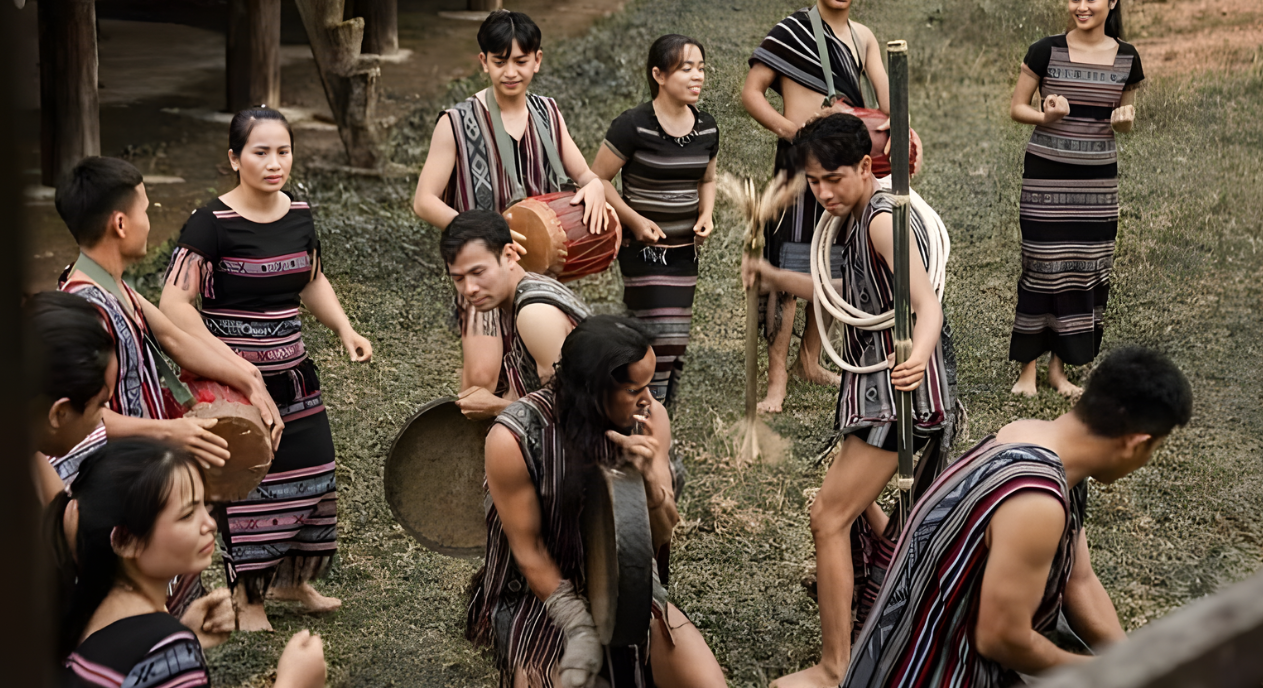
They also celebrate the harvest festival, the New Year festival called “htend” and the buffalo stabbing ceremony. Ancestor worship, known as “vaha” remains an essential part of spiritual life. Festivals strengthen solidarity and preserve traditional values.

Costumes
H’re men traditionally wear long loincloths decorated with tassels. Women wear five-flapped dresses buttoned on the right side. Traditional clothing appears mainly during festivals and ceremonies.

In daily life, many people now wear modern clothing. However, traditional attire remains an important cultural symbol among the 54 ethnic groups.

Economic Conditions
Rice cultivation forms the foundation of H’re economic life. They practice slash-and-burn farming and use simple tools. In some areas, they plough fields with buffaloes and harvest rice with sickles.
Families also raise buffaloes, pigs, chickens, and dogs. Gathering and hunting supplement food sources. The H’re practice weaving and knitting, although these crafts are not highly developed. In the past, they often exchanged goods through barter rather than money.
18. K’ho Ethnic Group – One of the Oldest Communities Among the Ethnic Groups in Vietnam
The K’ho, also known as Koho or Co Ho, are one of the 54 ethnic groups officially recognized in Vietnam. They have lived in the Central Highlands for thousands of years and developed a distinct cultural identity. As one of the long-standing ethnic groups in Vietnam, the K’ho preserve many traditional customs while adapting to modern life.
History
Scholars believe the K’ho belong to the Indonesian racial group and were co-owners of the ancient Sa Huynh Culture. Historical evidence suggests that they have existed for around 2,500 years. This makes them one of the oldest indigenous communities in the Central Highlands.
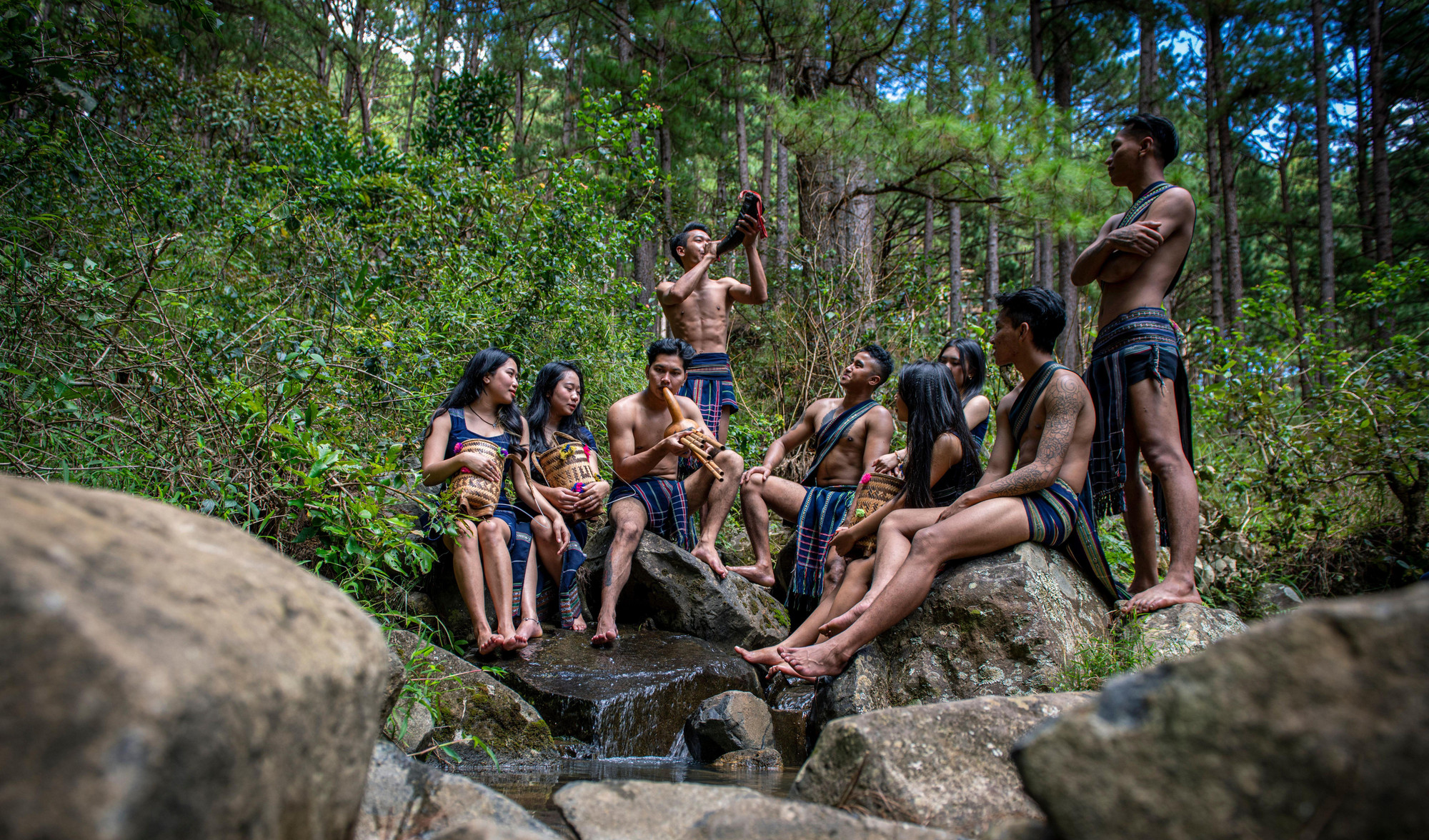
Over centuries, the K’ho created a unique cultural system shaped by mountain environments and agricultural traditions.
Language
The K’ho speak a South Bahnaric language, which belongs to the Mon-Khmer branch of the Austroasiatic language family. In the early 20th century, they adopted a Latin-based writing system. However, this script is not widely used today.

Most K’ho people now speak Vietnamese alongside their native language. This bilingual ability supports communication with other ethnic groups in vietnam.
Geographic Distribution
The K’ho mainly live in Lam Dong Province in the southern Central Highlands. They also reside in mountainous areas of Binh Thuan, Khanh Hoa, Ninh Thuan, Dak Lak, and Dong Nai.
According to the 2019 survey of 53 ethnic minorities, the K’ho population is 200,800 people. Most households live in rural areas and maintain strong ties to agricultural land.
Religion and Beliefs
The K’ho believe that supernatural forces control all aspects of life. Their belief system divides the spiritual world into “yang,” which represents benevolent gods, and “cha,” which represents harmful spirits. They make offerings during important events such as farming, weddings, funerals, and illness.
The K’ho traditionally practiced polytheism. However, many communities have adopted Christianity and gradually reduced older rituals, including offerings to the rice god. These spiritual practices reflect the broader traditions of ethnic groups in vietnam, where nature and deities shape daily life.
Festivals
The rice harvest festival is the most important celebration of the K’ho people. During this event, families thank the gods for a successful farming season and strengthen village unity.

They also organize the buffalo stabbing festival every three or seven cultivation cycles. Festivals include music, dancing, traditional food, and communal drinking of straw liquor. These ceremonies reinforce cultural identity among the 54 ethnic groups of Vietnam.

Costumes
K’ho men traditionally wear loincloths with vertical patterns. Women wear short black dresses decorated with white stripes. In colder weather, they add blankets for warmth.
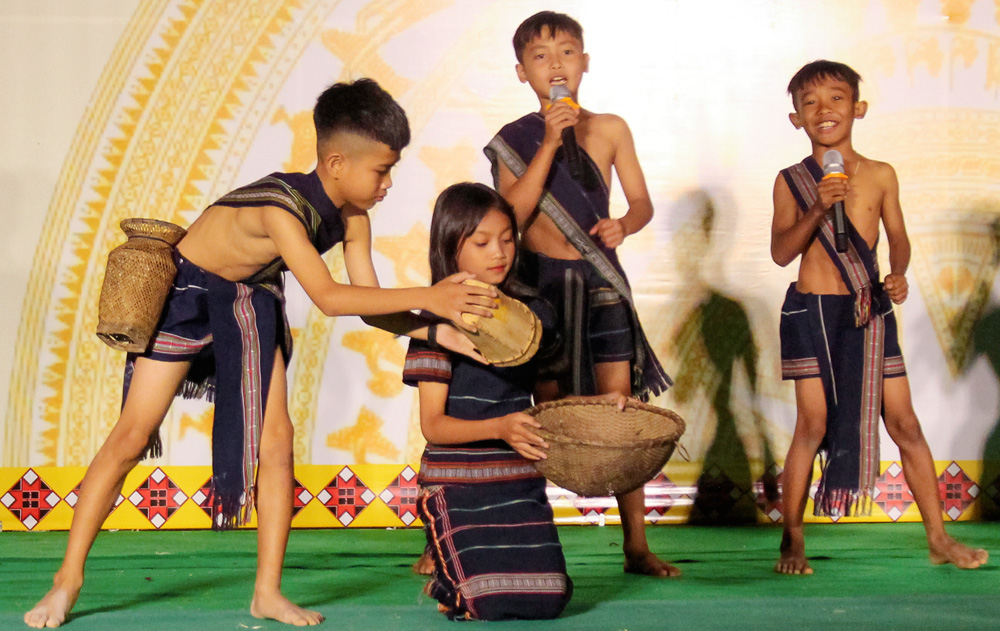
Some women practice ear stretching with wooden or ivory rings. Tooth blackening was also common in the past. Today, traditional clothing appears mainly during ceremonies and festivals, while modern outfits dominate daily life.
Economic Conditions
Slash-and-burn farming is the primary economic activity of the K’ho. The Xre subgroup mainly practices wet rice cultivation. Farmers grow rice and other crops using traditional tools similar to those of neighboring highland communities.
In addition to agriculture, the K’ho engage in hunting, fishing, animal husbandry, and forest gathering. They produce handicrafts such as bamboo weaving, embroidery, and tool making. Pottery remains one of their most developed crafts.
19. Raglai Ethnic Group – An Austronesian Community in South-Central Vietnam
History
The Raglai have long resided in the South-Central region of Vietnam. Over centuries, they developed a culture shaped by mountain environments and shifting cultivation.

Their historical development is closely linked to other Austronesian-speaking communities in the region.


Language
The Raglai language belongs to the Malayo-Polynesian group of the Austronesian language family.
Due to contact with neighboring ethnic groups, many Raglai people are bilingual or multilingual. Vietnamese is widely used in education, trade, and interethnic communication.
Geographic Distribution
The Raglai mainly live in the mountainous districts of Ninh Thuan and Khanh Hoa provinces. Smaller communities are found in Binh Thuan and Lam Dong.

They usually settle at elevations between 500 and 1,000 meters, forming villages in valleys and hillside areas suitable for farming.
Religion and Beliefs
The Raglai believe in a spiritual world governed by gods and supernatural forces. They think deities can bring protection or misfortune depending on rituals and offerings.
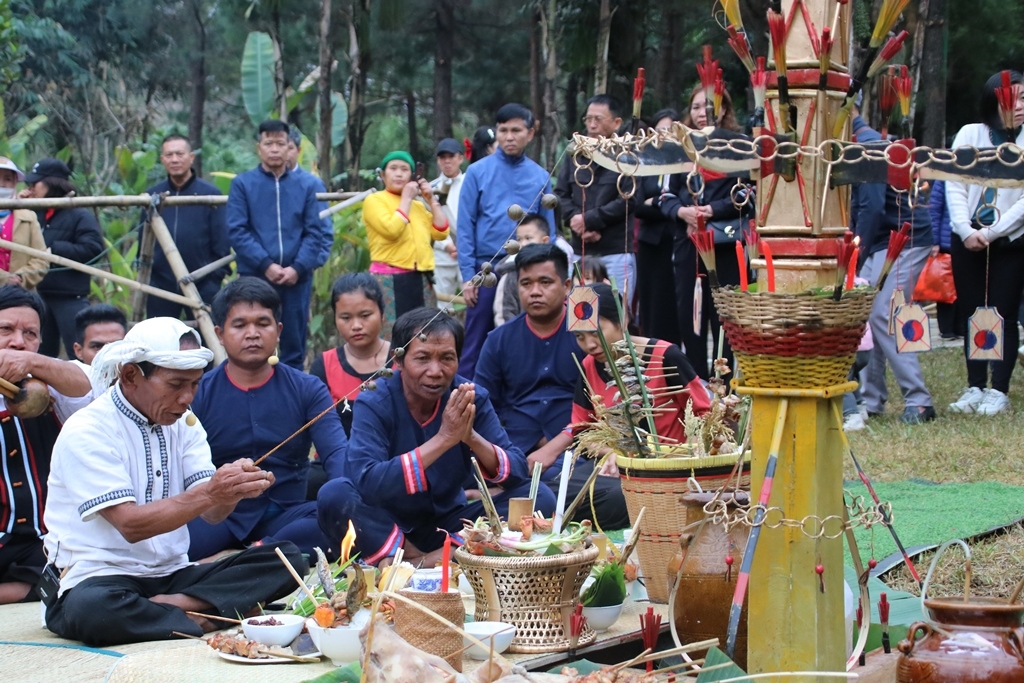
Ancestor spirits are especially respected. Annual ceremonies are organized to pray for health, good harvests, and community safety. Shamans play an important role in religious practices.

Festivals
Raglai festivals are closely related to agriculture and life-cycle rituals. Weddings involve important ceremonies at both the bride’s and groom’s houses, especially the mat-spreading ritual symbolizing marital union.
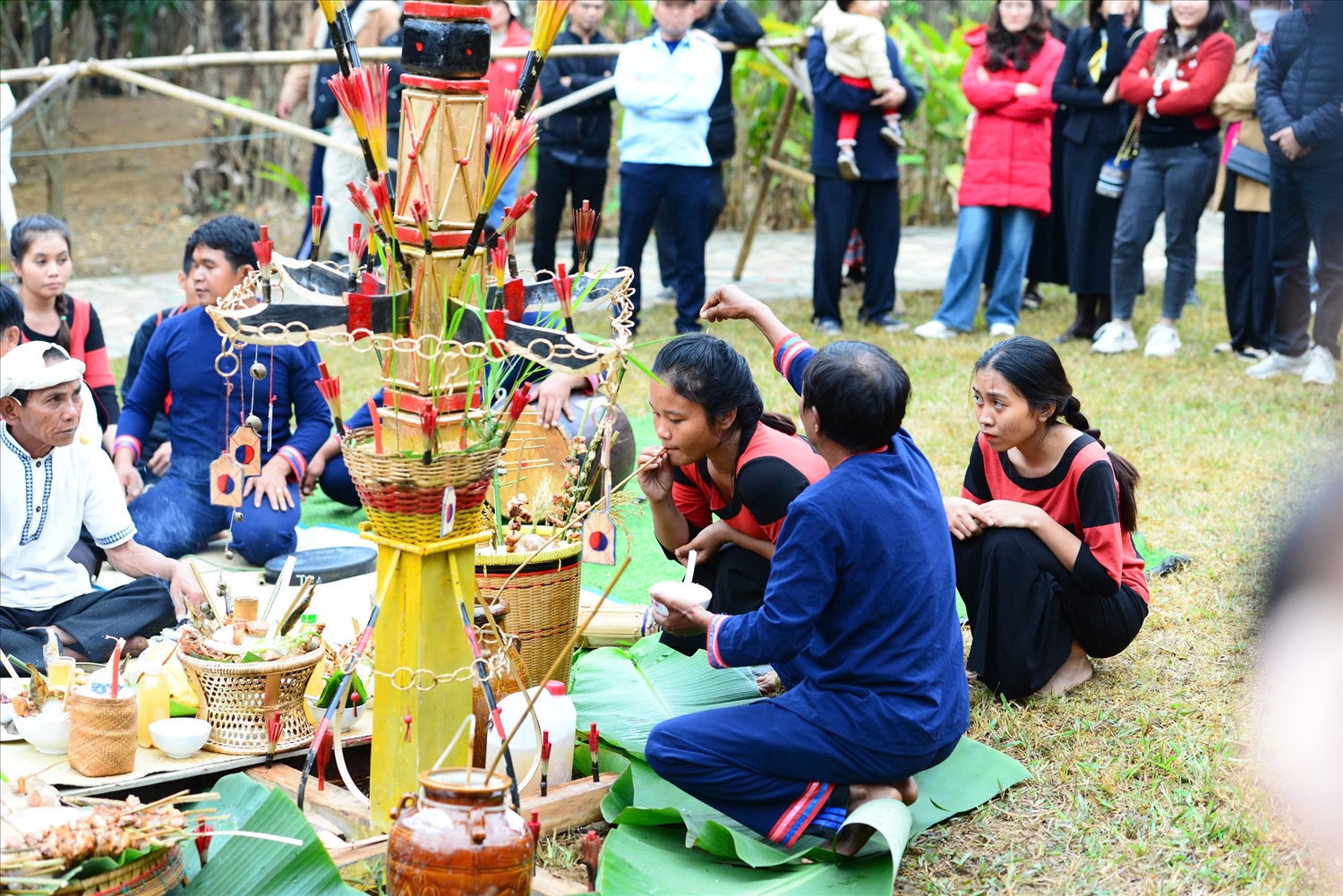
Funeral customs include burial in forests or fields, followed by the “bo ma” (grave abandonment) ceremony when conditions allow. Festivals often include music, communal meals, and traditional performances.
Costumes
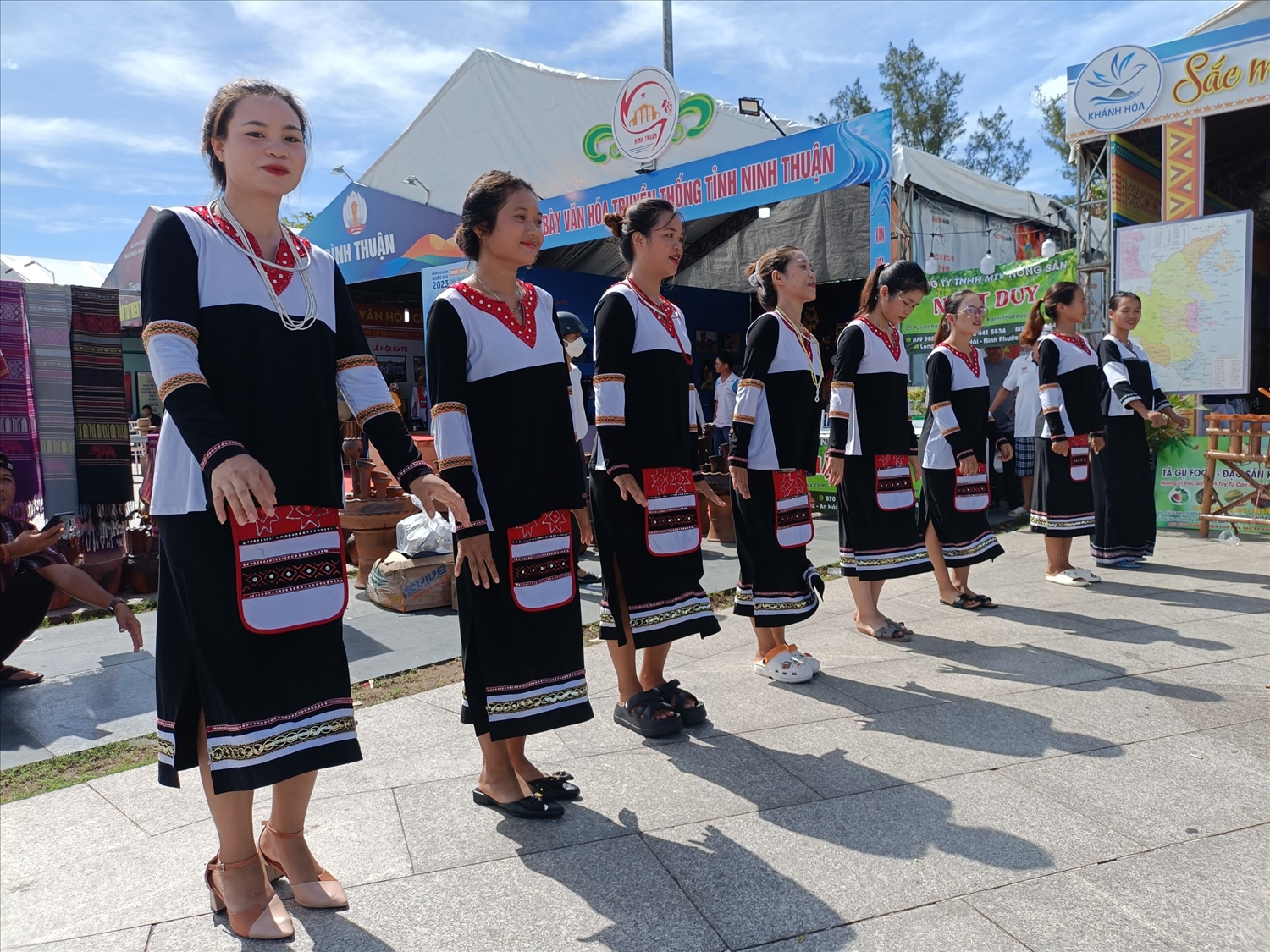
Today, most Raglai people wear modern clothing in daily life. Traditionally, men wore loincloths and women wore skirts and long shirts. During festivals, women may wear garments decorated with red and white patterns. Traditional dress now mainly appears at ceremonies and cultural events.
Economic Conditions
Agriculture is the foundation of Raglai economic life. They cultivate rice, corn, beans, gourds, and fruit trees. Wet rice farming has gradually developed in recent years.
Animal husbandry, including buffaloes, pigs, chickens, and ducks, supplements household income. Traditional crafts such as forging and weaving also contribute to the local economy.
20. Mnong Ethnic Group – A Cultural Owner of the Central Highlands
History
The Mnong are one of the long-established ethnic communities of the Central Highlands. Over generations, they have contributed significantly to regional socio-economic development and cultural preservation.

They are also known by various names such as Pnong, Mnong Gar, Mnong Rlam, Mnong Chil, and others, reflecting internal subgroups and local variations.
Language
The Mnong language belongs to the Mon-Khmer branch of the Austroasiatic language family.

Its vocabulary shows some influence from the Ede language due to long-term cultural contact. Today, many Mnong people also speak Vietnamese for education and communication.
Geographic Distribution
Mnong communities are found in 51 out of 63 provinces and cities in Vietnam.
Most of them live in Dak Nong and Binh Phuoc provinces, as well as southwestern areas of Dak Lak and Lam Dong. Their settlements are concentrated in the Central Highlands region.
Religion and Beliefs
The Mnong are divided into two main religious groups: those following traditional animistic beliefs and those practicing Protestantism or Catholicism.

Traditional believers worship multiple gods and believe that all things possess spirits. Agricultural rituals and village ceremonies play an important role in spiritual life. Religious Mnong communities focus on monotheistic worship and have reduced traditional rituals.
Festivals
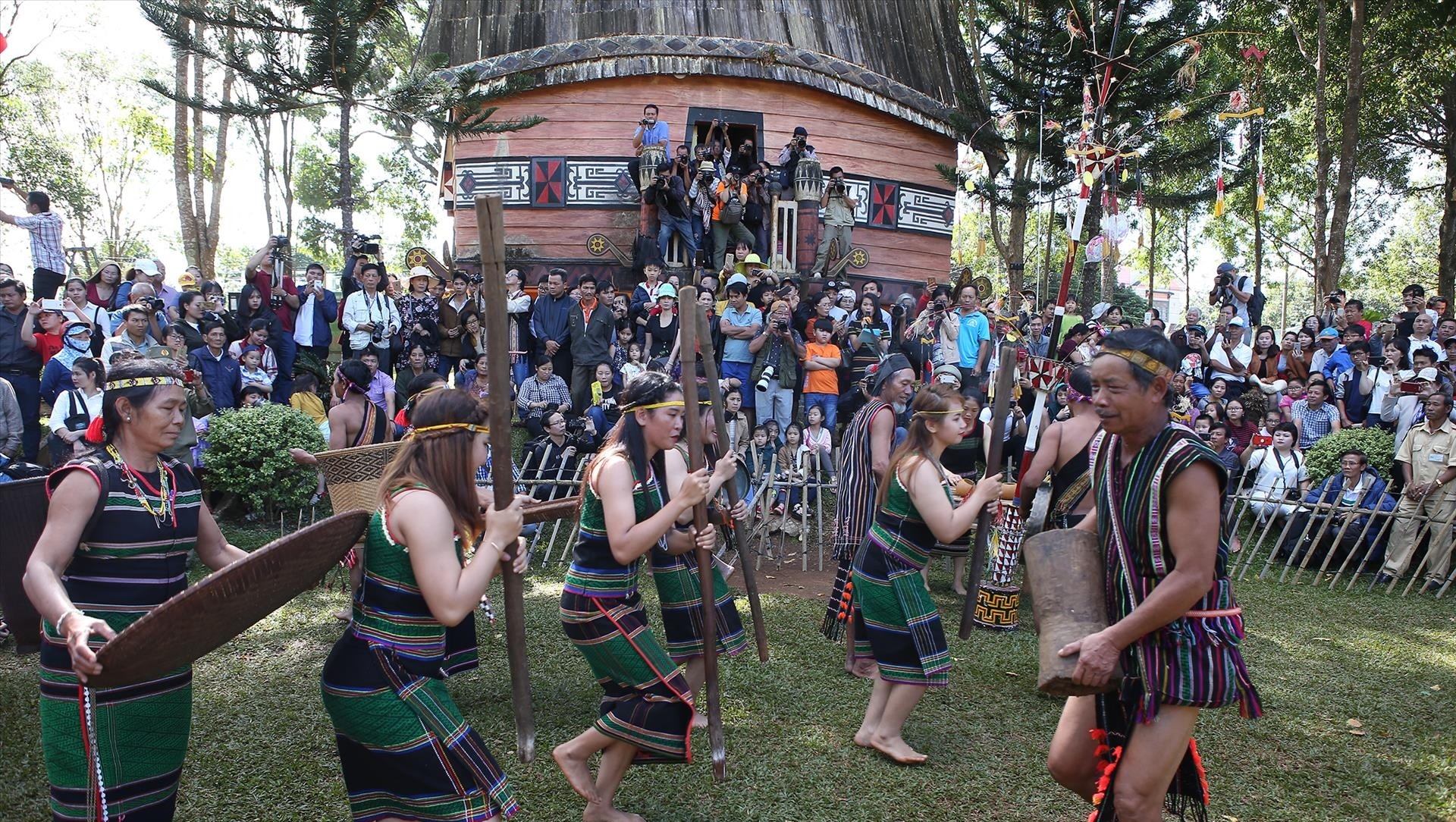
The buffalo stabbing festival is the most important traditional celebration of the Mnong. It is organized after the harvest season to thank the gods of heaven, earth, and rice.
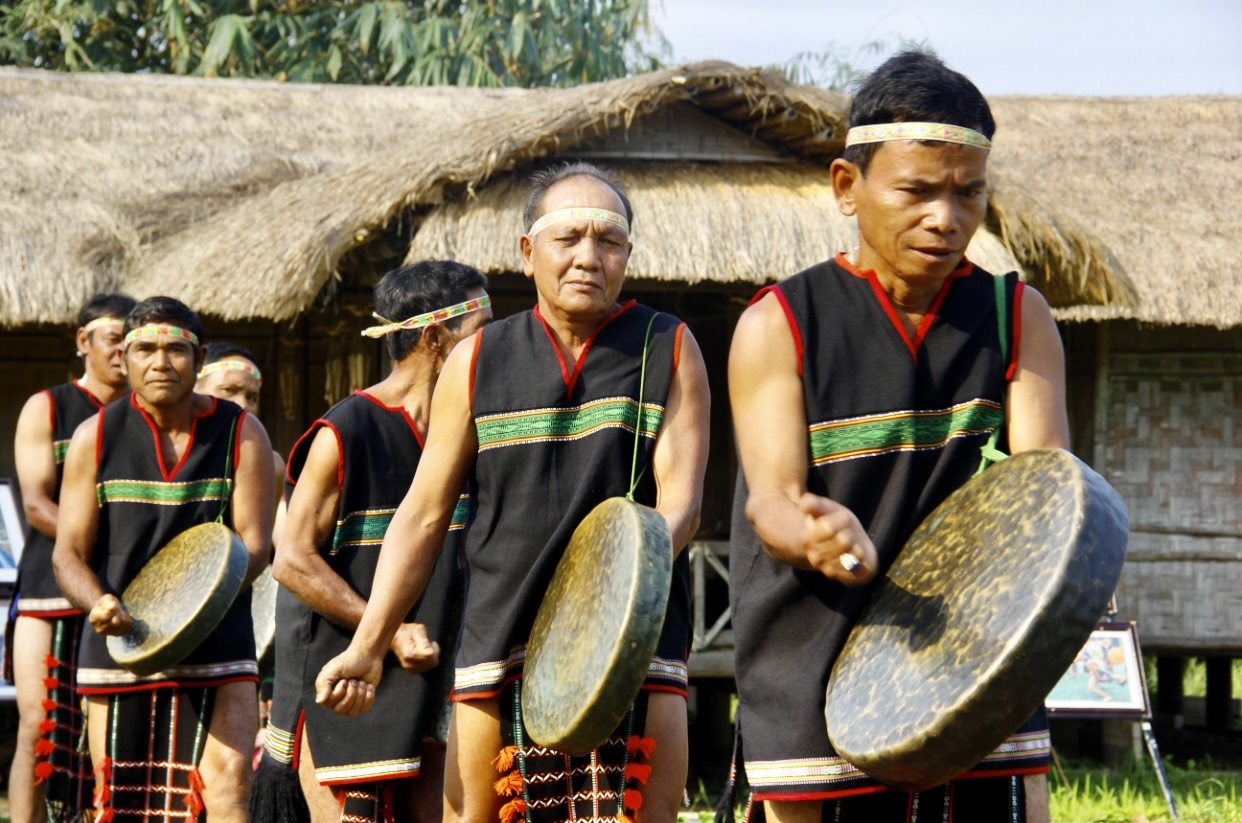
Other rituals include ceremonies for village protection and seasonal worship, reinforcing community solidarity.
Costumes
Traditionally, Mnong men wore loincloths and women wore skirts, sometimes without upper garments in daily life.

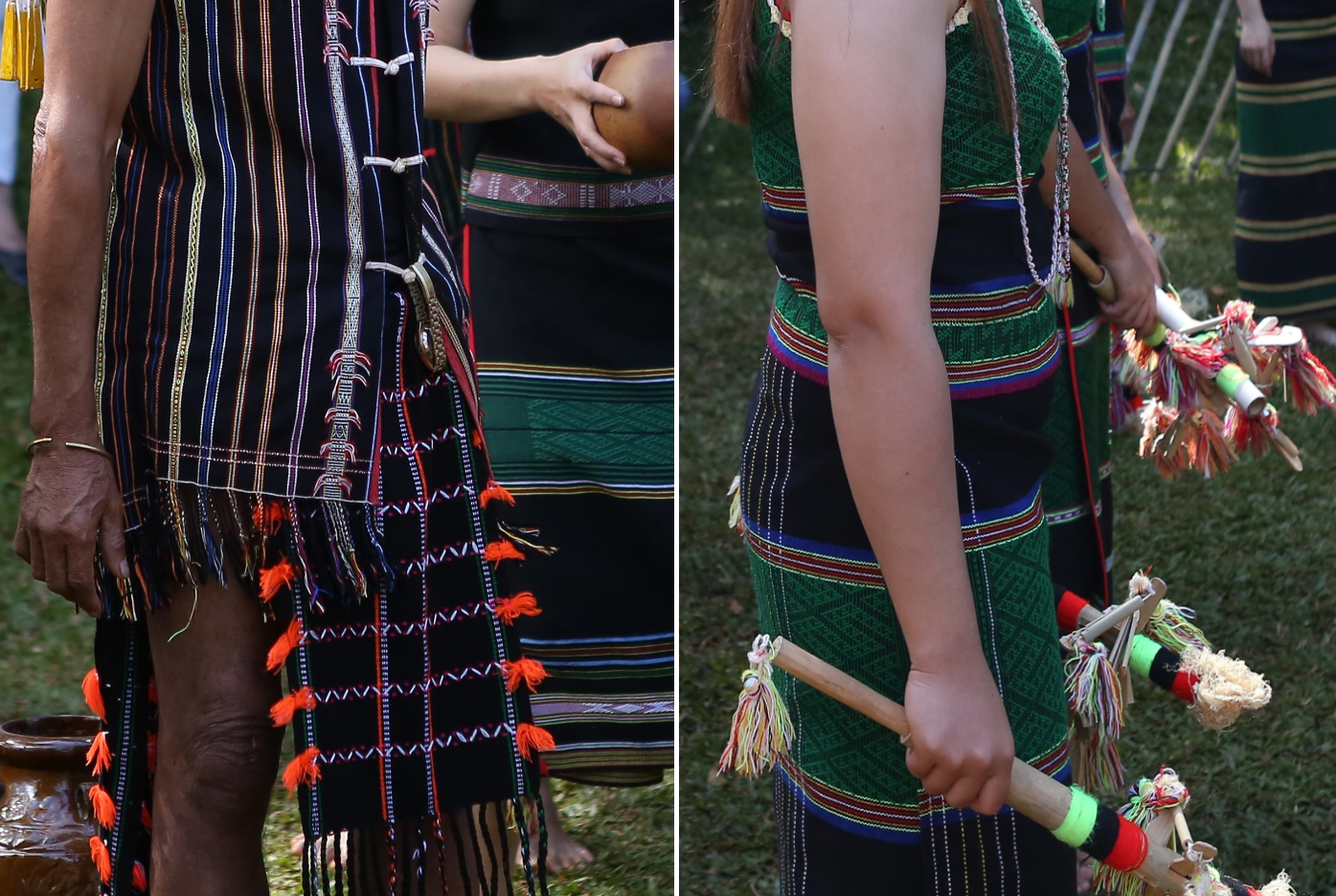
Today, clothing is largely influenced by Kinh styles, although traditional attire appears during festivals. Popular accessories include bronze or gold bracelets and colorful bead necklaces.

Economic Conditions
Slash-and-burn farming remains the main economic activity. The Mnong cultivate rice by hand and also practice wet rice farming in marshy areas using buffalo ploughing.
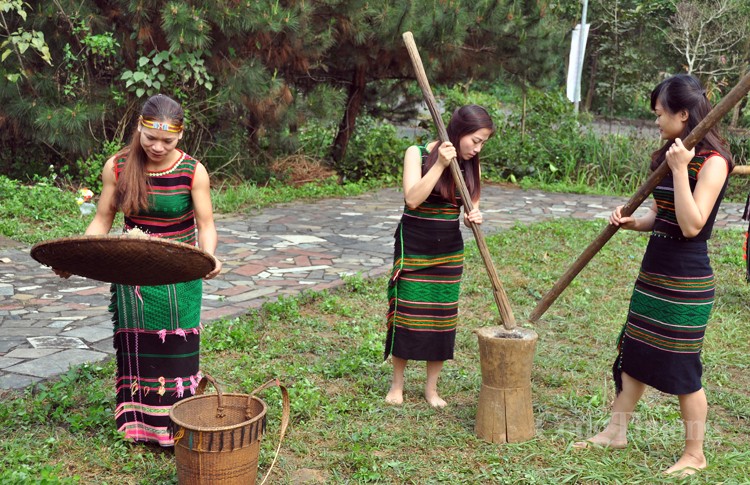
Hunting and gathering supplement agricultural production. They are skilled in weaving, cotton growing, and pottery making. In Buon Don, some Mnong communities are well known for hunting and taming wild elephants.
Although access to electricity and clean water has improved, poverty rates remain relatively high in some Mnong communities.
Explore more related content at Fanpage DaNang 365!