



Filming in Da Nang: what foreign crews should know
Da Nang is an easy city to shoot in, right up until the part nobody planned for. This is the short version of what visiting crews usually learn the hard way, from people who work here year round.
The city sits in the middle of Vietnam, with an international airport twenty minutes from the beach and Hoi An an hour down the coast. That geography is why so much commercial and travel work lands here. It also creates a specific trap: the place looks so straightforward on a map that teams under plan.
Weather is the schedule, not a detail
Two windows matter.
From roughly September to December, central Vietnam gets its rain, and it does not arrive as drizzle. A two hour downpour can erase an exterior day, and the storm season sits inside that same stretch. Any shoot booked in those months needs a written weather reschedule clause and an indoor fallback that was scouted, not imagined.
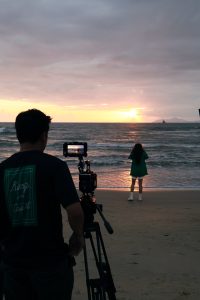
From April to August the problem inverts. Roughly ten in the morning to two in the afternoon, the sun is hard enough that skin tones become difficult and every surface goes contrasty. Local crews simply do not shoot exteriors in that block. They work early morning and late afternoon, and they use the middle of the day for interiors, moves and lunch. A call sheet that ignores this will produce four hours of unusable material.
Plan the day around the light and the season, and Da Nang is generous. Plan it around a flight schedule, and it is not.
Permits take longer than people expect
Handheld filming on a public street is one thing. A tripod, a crew, a light stand and a drone are another. Beaches, the Son Tra peninsula, bridges and most managed attractions each have their own process, and several of them want the request in writing well ahead of the date.
Two situations always need formal permission: a large crew footprint, and anything that closes or slows a road. A narrative or documentary film project is a separate category again, because the script has to be approved by the authorities before the shoot, not after. Commercial and brand work with a small unit on private or managed property is usually simpler, but the property still decides.
The realistic advice is to decide early which shots genuinely require a controlled location and which ones can be grabbed run and gun, then start the paperwork for the first group as soon as the dates are fixed. A local fixer who has filed these requests before will know which sites answer quickly and which ones answer only if the request arrives weeks ahead; CINEFY, for example, handles permits and fixing as a line item for visiting productions, which keeps the paperwork off the visiting producer’s desk.
Drone work deserves its own line. Rules around unmanned aircraft in Vietnam have tightened, and registration is tied to the owner of the aircraft rather than to the person flying it. A visiting team should confirm who is legally responsible for the drone on the day before anyone opens a case. With a local operator who already holds the registration, a flight permit for Da Nang typically takes two to three working days, and the airport in the middle of the city means a good share of the map is restricted.
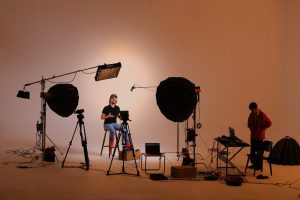
Executive interview set in the studio, two cameras, with lavalier and boom audio.
What to fly in, and what to source here
Bodies, lenses and personal kit travel fine. Grip, stands, large lights, generators and anything heavy usually do not make financial sense to bring. Local camera rental in Da Nang from a house such as CINEFY covers cinema bodies, lenses, lighting, grip and gimbals by the day, with prices listed on the website, so most crews arrive with glass and media and collect the heavy items on the first morning.
Two practical notes. First, lens mounts: locally rented cinema glass in Vietnam is mostly PL or EF; Sony E is common on the mirrorless side, and RF is rare. A crew arriving with another mount should confirm adapters before the shoot rather than after. Second, power: mains here is 220 volts at 50 hertz, and three phase power is not something a location will simply have. Anything above a modest lighting package needs a generator or a portable power station on the list, and that item is easy to forget until the first big light refuses to strike.
Camera cards and media are worth bringing yourself. Specific card formats are not always sitting on a shelf locally, and the day you need one is never the day to find out.
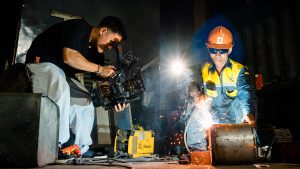
Filming the production line and machinery inside the factory.
Crew is available, briefing is the work
Da Nang has gaffers, camera assistants, grips, sound operators and production assistants who work regularly on commercial jobs. Availability is not usually the problem.
The friction is language and shorthand. Technical English is common on set at the department head level and thinner below it, so the useful move is to over prepare visual documents. A shot list with frames, a lighting diagram and a floor plan will get a setup built faster than any amount of explaining. Budget a real tech scout with the local heads of department instead of a phone call, because thirty minutes on the actual location resolves things that an email thread cannot.
One cultural note that saves time: local crews tend to confirm rather than question. If a plan has a flaw, it often surfaces as a quiet hesitation rather than an objection. Asking a direct question, such as what would you do differently here, tends to unlock the useful answer.
Building exterior shot in the late afternoon, when the sun is low.
A studio is the cheapest insurance you can buy
Every experienced production in this region keeps an indoor option on standby, and that habit exists because of the rain.
A cyclorama or a controlled interior space removes the two things a coastal city keeps handing you: weather and noise. Da Nang traffic and the constant sea wind are both worse for sound than for picture, and neither shows up on a location scout done at eleven in the morning on a calm day.
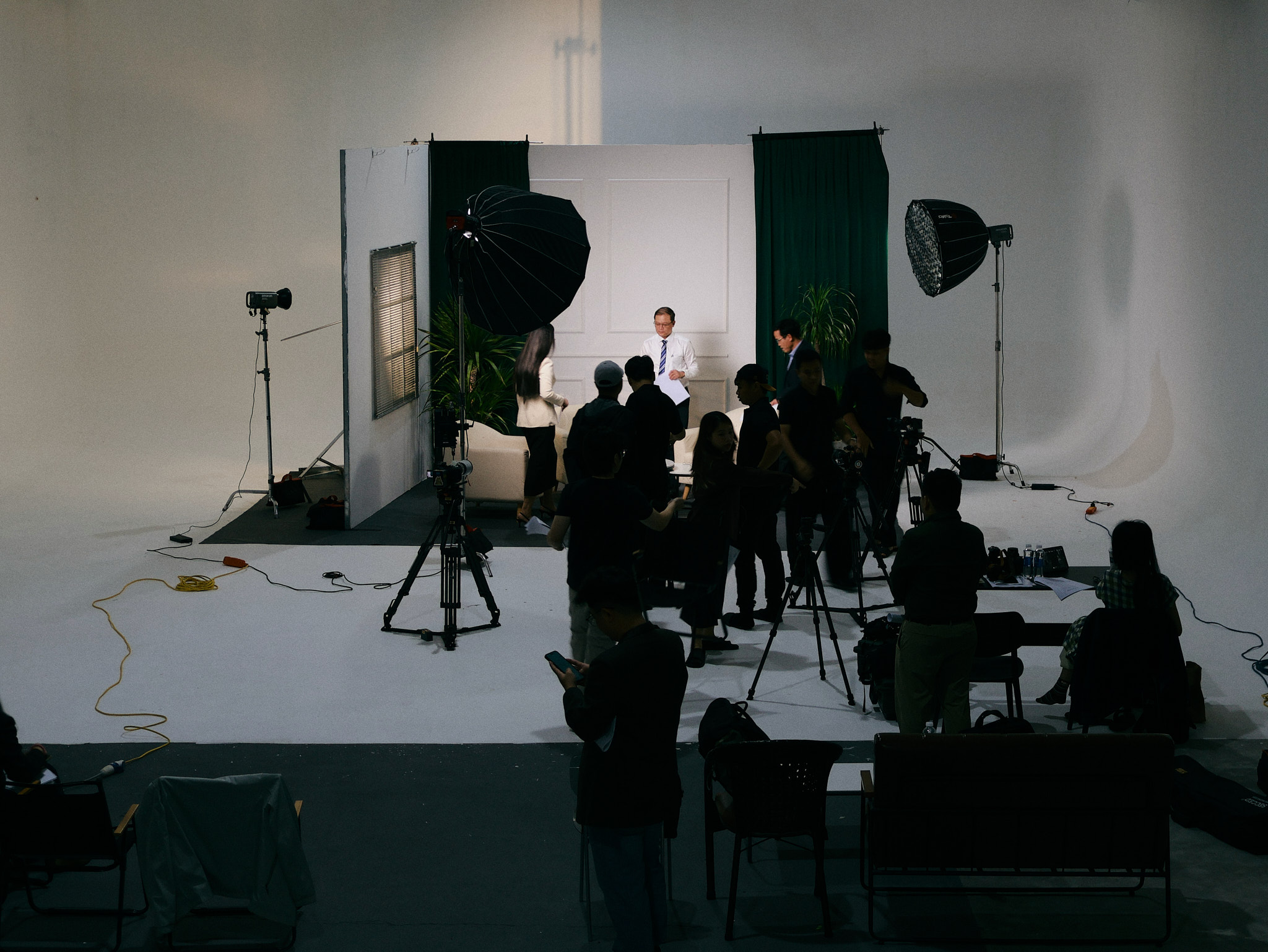
For anything involving dialogue, a talking head, a product, or a scene that has to match across days, booking indoor time is usually cheaper than losing a day outdoors. It is also the only way to guarantee a look is repeatable if the campaign needs a second batch later. Three phase power is the other reason studios get booked for lighting heavy days; CINEFY’s 360 square metre cyclorama studio in Son Tra, for example, runs on it, with full blackout and a podcast set already standing, which is why it tends to be the fallback when a beach day washes out.
Dates to avoid, and one to consider
Tet, the lunar new year, effectively closes the country for about a week and slows it down for two more on either side. Crew, rental houses and locations all go quiet. It is not a period to schedule around; it is a period to schedule outside.
The other public holidays in late April and early May fill hotels and beaches, which is good for atmosphere and bad for control.
On the positive side, the Da Nang Asian Film Festival brings a concentration of industry people into the city, which is a reasonable moment to meet local partners face to face if a longer project is coming.
The short version
Book the season before you book the flights. Start permits when the dates are fixed, not when the crew lands. Bring glass and media, source grip and power locally. Over prepare the visual briefing documents. Keep an indoor fallback on the schedule, and stay away from Tet.
Teams that want a starting checklist for scope and deliverables can look at how video production in Da Nang is usually broken into line items by CINEFY, which makes it easier to compare what a local partner is actually quoting for.
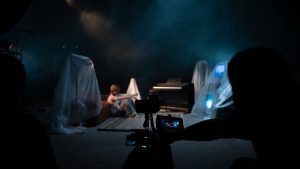
The crew building the set in the 360 sqm cyclorama studio.
About the author: CINEFY is a video production company, studio and camera rental house in Da Nang, Vietnam, founded in 2022, with its own 360 square metre cyclorama studio and company owned camera, lighting and grip inventory at 179B Nguyen Cong Tru, An Hai, Son Tra, Da Nang. The crew works in English and Vietnamese and regularly services visiting brands and productions from Singapore, Germany, the US and the UK. Production and rental: +84 779 771 234. Studio and podcast: +84 965 408 519. Website: cinefy.com.vn.