


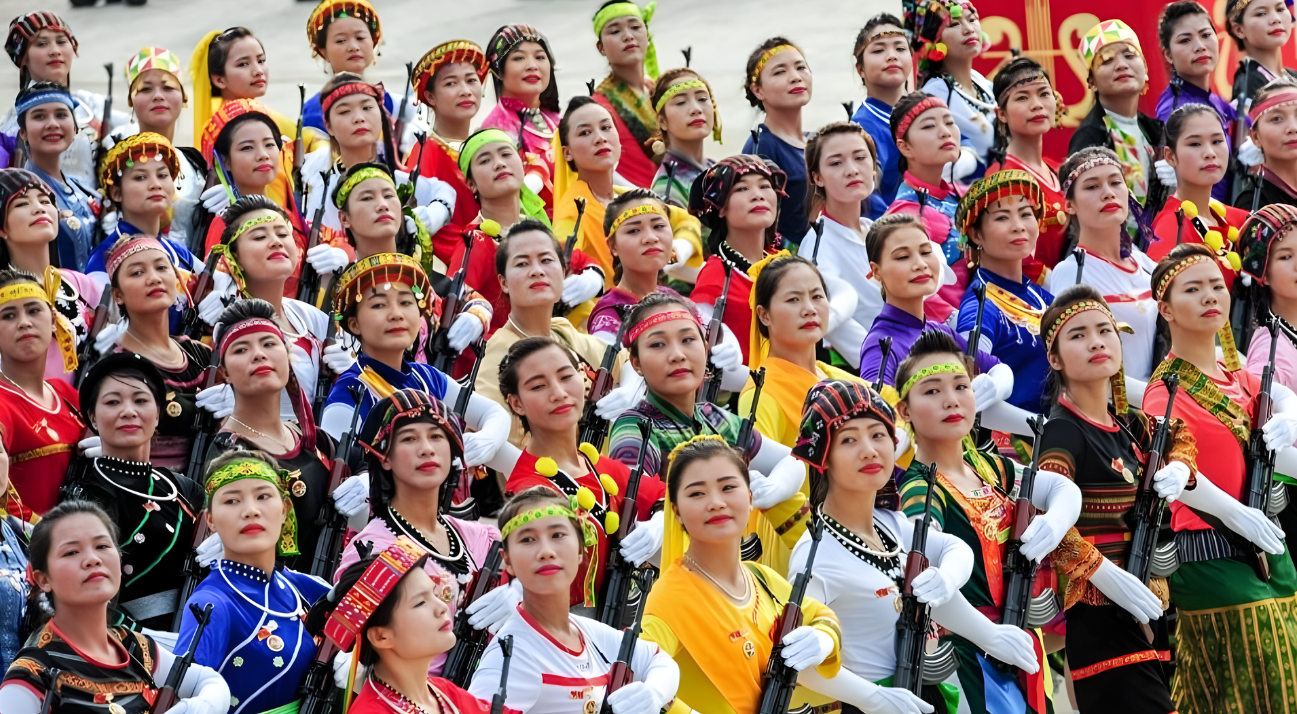

Vietnam is a multicultural nation proudly home to 54 ethnic groups, each with its own language, traditions, costumes, and cultural identity. The diversity of the ethnic groups in Vietnam continues to shape the country’s unique cultural landscape.
In Part 3 of our series on the 54 ethnic groups, we introduce 10 more communities and explore their history, language, geographic distribution, religion, festivals, costumes, and economic life. Through these stories, readers gain deeper insight into the traditions of ethnic groups in Vietnam and their enduring contributions to the nation’s heritage. Discover more cultural stories at danang365!
21. Tho Ethnic Group – A Distinct Community Among the Ethnic Groups in Vietnam
History
The origin of the Tho people dates back around 4,000 years. At that time, a group of ancient Vietnamese communities lived in the midland and mountainous regions of present-day Nghe An and parts of Thanh Hoa Province. Over time, some groups migrated to the plains and gradually became the Kinh majority. Others remained in their original homeland and later became the ancestors of the Tho people today.
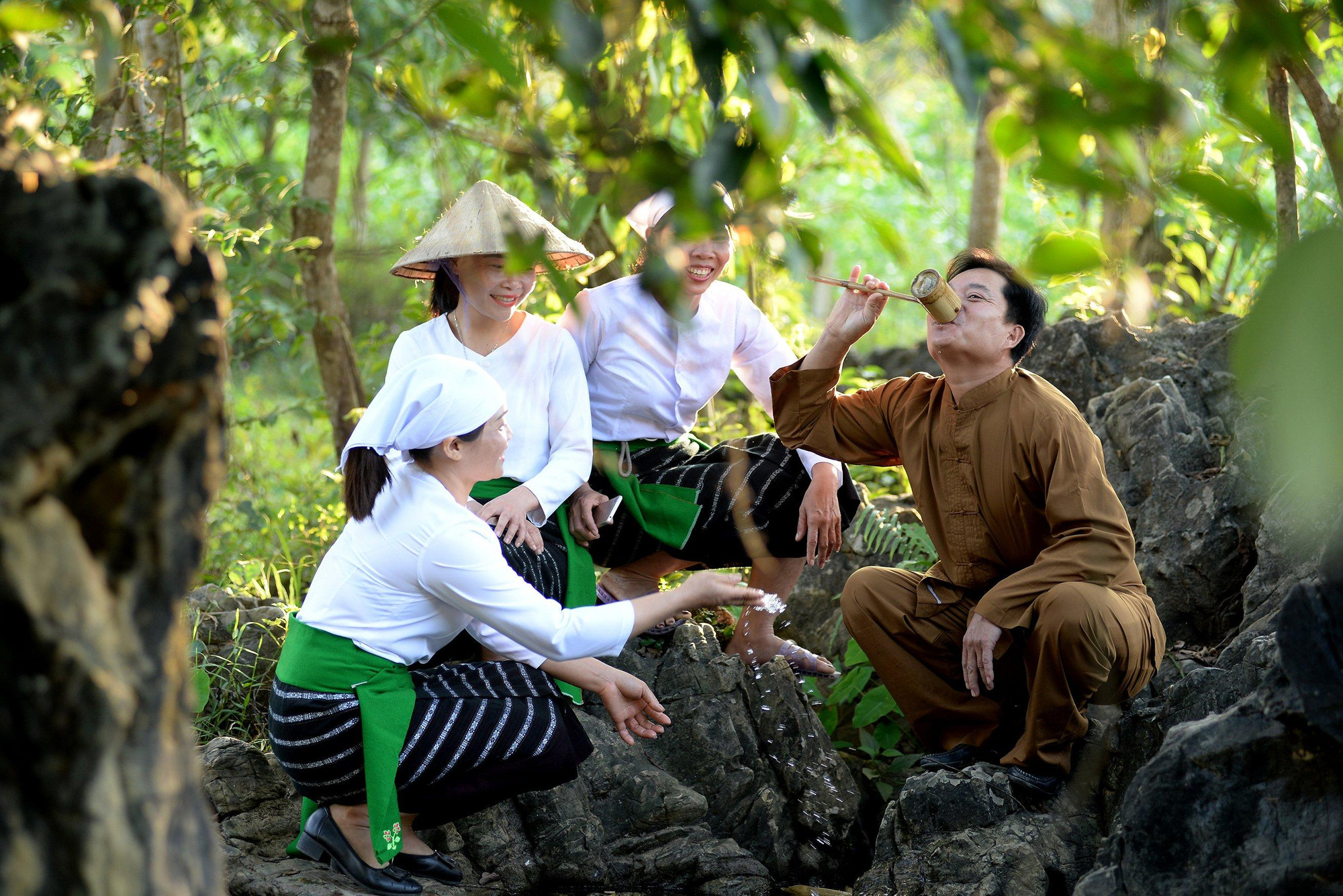
The community is also known by several other names such as Nha Lang, Keo, Mon, Cuoi, Ho, Dan Lai, Ly Ha, Tay Pong, Con Kha, and Xa La Vang. These names often represent different local groups within the Tho community.
Language
The Tho people speak both Vietnamese and the Tho language. Their language belongs to the Viet–Muong branch of the Austroasiatic language family, which also includes Vietnamese and Muong.
In the past, the Tho people did not have a widely used writing system. Only a small number of people knew classical Chinese characters. Today, Vietnamese is widely used in education and daily communication, helping the community connect with other ethnic groups in Vietnam.

Geographic Distribution
The Tho people mainly live in the midland and mountainous areas of Nghe An and Thanh Hoa provinces. These regions lie at the intersection of migration routes from the north to the south and from lowland to upland areas.

The community includes several local groups such as Tho Mon, Tho Keo, Tho Lam La, Tho Cuoi, Tay Poong, and Dan Lai – Ly Ha. Each group lives in specific districts or communes, especially in Nghe An Province.
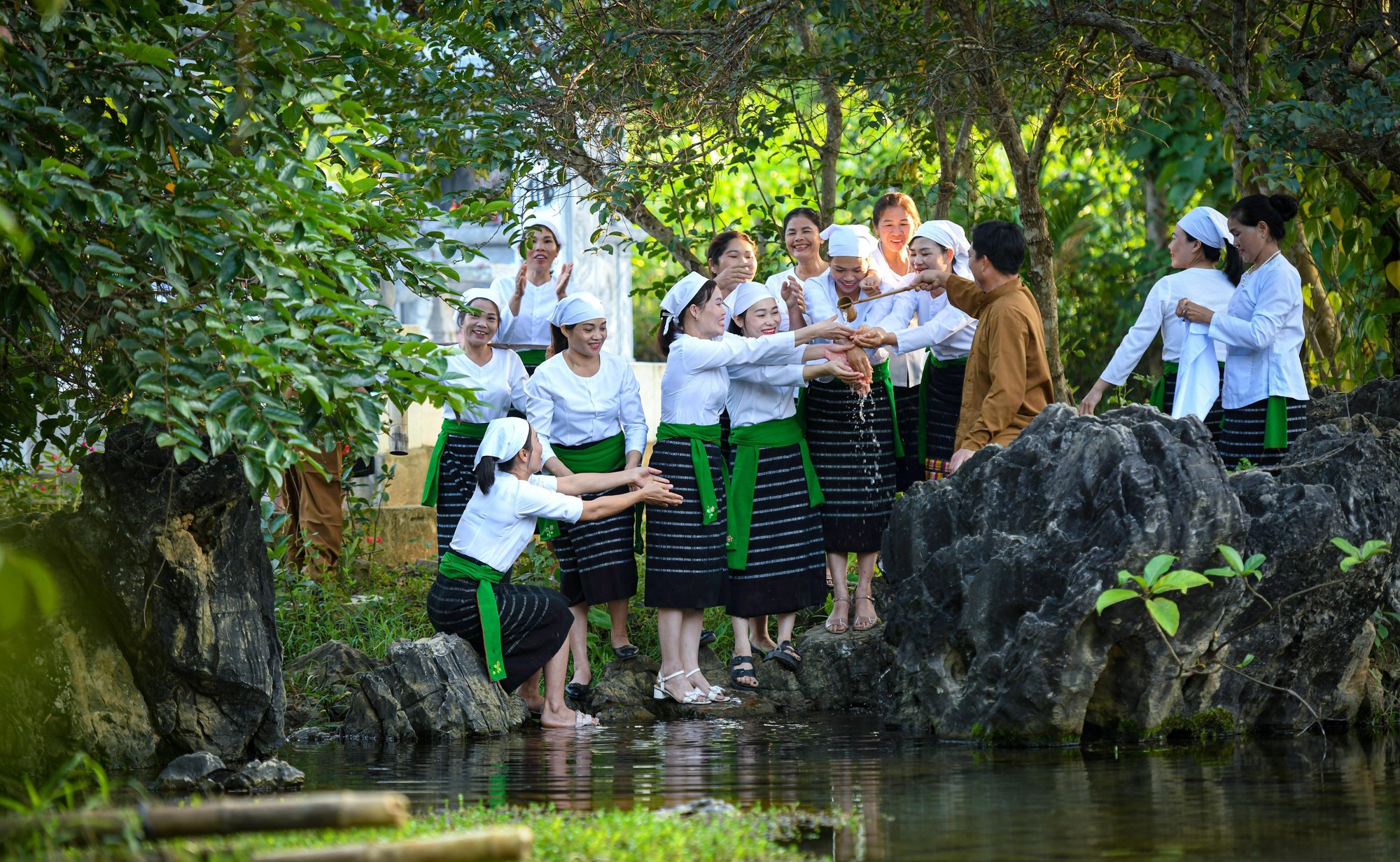
Religion And Beliefs
The Tho people traditionally follow animism, believing that spirits exist in nature and influence daily life. Forests, rivers, mountains, and large trees are often considered sacred.
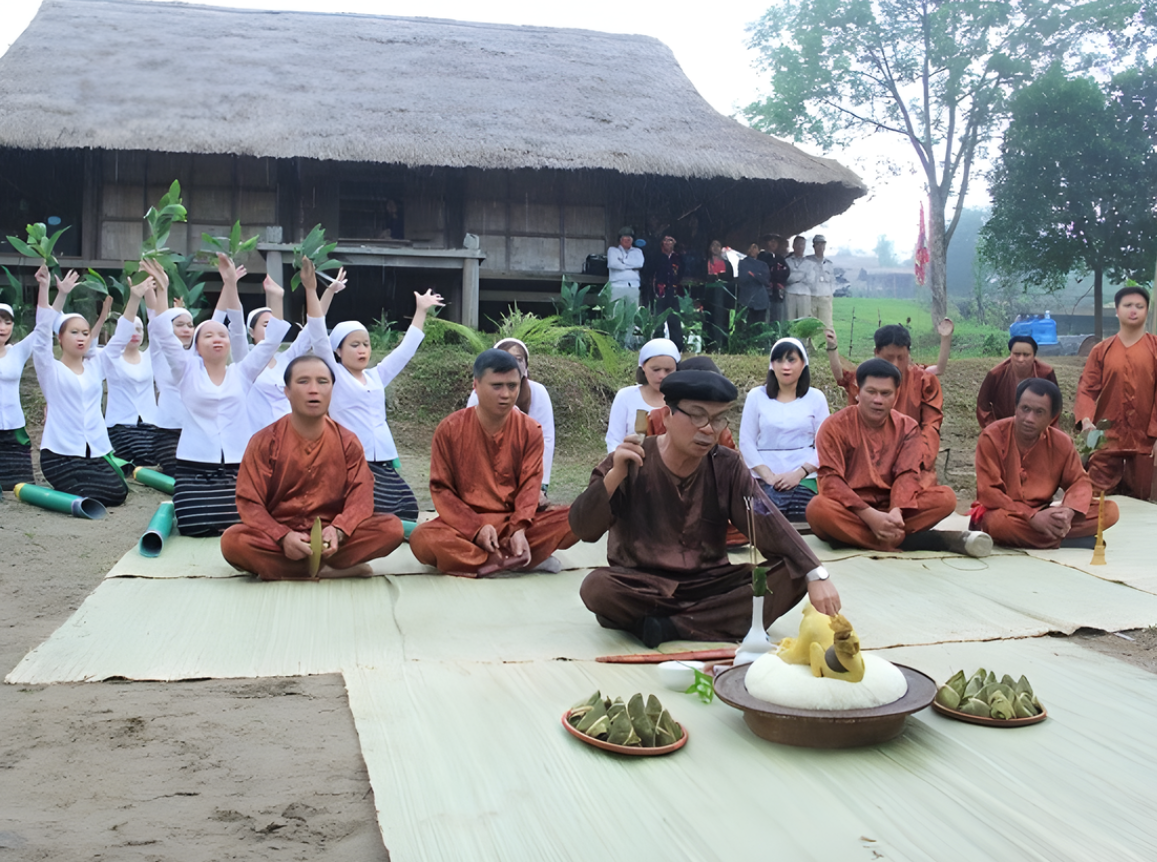
Ancestor worship also plays an important role in spiritual life. Families maintain ancestral altars and perform rituals to honor previous generations. They also worship household and land-related deities such as the Kitchen God and the Earth God.
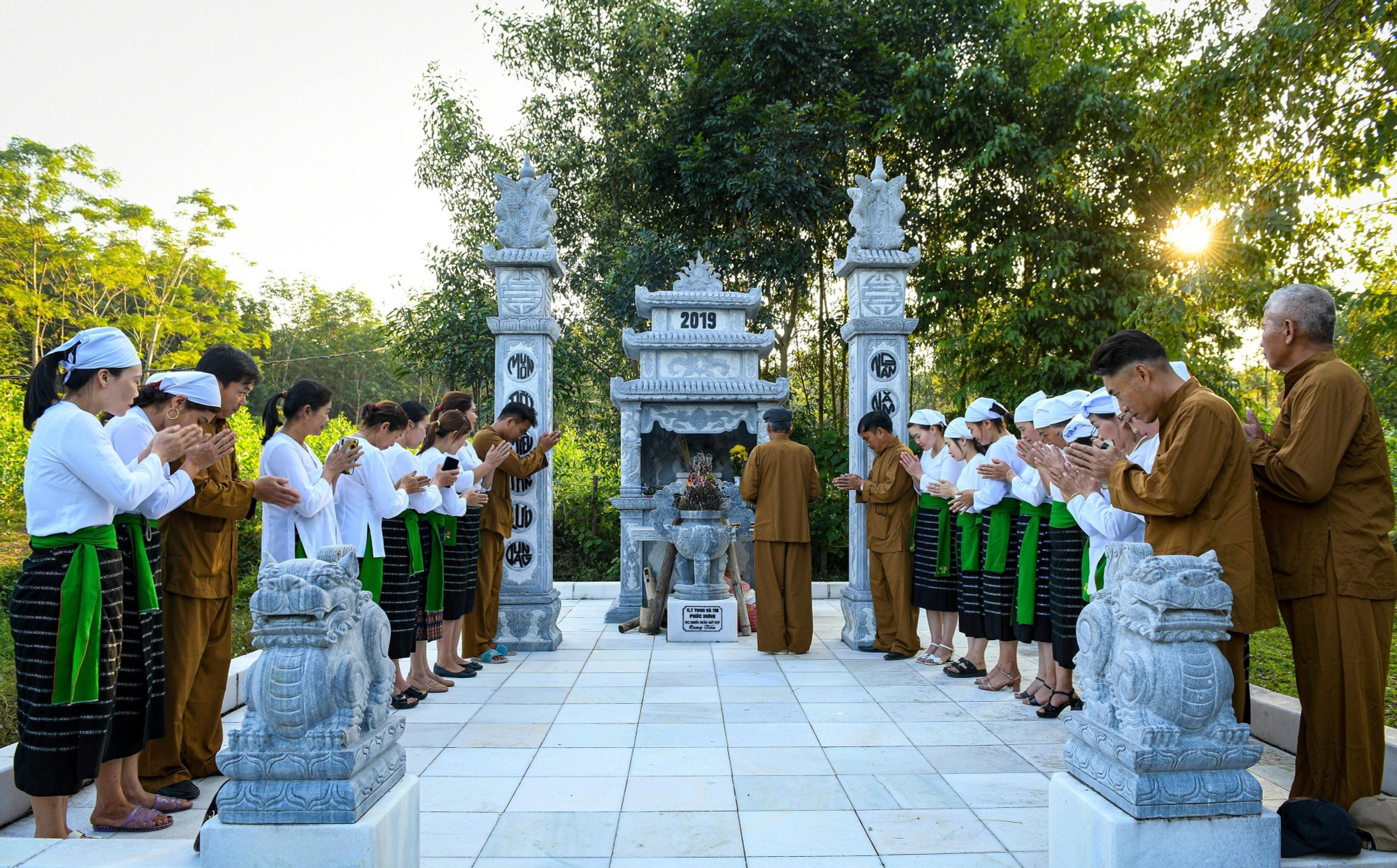
Festivals
Traditional festivals help strengthen community bonds and preserve cultural identity. During major holidays such as the Lunar New Year, families gather to perform rituals, prepare traditional foods, and visit relatives.

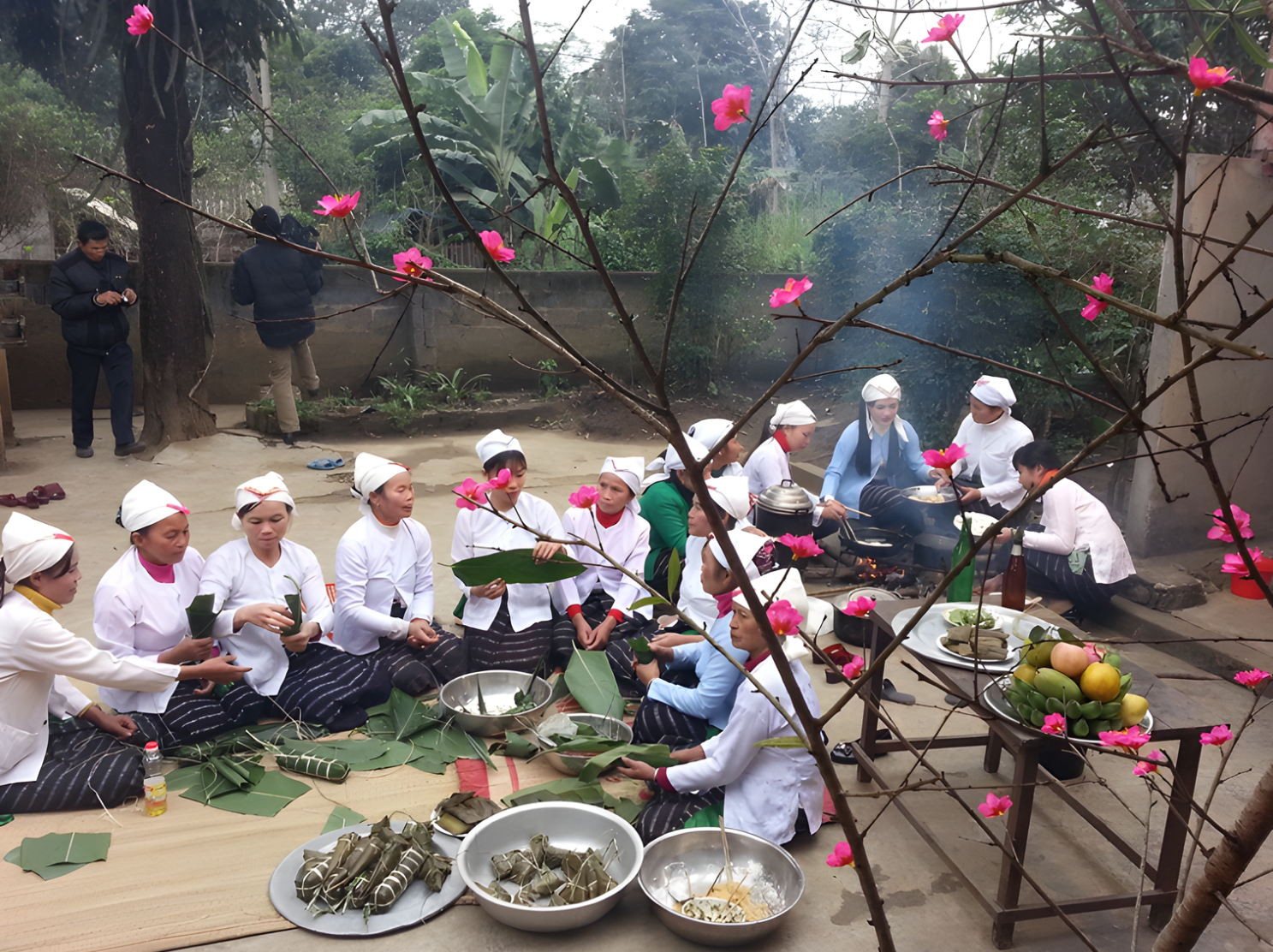
Festivals also include music, games, and social activities. A unique custom is the tradition of “sleeping on the roof,” where young men and women meet and talk during festival nights while following strict community rules.

Costumes
Traditional clothing reflects the cultural identity of the Tho people. Men wear wide brown trousers with simple dark shirts, often paired with scarves and wooden clogs.

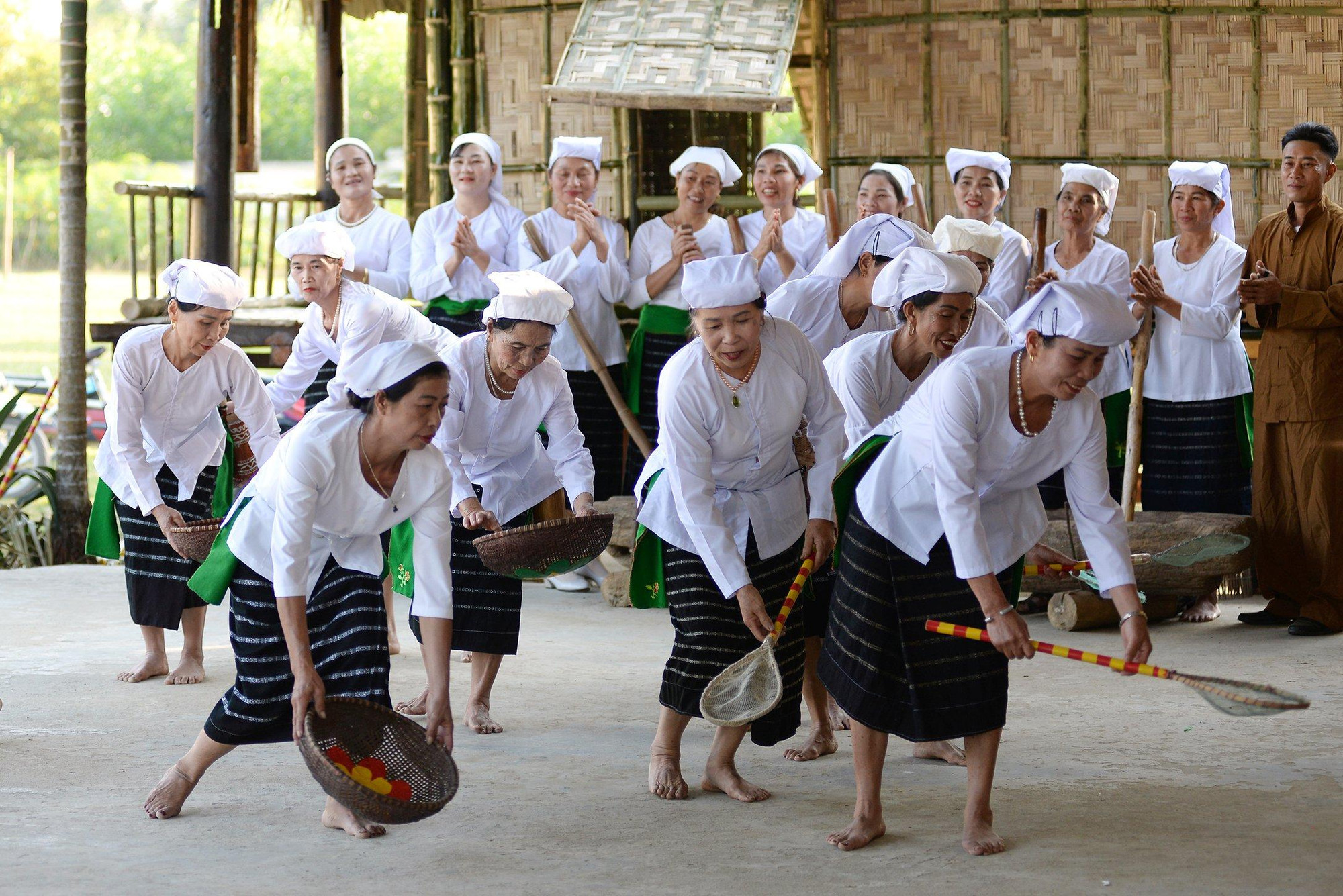
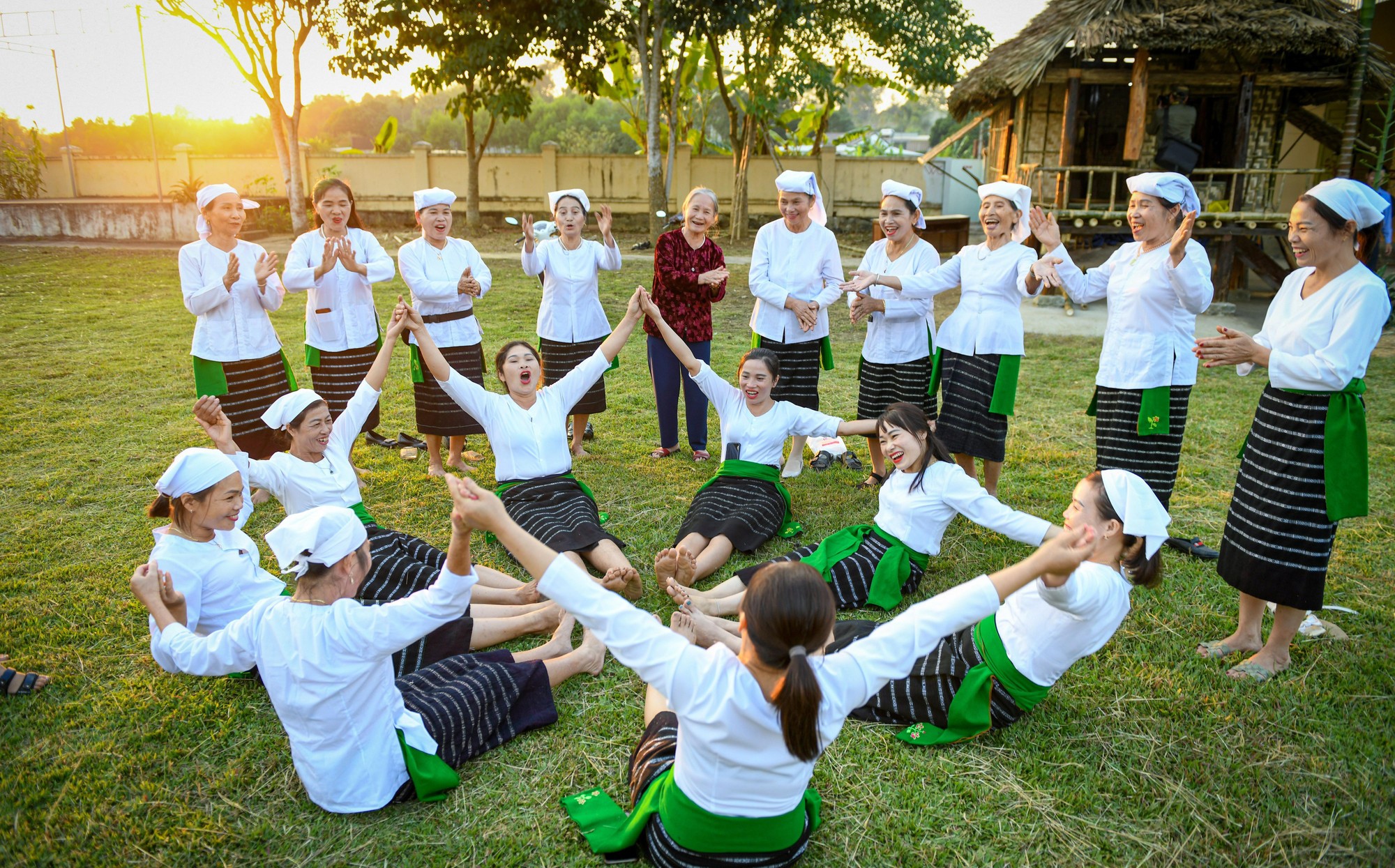
Women wear white shirts with indigo cotton skirts decorated with woven stripes. They also use green belts and white scarves. Today, modern clothing is common, while traditional costumes mainly appear during festivals.

Economic Conditions
Agriculture is the main livelihood of the Tho people. Many households practice swidden farming, while some cultivate wet rice in valley fields. Rice, cassava, and maize are the main crops.
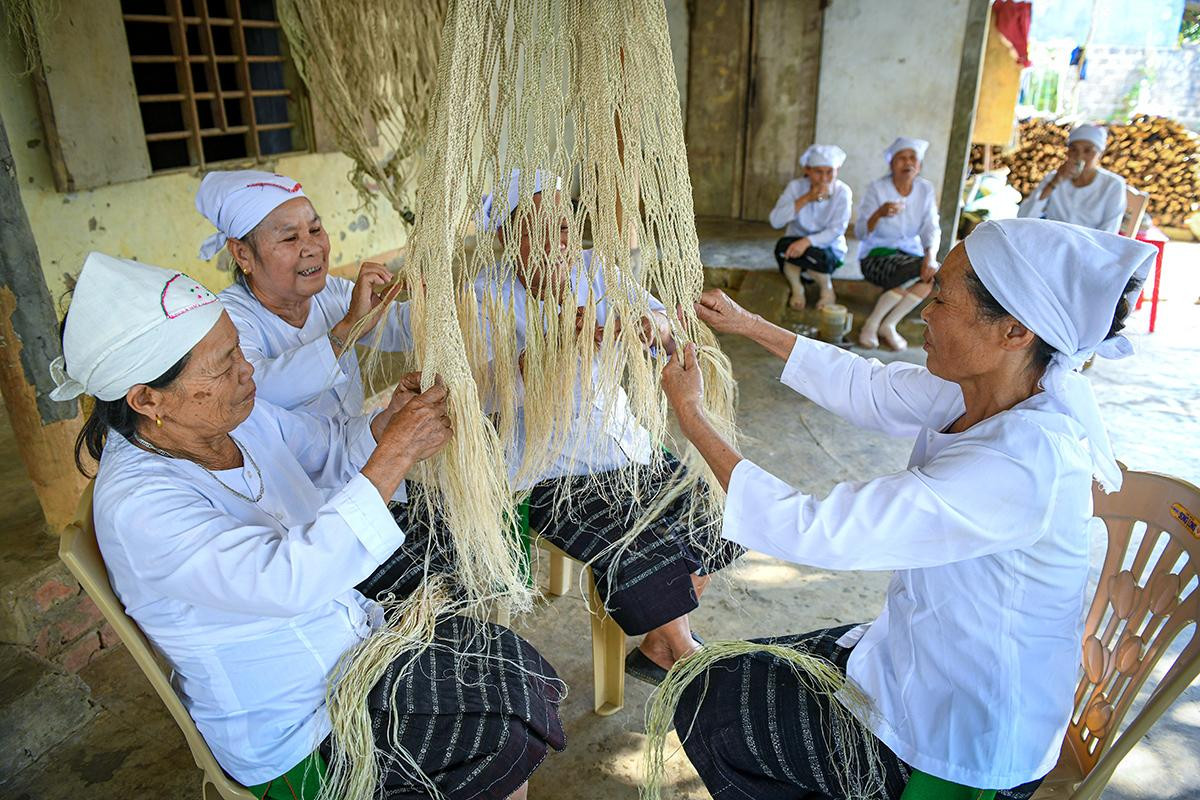
Some communities also maintain traditional crafts such as hammock weaving and making gai cakes. These activities help increase income while preserving cultural traditions.
22. S’tieng Ethnic Group – A Distinct Community Among the Ethnic Groups in Vietnam
History
Although their population is not large compared to many other ethnic groups in Vietnam, the S’tieng people have formed a cohesive community with a strong cultural identity. They are considered an important part of the diverse mosaic of the 54 ethnic groups in Vietnam.
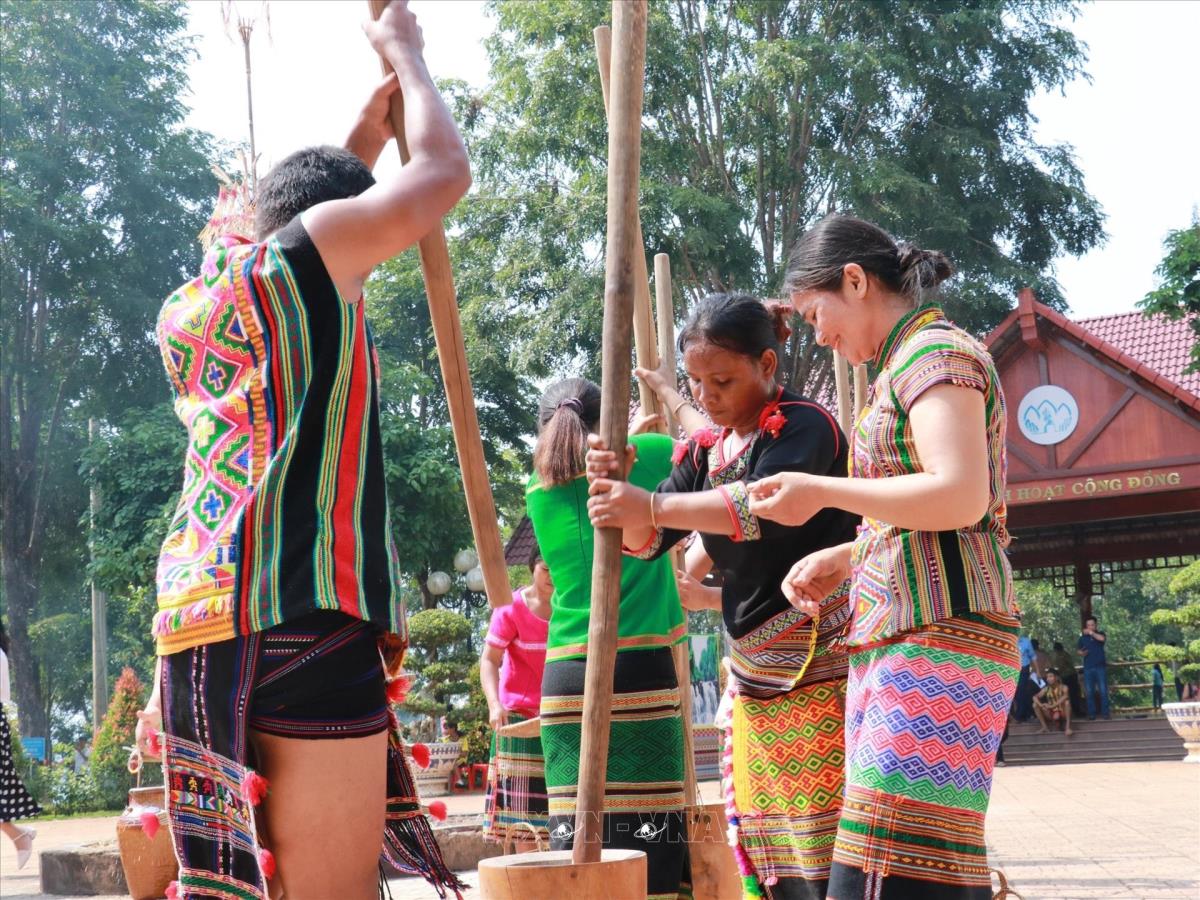
Because the S’tieng people traditionally had no written language, information about their origin mainly comes from folk legends and findings from archaeological and anthropological research. The S’tieng people call themselves Dieng and are also known by other names such as Xa Dieng, Xo Dieng, and Xa Chieng. They have lived for a long time in the Truong Son region, the Central Highlands, and parts of Southeast Vietnam. Within the community, several local groups exist, among which four typical groups are Bu Dip, Bu Dek, Bulac, and Bu Lo.
Language
The S’tieng people speak the S’tieng language, which belongs to the Mon–Khmer branch of the Austroasiatic language family. This linguistic group also includes several other languages spoken by ethnic communities in Vietnam and Southeast Asia.
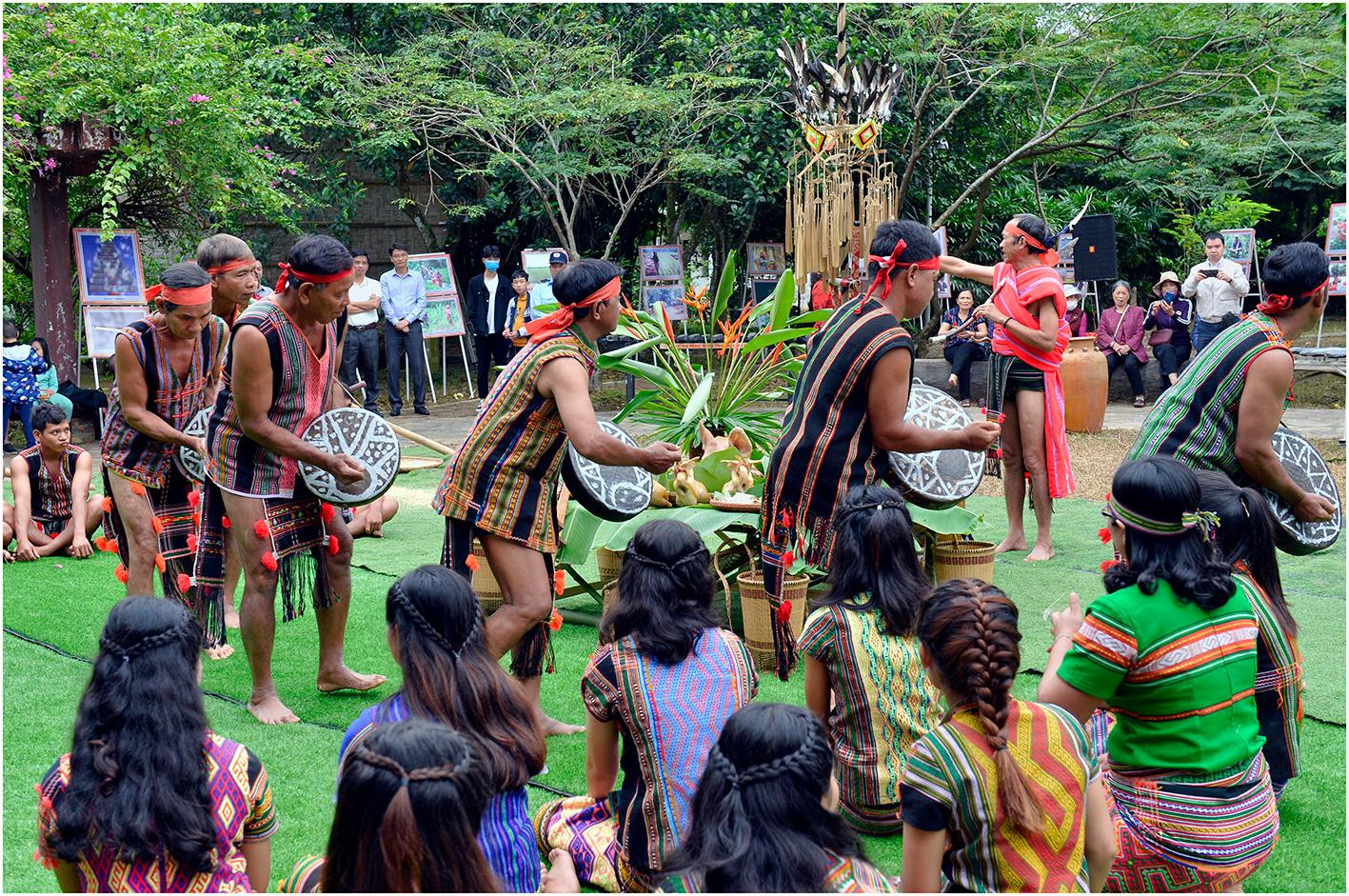
Today, many S’tieng people also use Vietnamese in education and daily communication. This bilingual ability helps them interact with other communities and integrate into the wider society.
Geographic Distribution
The S’tieng people mainly live in Binh Phuoc Province, where their population is most concentrated. Smaller communities can also be found in some neighboring provinces in the Southeast region of Vietnam.

Their villages are usually located in rural and forested areas. According to census data from 2019, the majority of the S’tieng population still lives in rural areas.
Religion And Beliefs
Traditional beliefs of the S’tieng people are based on polytheism and animism. They believe that all things in nature have spirits and spiritual power.

Because of this belief, they worship many natural deities such as the gods of thunder, the sky, the earth, the sun, the moon, mountains, and rivers. Rituals and ceremonies are important ways for the community to communicate with these spirits and seek protection or blessings.
Festivals
Festivals play an important role in the cultural life of the S’tieng community. Many ceremonies are organized throughout the year to honor deities and celebrate agricultural cycles.
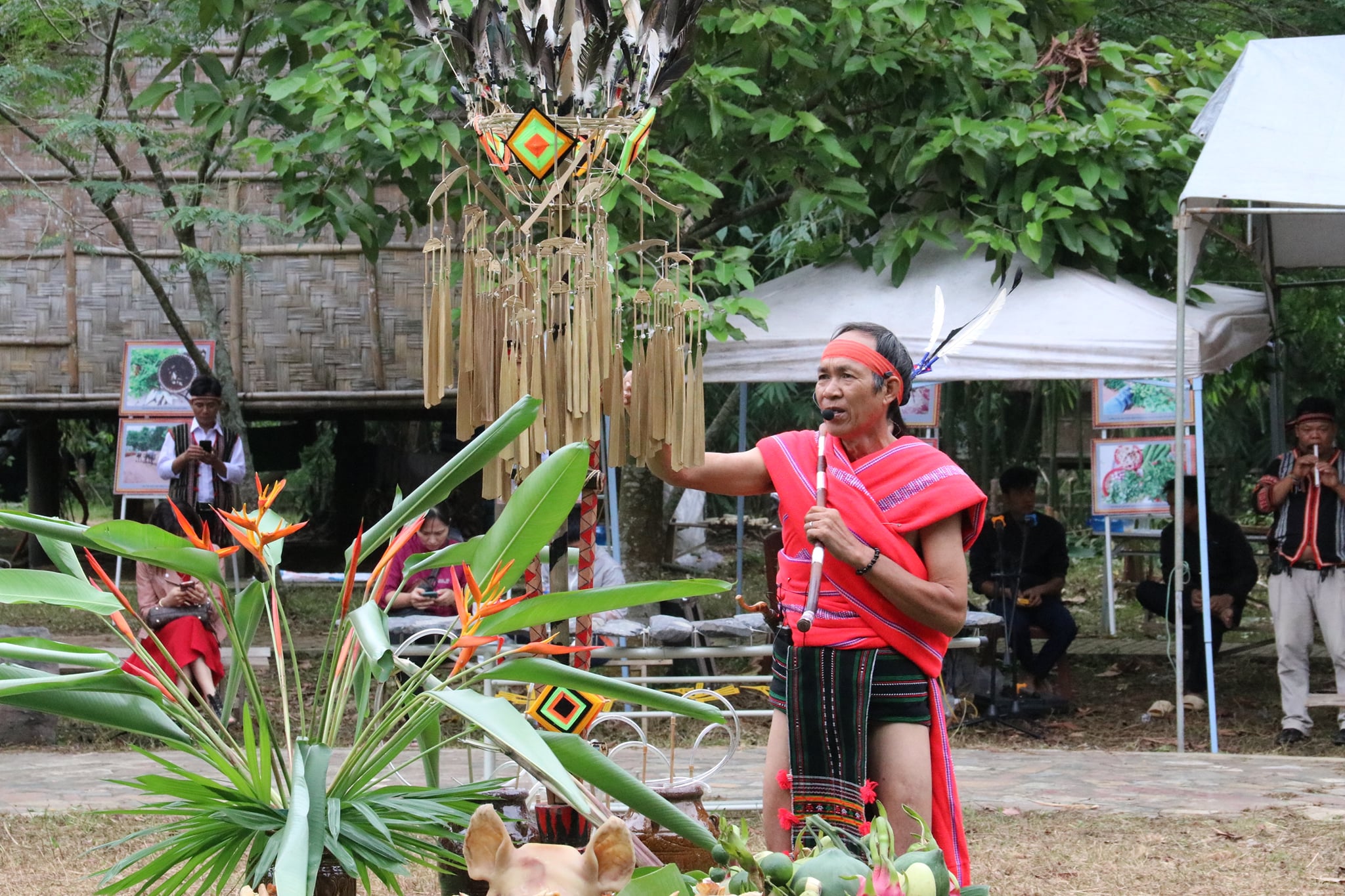
One of the most important rituals is the buffalo stabbing festival, which is considered the largest traditional ceremony. The S’tieng New Year celebration is known as the straw offering ceremony, held after the upland rice harvest. This ritual expresses gratitude to the rice god and hopes for a successful harvest in the next farming season.

Costumes
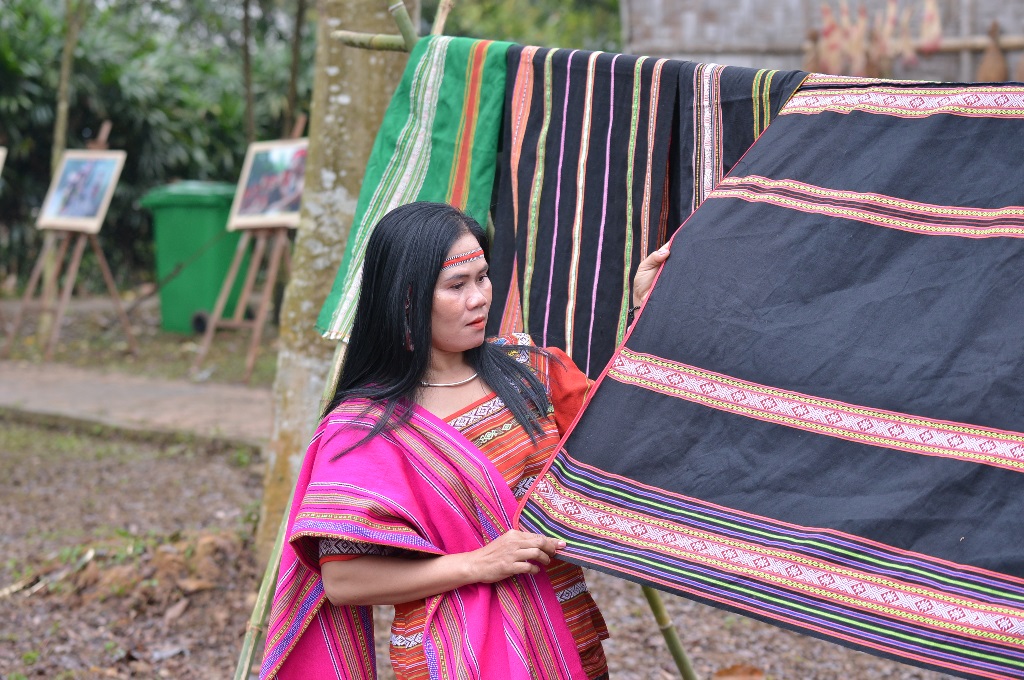
Traditional S’tieng clothing reflects their cultural identity. In the past, men often wore loincloths and remained bare-backed, while women wore shirts and skirts made from woven fabrics.
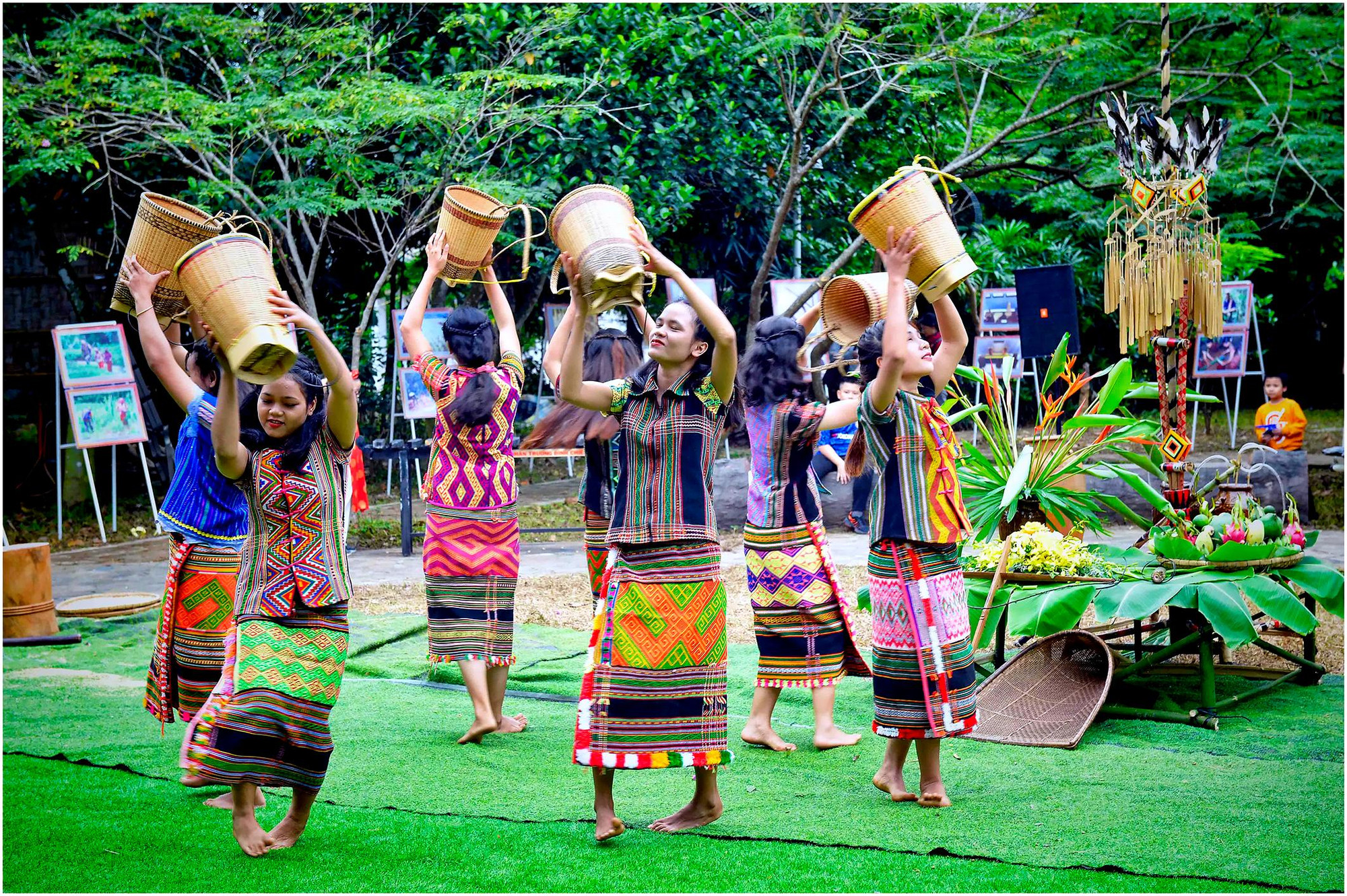
Both men and women liked to wear jewelry, especially bracelets and large earrings made from ivory or metal. Today, many S’tieng men dress similarly to Vietnamese men, while women often wear modern blouses and shirts in daily life.
Economic Conditions
Agriculture remains the main livelihood of the S’tieng people. Some groups practice upland farming, while others cultivate rice fields in lower areas. Traditional farming tools are simple and mainly include axes, knives, and bamboo rakes.
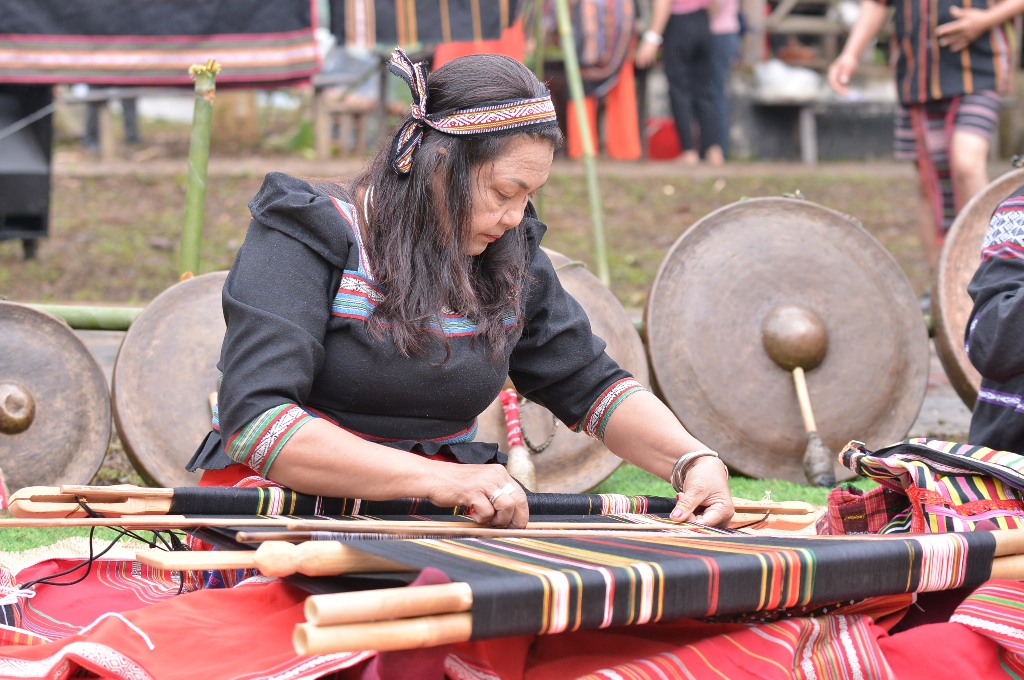
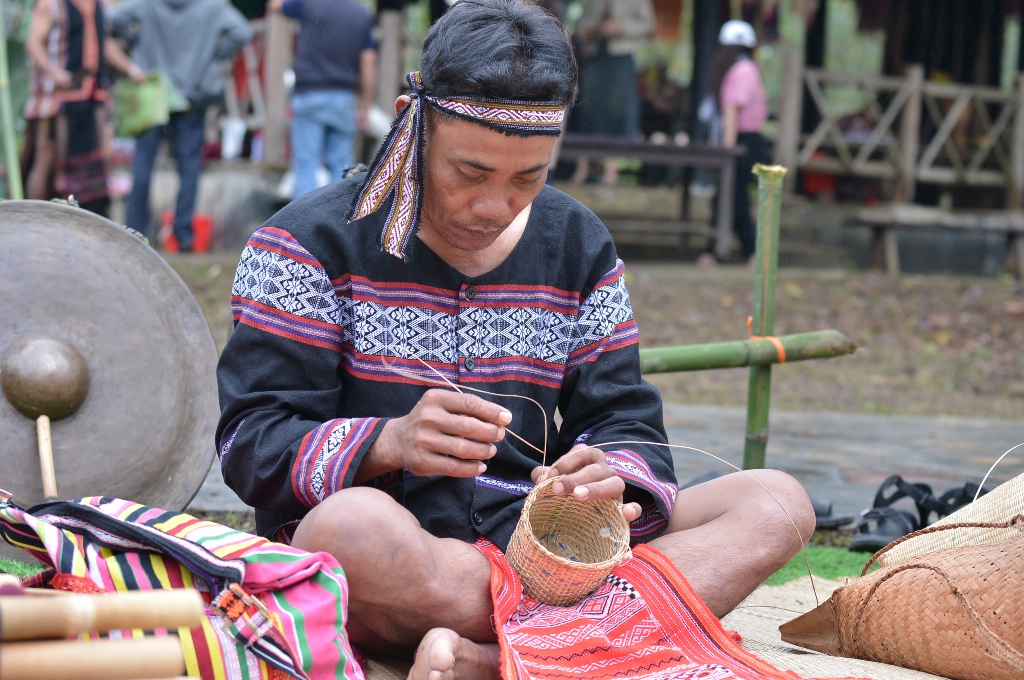
In addition to farming, the S’tieng people also engage in hunting, gathering, livestock raising, weaving, and handicrafts. They often trade goods with neighboring communities such as the Kinh, Khmer, Mnong, Ma, and even people across the border in Cambodia.
23. Kho Mu Ethnic Group – Culture and Traditions in Northwest Vietnam
History
The Kho Mu people are one of the long-established communities living in the mountainous areas of mainland Southeast Asia. Many researchers believe that they originally lived on the Indochinese Peninsula, especially in northern Laos. Historical sources mention that they once formed a kingdom called Swa or Lawa near present-day Luang Prabang.

Later migrations of other groups into the region gradually pushed Kho Mu communities toward Thailand and the northwestern mountains of Vietnam. Some folk stories of the Kho Mu and Thai people also describe the origin of humans from gourds, reflecting traditional beliefs about the beginning of mankind.

The name Kmu or Kum Mu means “people” or “community.” The group is also known by several other names such as Xa Cau, Kha Kluu, Mang Cau, Tay Hay, Mon Xen, Pu Thanh, and Tenh.
Language
The Kho Mu language belongs to the Mon–Khmer branch of the Austroasiatic language family. This language group includes several other languages spoken by ethnic communities in Vietnam and neighboring countries.
Many Kho Mu people can also read and write Thai, especially in areas where they have long interacted with Thai communities. Vietnamese is increasingly used in education and daily communication.
Geographic Distribution
The Kho Mu people mainly live in provinces along the Vietnam–Laos border, especially in Nghe An, Thanh Hoa, Son La, Lai Chau, and Dien Bien.

Their villages are usually located on foothills, terraces, or near rivers and streams. These locations provide access to water and make travel and farming more convenient. In many villages, households living close to each other are often relatives.
Religion And Beliefs
Traditional beliefs of the Kho Mu people are closely connected to animism. They believe that spirits exist in both the natural world and daily life.
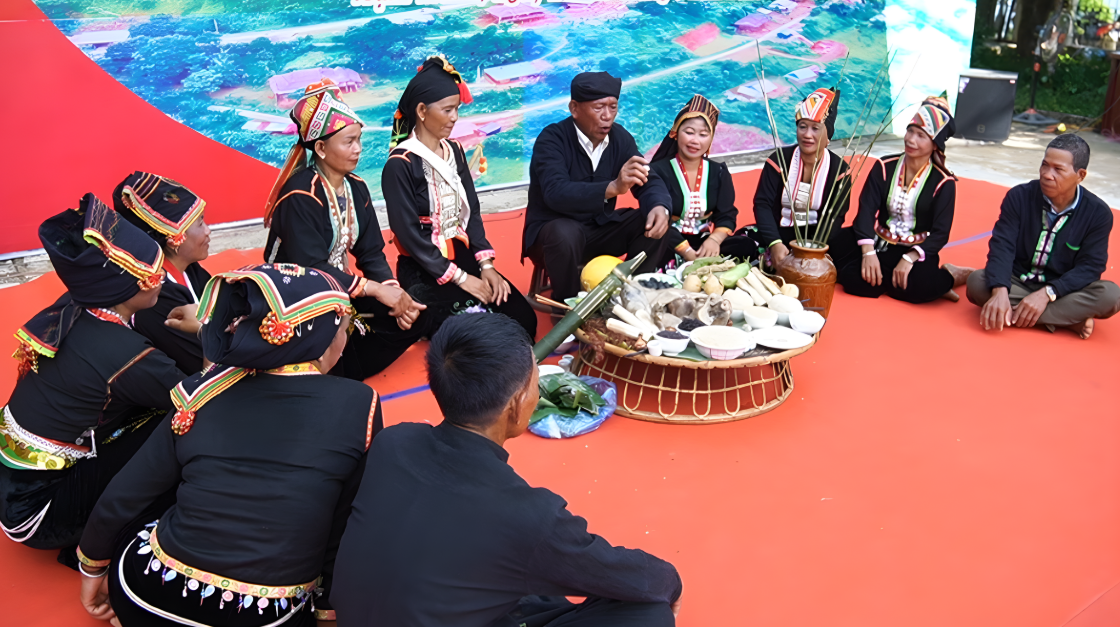
Among these spirits, five types are considered especially important: the heaven ghost, the earth ghost, the ancestral ghost, the house ghost, and the thuong luong ghost. Families maintain separate spaces for worship, including ancestral altars and altars dedicated to household spirits. These rituals are believed to bring protection, health, and good fortune to the family and the community.
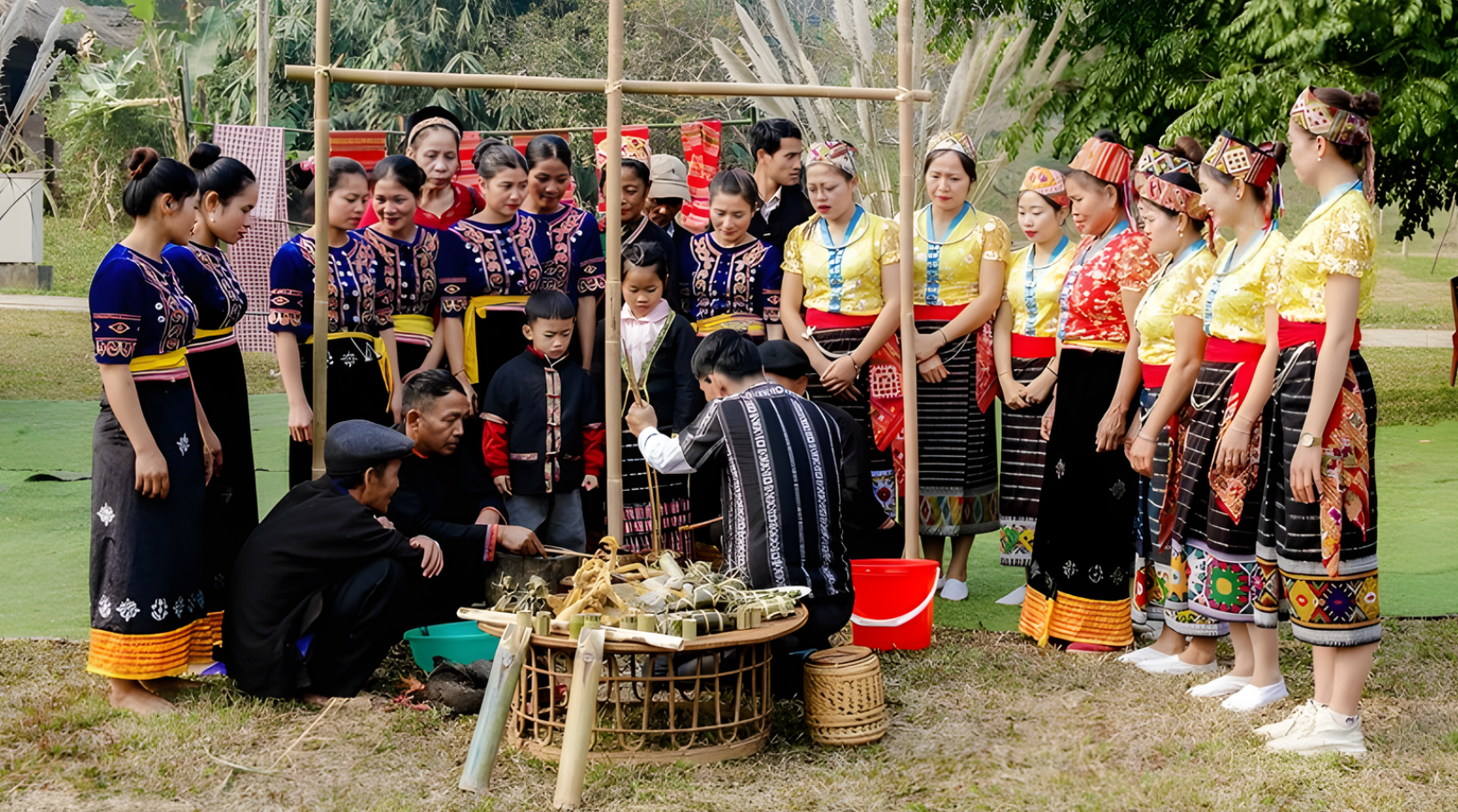
Festivals
Festivals play an important role in the cultural life of the Kho Mu community. In addition to celebrating the Lunar New Year, they also organize the new rice festival after the harvest season, usually in the tenth lunar month.
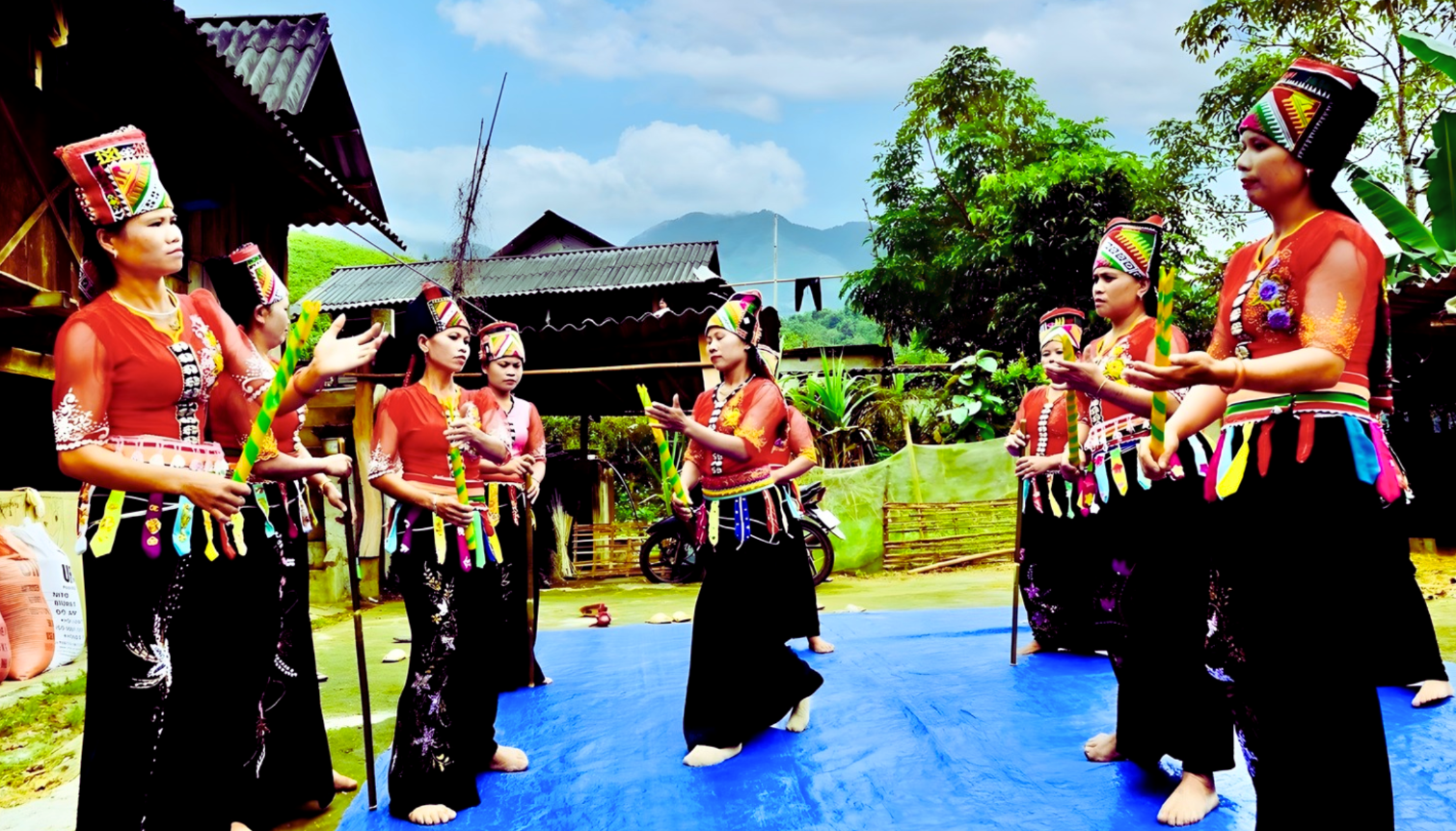
Another well-known celebration is the Go Ro festival, which takes place toward the end of the year in some communities. These events often include traditional music, dance, and communal gatherings that strengthen village unity.

Costumes
Traditional clothing of the Kho Mu people is similar to that of the Thai people in the same region. However, women’s clothing is often decorated with rows of coins and shells on the bodice, which create a distinctive cultural detail.
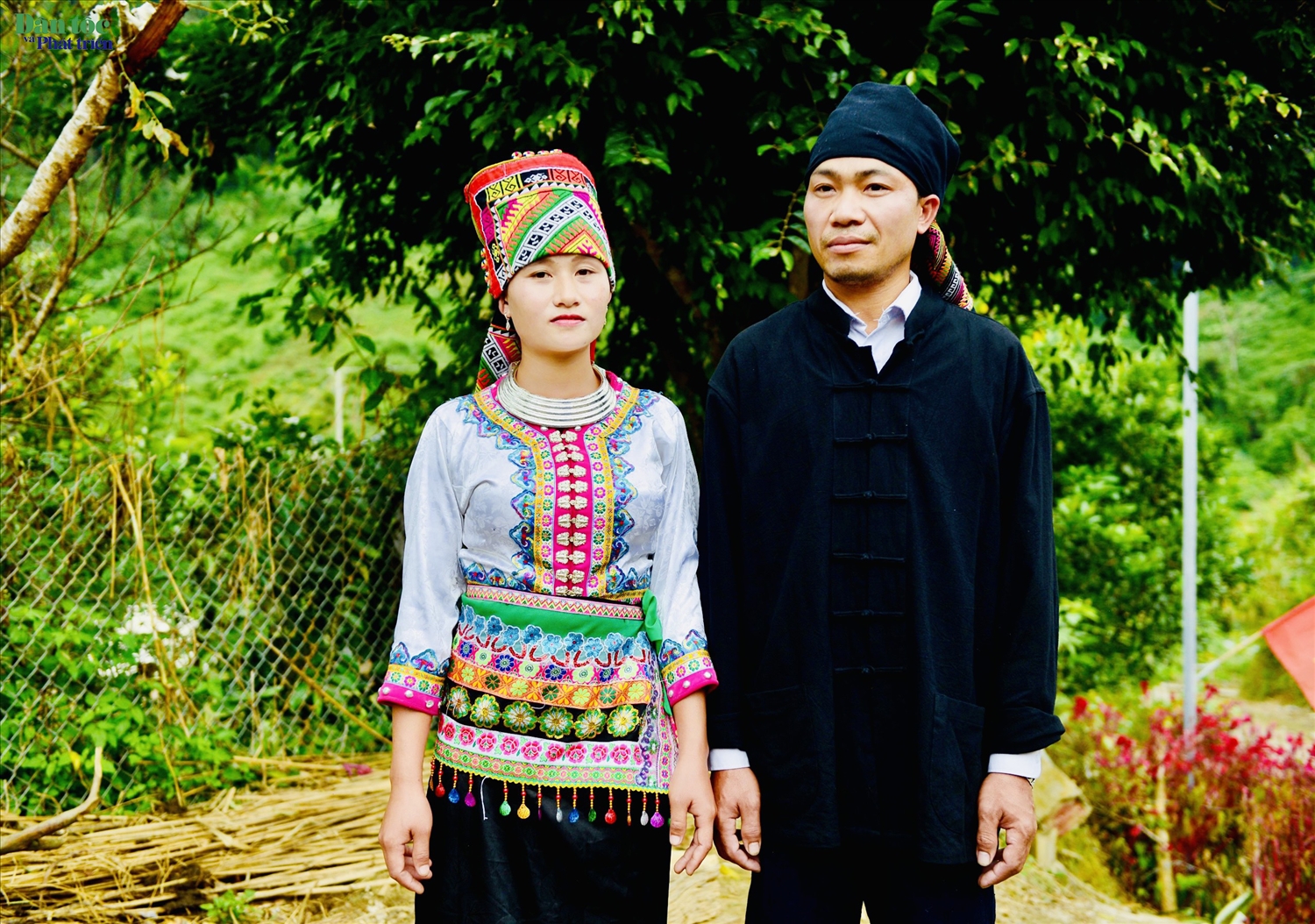
Today, modern clothing has become common in daily life. Traditional costumes are mainly worn during festivals and cultural events.
Economic Conditions
Agriculture is the main livelihood of the Kho Mu people. In the past, many communities practiced shifting cultivation, but today most households have moved toward more settled farming.

Rice and maize are the main crops, along with gourds, beans, and other vegetables. Some families also engage in handicrafts such as weaving, blacksmithing, carpentry, and basket making.
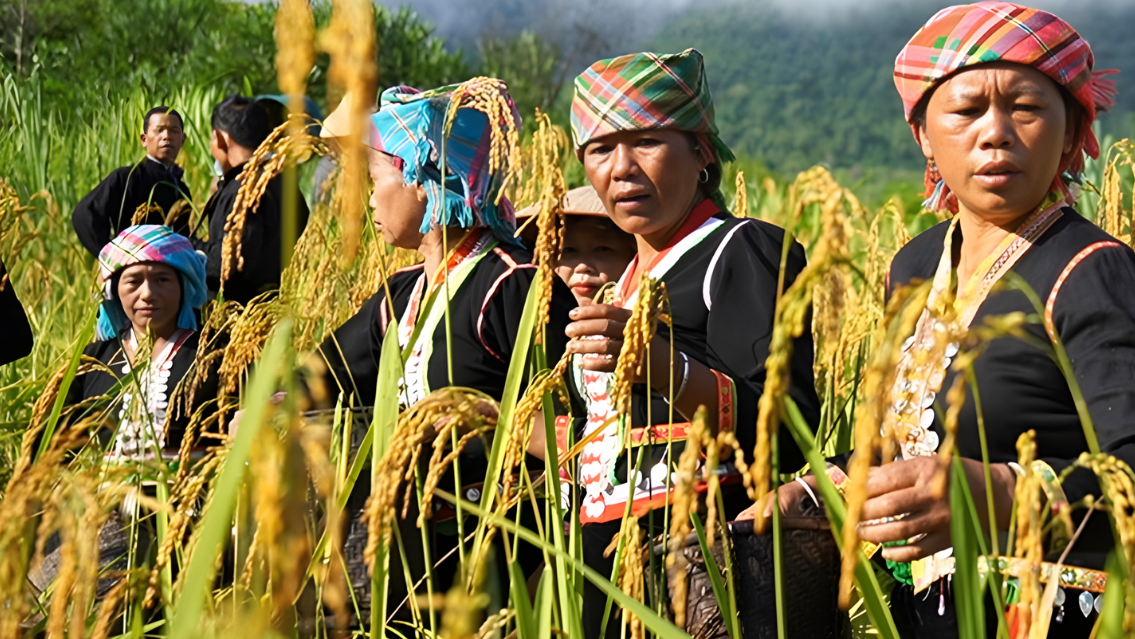
With improved farming methods and crop diversification, many Kho Mu households have gradually improved their living conditions and achieved more stable economic lives.
24. Bru-Van Kieu Ethnic Group – Life and Traditions in the Truong Son Mountains
History
The Bru–Van Kieu people are considered one of the long-standing indigenous communities of central Indochina. Most researchers believe they have lived in the region for a very long time before gradually migrating to different areas due to historical changes. Many groups eventually moved eastward and settled in the western mountainous areas of Quang Tri Province in central Vietnam. Today, the Bru–Van Kieu community is divided into several local groups, including Bru, Van Kieu, Mang Cong, Tri, and Khua.

Having lived for generations in the vast Truong Son Mountain Range, the Bru–Van Kieu people have developed a distinctive spiritual life closely connected to nature and their ancestral traditions. One unique cultural feature is that many Van Kieu people in the North Central region have adopted the surname Ho to honor President Ho Chi Minh, reflecting their deep respect and admiration for him.

Language
The Bru–Van Kieu people speak the Bru language, which belongs to the Mon–Khmer branch of the Austroasiatic language family.
This language is closely related to the languages of neighboring ethnic groups such as Ta Oi and Co Tu, showing the long history of cultural interaction among communities living along the Truong Son mountains.
Today, many Bru–Van Kieu people also speak Vietnamese, especially younger generations who attend school and interact more frequently with other communities.
Geographic Distribution
The Bru–Van Kieu people live in many areas across Vietnam, but their population is mainly concentrated in Quang Tri, Quang Binh, and Thua Thien Hue provinces.

Most villages are located in mountainous or forested areas along the Truong Son range. These locations provide natural resources such as forests, streams, and farmland for their traditional livelihood. A smaller number of Bru–Van Kieu families also live in Dak Lak Province. Many of them were relocated there during historical events in 1972.
Religion And Beliefs
Traditional beliefs of the Bru–Van Kieu people are based on animism, the idea that spirits exist in all elements of nature. They worship many deities, including the rice god, kitchen god, mountain god, land god, and river god. Among these, the rice god holds a particularly important place because rice cultivation is central to their livelihood.
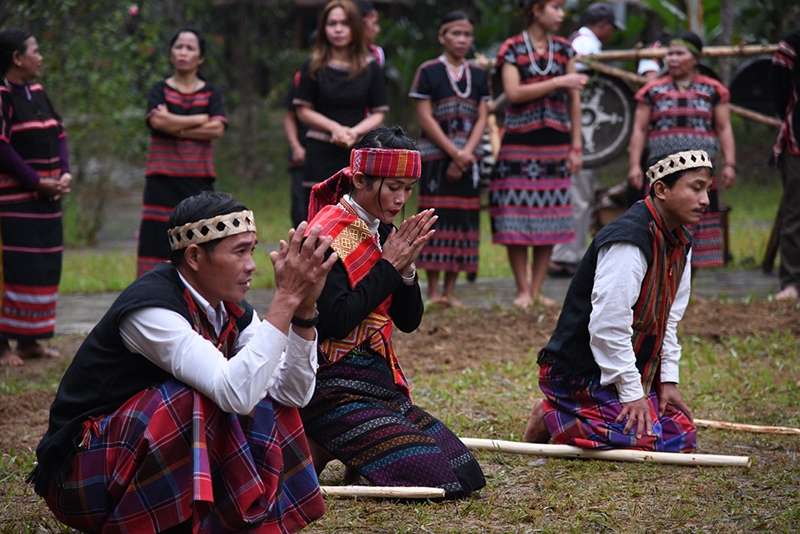
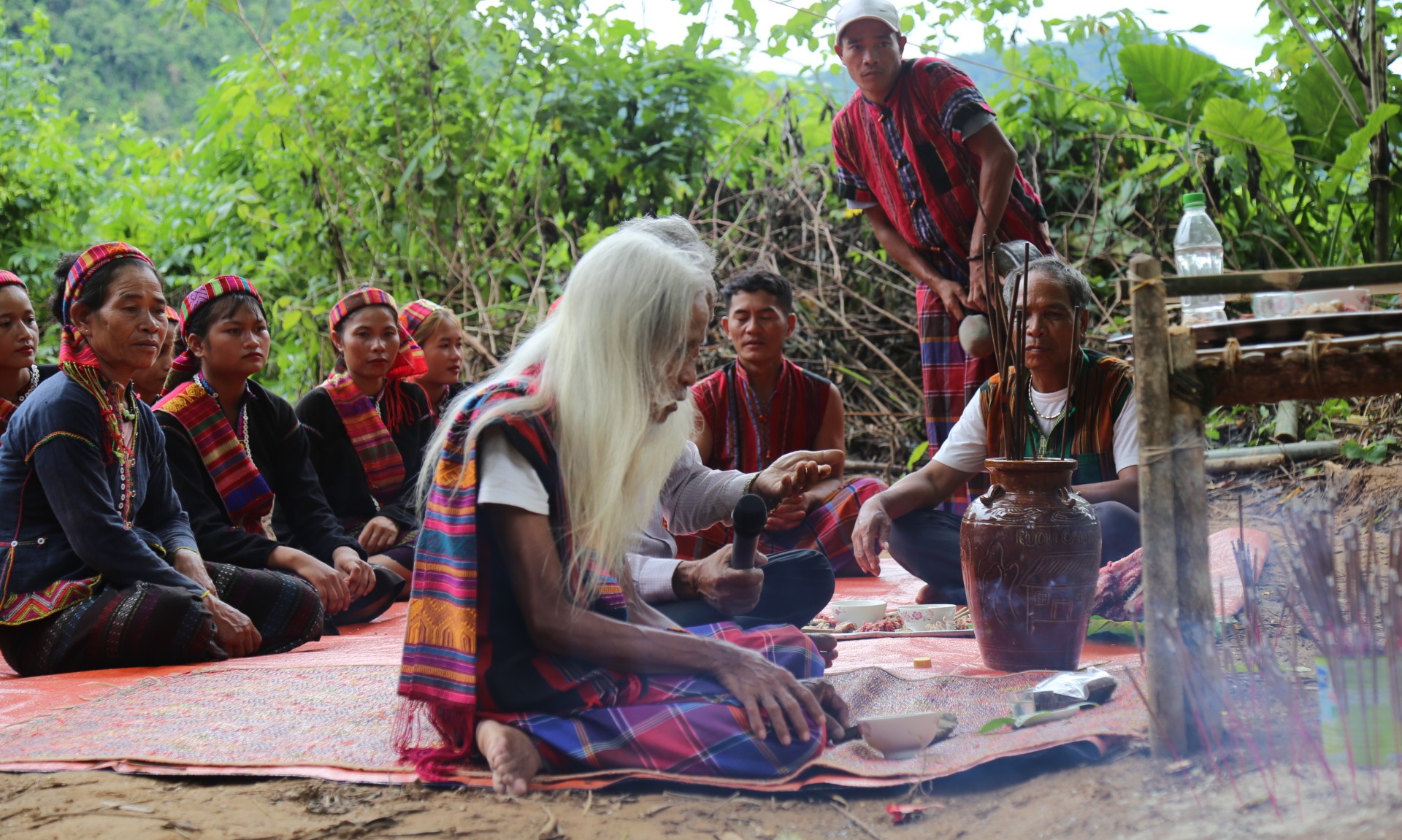
Ancestor worship is also an essential part of their spiritual life. Families often perform rituals to ask for protection, favorable weather, and good harvests.
Festivals
The Bru–Van Kieu people celebrate many rituals related to agricultural activities, especially upland rice cultivation. Important ceremonies are held during key stages of farming such as planting, tending, and harvesting rice. One of the most significant events is the pre-harvest ceremony, which often becomes a large community festival for the entire village.
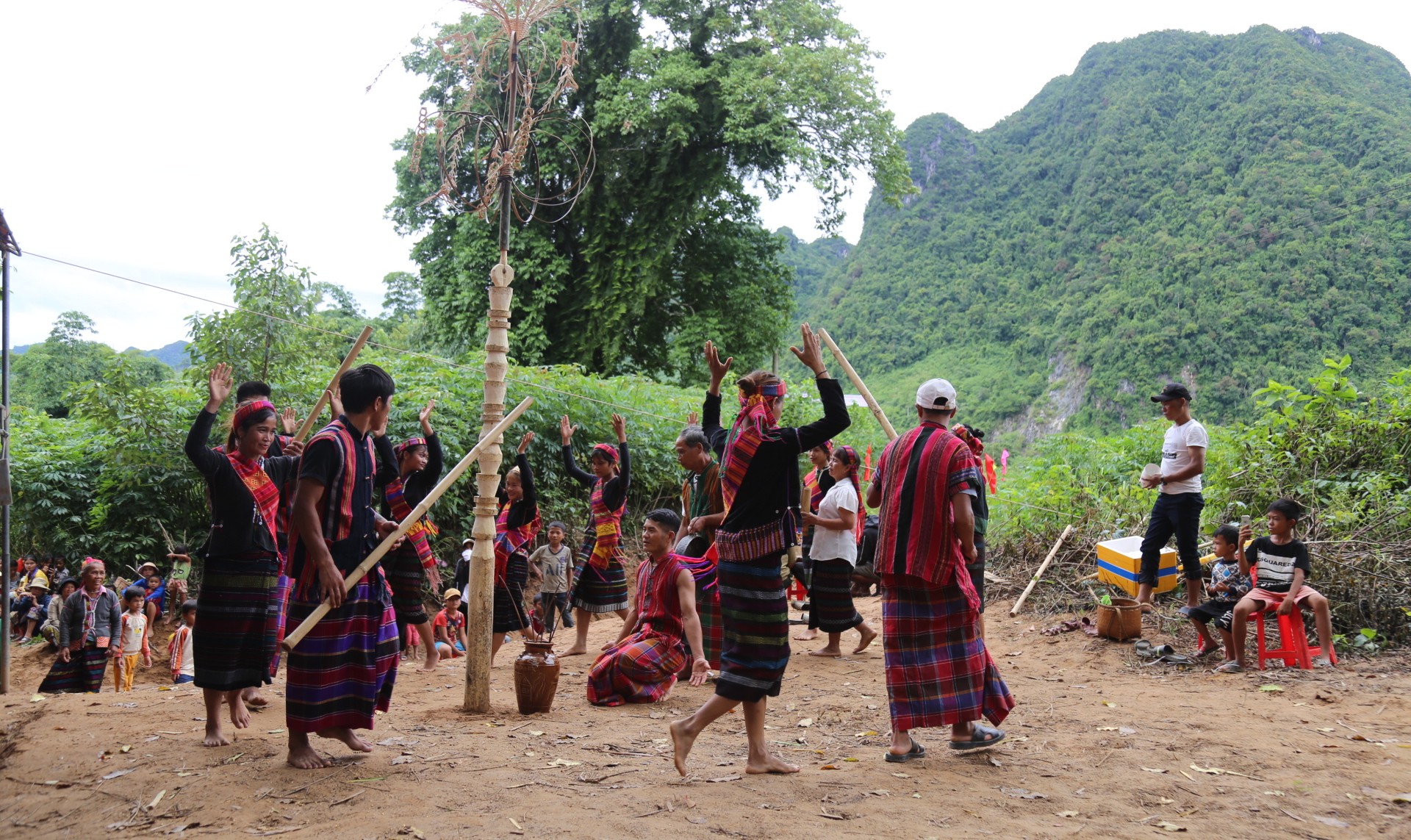
In addition to agricultural festivals, individuals also participate in life-cycle rituals such as ceremonies for birth, illness, marriage, and funerals.
Costumes
Traditional clothing of the Bru–Van Kieu people reflects their simple lifestyle in the mountainous regions. Men traditionally wear loincloths and often use headscarves. Women wear sleeveless tops with round or square necklines and wrap skirts made from a single piece of fabric tied with a cloth belt.
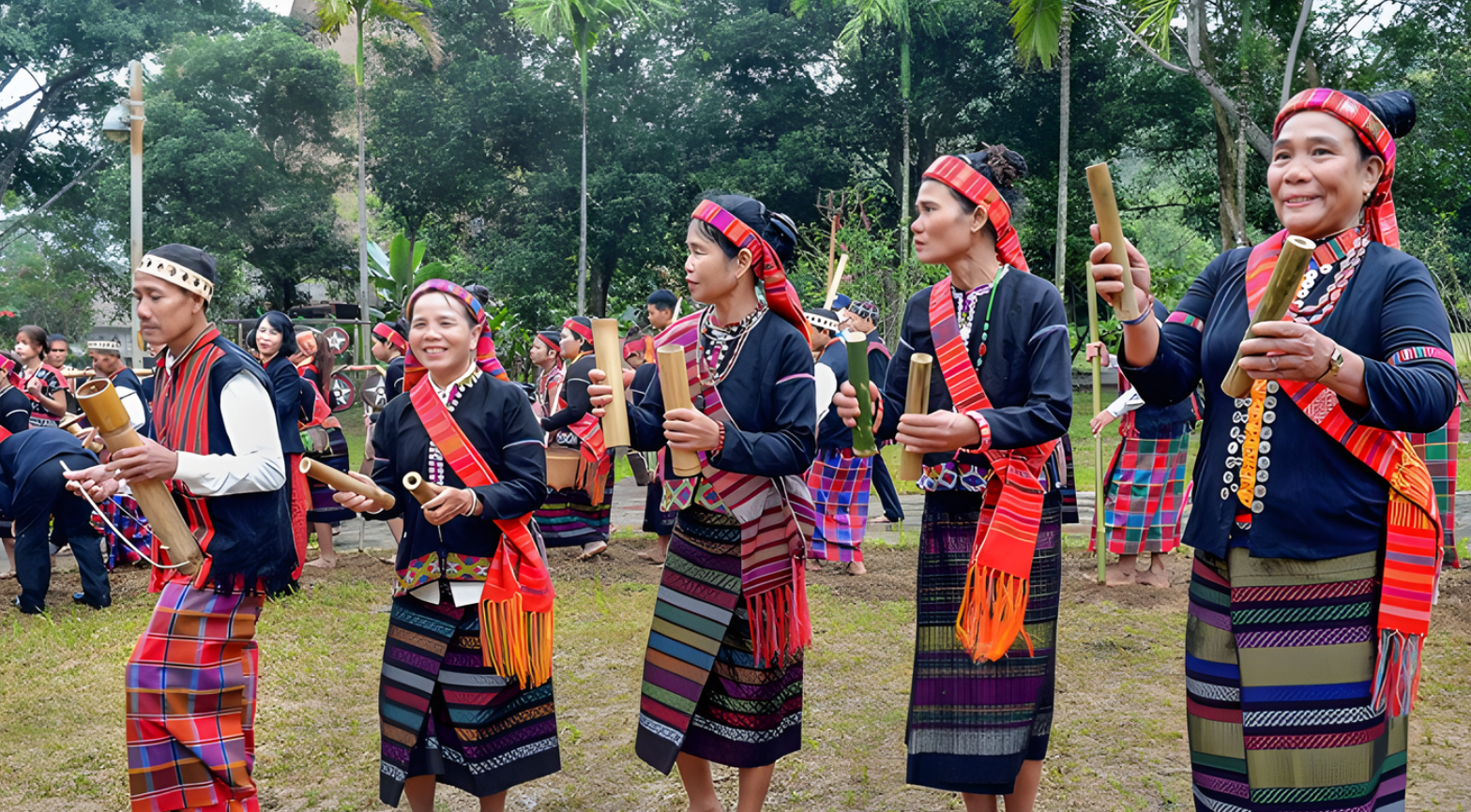
Both men and women commonly wear their hair in a bun, which is a distinctive cultural feature. Today, modern clothing is widely used in everyday life, while traditional costumes mainly appear during festivals and cultural events.
Economic Conditions
For generations, the Bru–Van Kieu people have relied primarily on agriculture, especially upland rice cultivation. Traditional farming methods included clearing forest land, sowing seeds by hand, and harvesting rice manually. In addition to farming, families often raise livestock such as buffaloes, cows, pigs, and chickens.

Handicrafts are not widely developed, and many communities traditionally exchanged goods with nearby Vietnamese and Lao groups. In recent years, improved infrastructure and government support programs have gradually helped improve local living conditions.
25. Giay Ethnic Group – Cultural Life in Northern Vietnam
History
The Giay people are believed to have originated from southern China. Historical records indicate that they migrated to northern Vietnam around 300 years ago.

Over time, Giay communities gradually settled in the mountainous regions of northern Vietnam, where they developed stable villages and maintained many traditional customs. Despite migration and cultural interaction with other groups, the Giay people have preserved a strong sense of identity and community traditions.
Language
The Giay people speak the Giay language, which belongs to the Tay–Thai language group of the Tai–Kadai language family.
This language shares similarities with several languages spoken by other ethnic groups in northern Vietnam. Today, many Giay people also speak Vietnamese, especially in education and daily communication.
Geographic Distribution
The Giay people mainly live in the northern mountainous provinces of Lao Cai, Ha Giang, Lai Chau, and Yen Bai. Their villages are often located in valleys or near rivers where fertile land supports wet rice cultivation. These areas provide favorable conditions for agriculture and community development.
Religion And Beliefs
Ancestor worship plays a central role in the spiritual life of the Giay people. The ancestral altar is usually placed in the most respected position in the center of the house. On the altar, families commonly place three incense bowls. The largest bowl in the middle is dedicated to the earth god, while the two bowls on each side honor deceased family members.

In addition to ancestor worship, the Giay people also worship forest spirits and village guardians. Some traditional beliefs related to totem worship still exist, where families honor specific animals believed to protect them.
Festivals
Festivals and traditional gatherings are important occasions for community connection and cultural expression among the Giay people. During celebrations such as weddings or village festivals, traditional musical instruments including drums, gongs, and the pi le trumpet are often played. Folk singing and responsive songs performed in the Giay language remain an important part of these events.

Traditional dances such as the lantern dance and fan dance are also performed, reflecting the artistic heritage of the Giay community.

Costumes
Traditional clothing of the Giay people varies slightly between regions. Men traditionally wear long shirts that reach the knees with wide sleeves, paired with loose trousers. They often wear their hair in a bun or wrap it with a scarf.
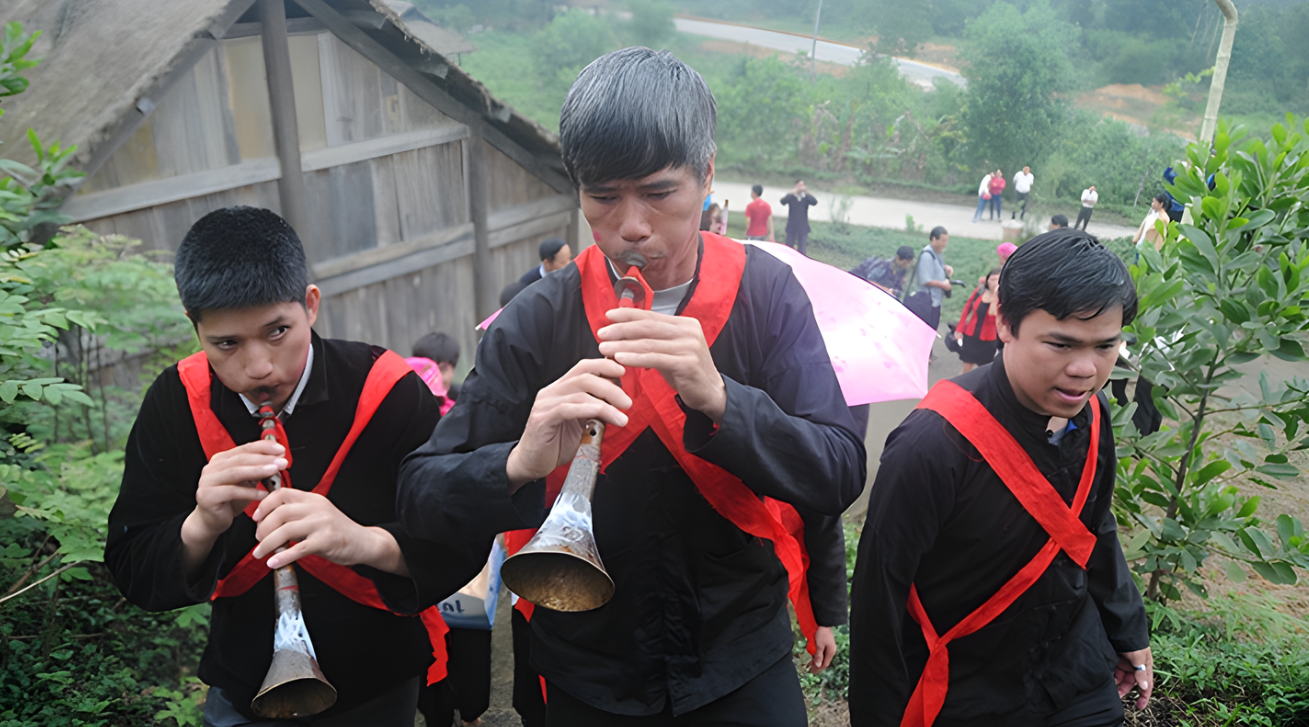
Women’s clothing differs by locality. In Ha Giang, women usually wear knee-length flared skirts with long shirts. In Lao Cai and Lai Chau, women commonly wear black satin trousers with colorful short shirts fastened under the arm. Indigo-dyed headscarves are also a typical accessory. Today, traditional costumes are mainly worn during festivals and cultural celebrations.

Economic Conditions
The Giay people have long experience in wet rice cultivation, which remains the foundation of their economy. In some areas, they also grow industrial crops such as cardamom and tea. Livestock raising is common, including buffaloes, cows, goats, pigs, and poultry, and some families also raise fish such as carp and tilapia. Forestry activities also contribute to local livelihoods.
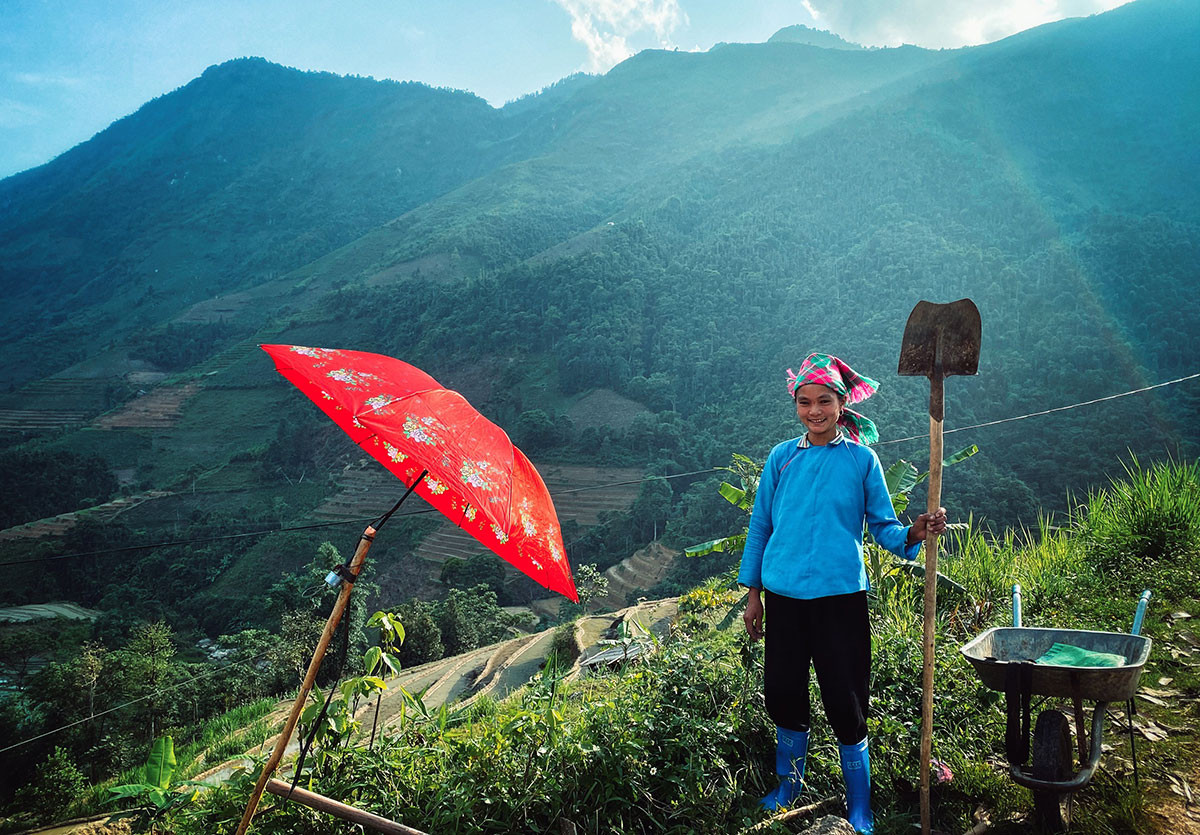
Handicrafts play a supplementary role in the economy. Men often make bamboo and rattan products like baskets and household tools, while silver jewelry making is another traditional craft. Some families also produce tofu, cassava wine, and rice wine as additional sources of income.
26. Co Tu Ethnic Group – Culture and Community Life in the Truong Son Mountains
History
The Co Tu people have lived for generations in the Truong Son – Central Highlands region of Vietnam. Although the exact origin of this ethnic group is still debated, many researchers believe that the Co Tu once belonged to a highly developed cultural community in the region.

Scholars often base this view on the Co Tu’s achievements in architecture, sculpture, and traditional art, which show a rich and sophisticated cultural heritage.
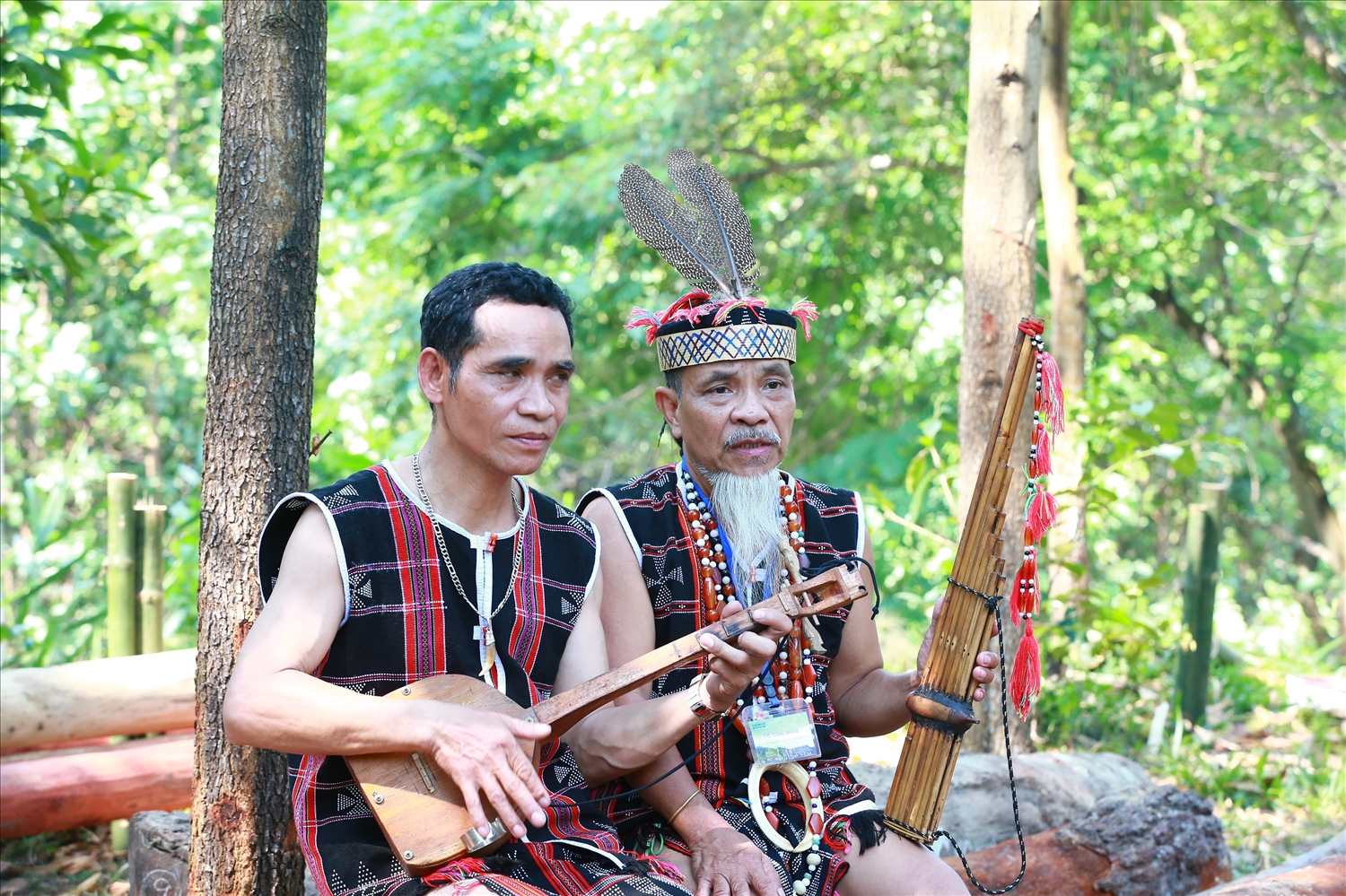
The Co Tu people do not have clearly defined subgroups but are sometimes distinguished according to their residential areas. These include Co Tu Driu (highland communities), Co Tu Cha Lau (central areas), and Co Tu Nal (lowland communities).
Language
The Co Tu language belongs to the Mon–Khmer branch of the Austroasiatic language family, which is widely spoken across mainland Southeast Asia.
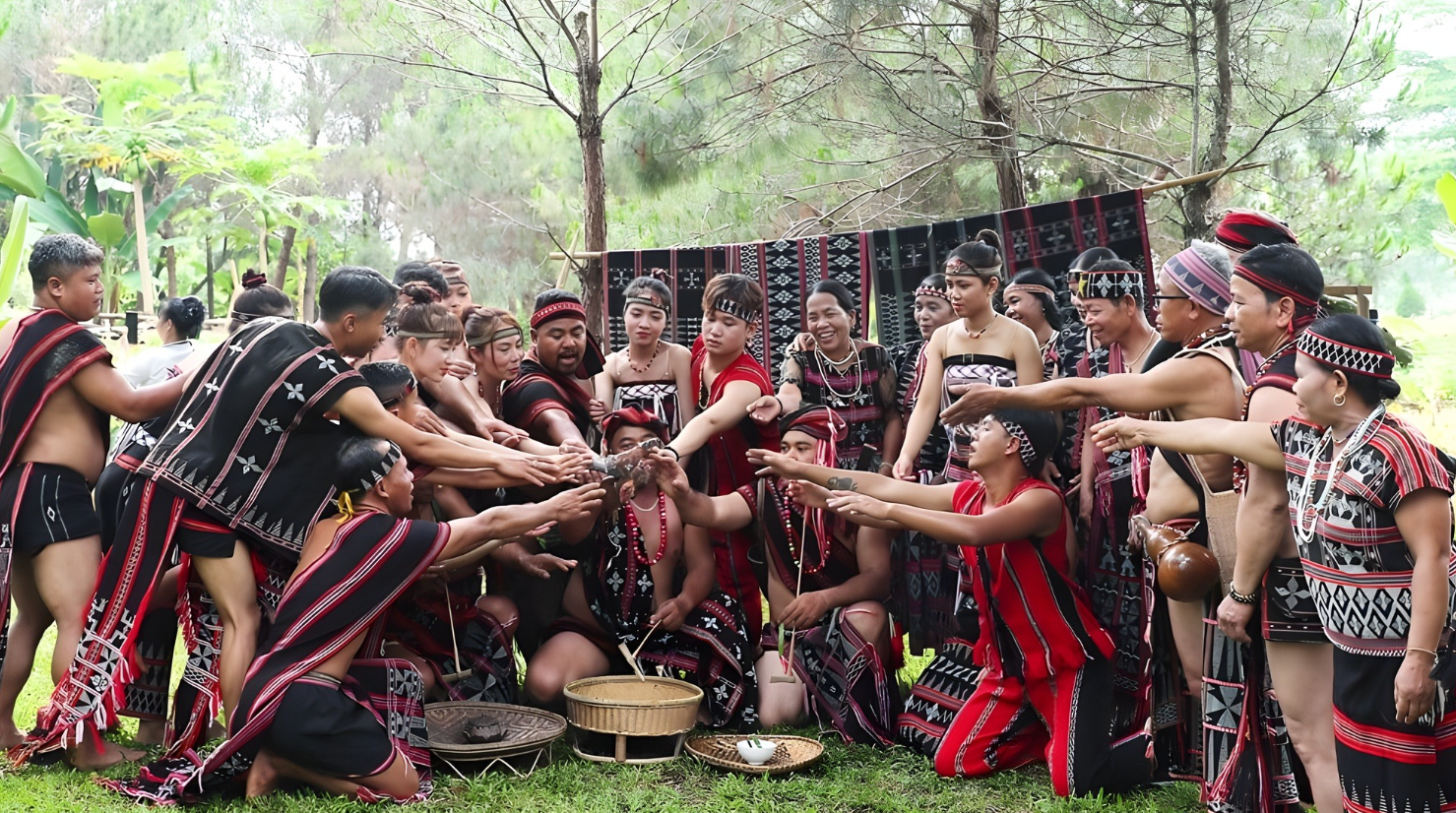
This language is closely related to the languages of nearby ethnic groups such as Ta Oi and Bru–Van Kieu, reflecting long-standing cultural interactions in the Truong Son region.
Before 1975, a Latin-based writing system was developed for the Co Tu language, but today it is rarely used. Vietnamese is increasingly used in education and public life.
Geographic Distribution
The Co Tu people mainly live in the central provinces of Quang Nam and Thua Thien Hue. In Quang Nam Province, they are concentrated in mountainous districts such as Nam Giang, Dong Giang, and Tay Giang. Smaller communities also live in Nam Dong and A Luoi districts of Thua Thien Hue Province.

Their villages are often located near forests and rivers in mountainous areas, which provide natural resources for farming and daily life.
Religion And Beliefs
Like many ethnic groups in the Central Highlands, the Co Tu people believe in animism, the idea that all natural elements contain spiritual forces.
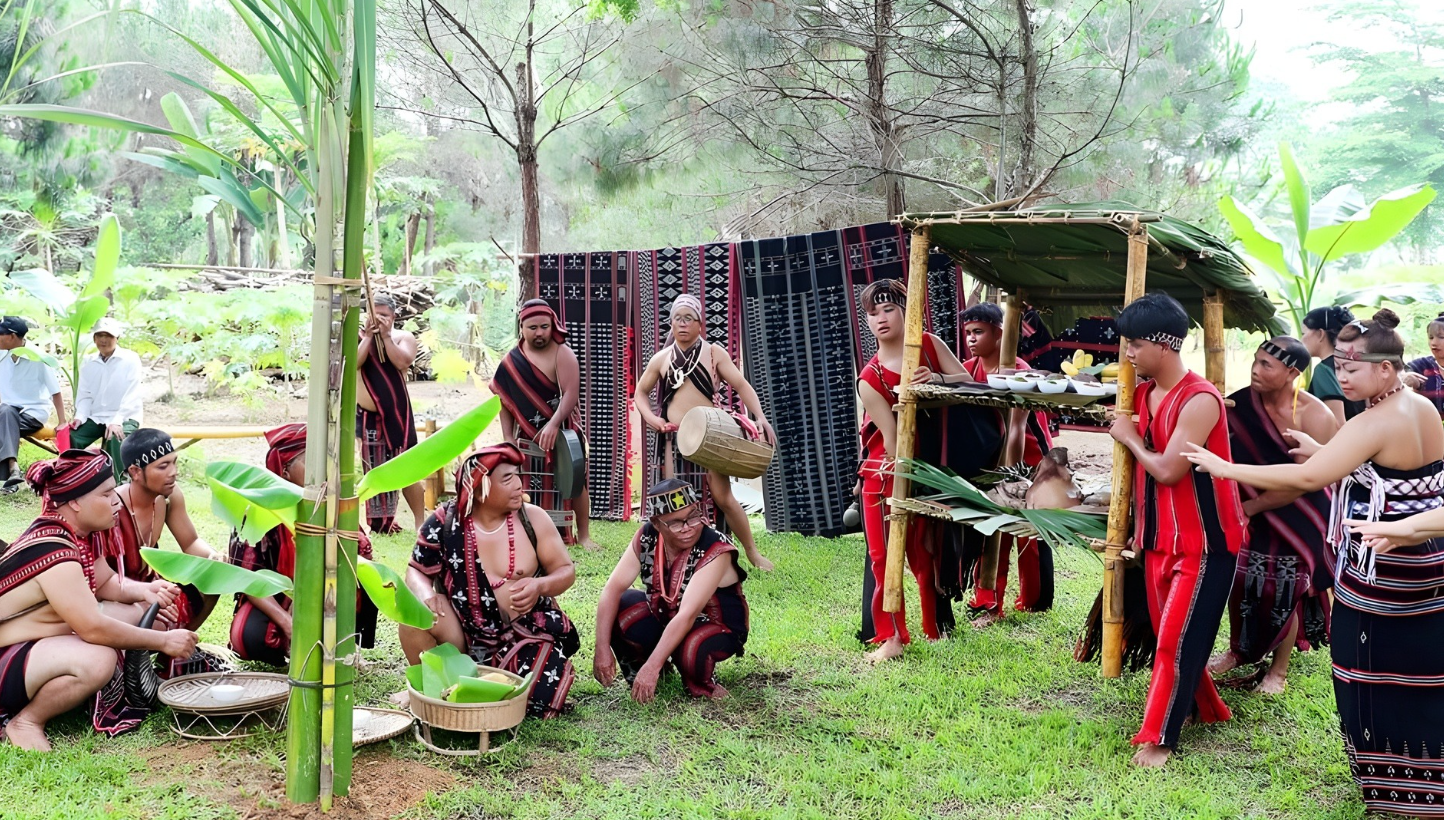
They believe that gods and spirits influence many aspects of life, from building houses and farming to marriage and funerals. Because of this belief, the Co Tu perform many rituals to honor the spiritual world.
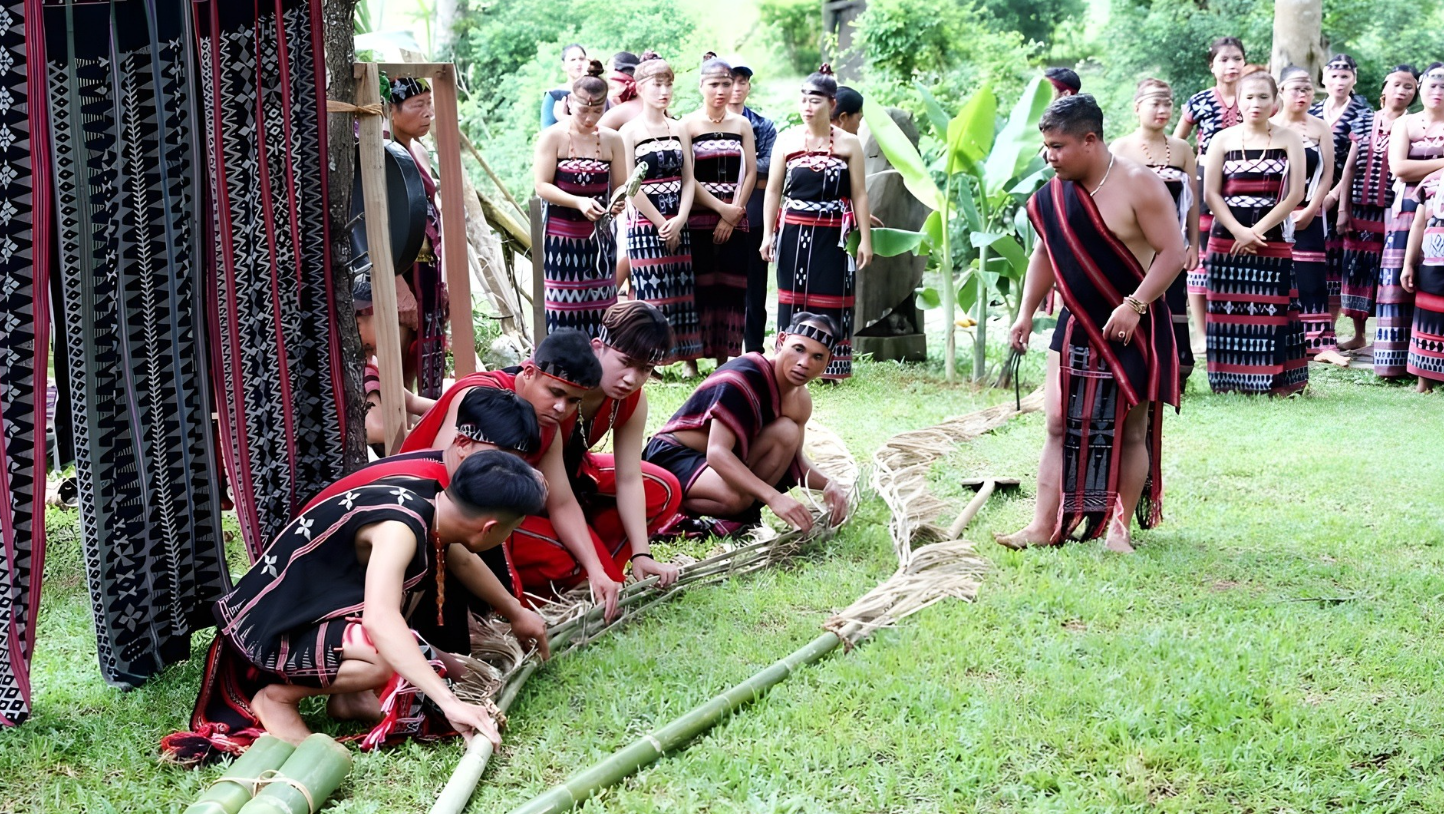
Each village often keeps a sacred object, usually a stone, in the communal house as a protective symbol for the entire community.
Festivals
Festivals play an important role in Co Tu cultural life. Many ceremonies are related to agriculture, community activities, and important stages of human life.

After the rice harvest season, villages often celebrate traditional festivals and community gatherings during January and February, similar to the Lunar New Year period.

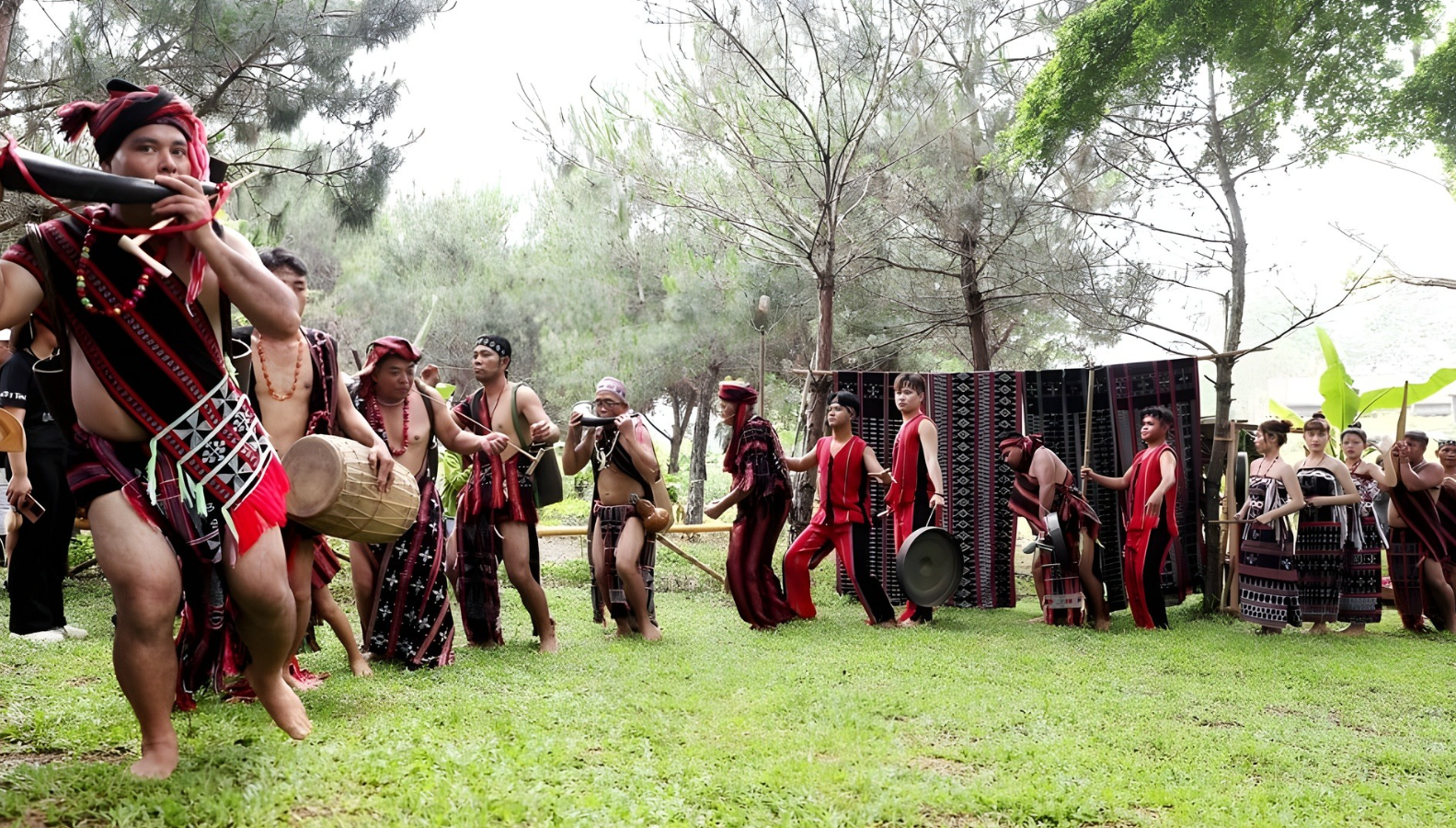
During these events, villagers perform rituals, traditional dances, and musical performances that strengthen community bonds.
Costumes
Traditional Co Tu clothing is usually made from black woven fabric decorated with white beads and patterns. In the past, men often wore loincloths and were bare-chested, while women wore knee-length skirts and wrapped cloth around the upper body similar to a halter top. In colder weather, both men and women used woven blankets for warmth.

Today, traditional costumes are mainly worn during festivals and cultural performances, while modern clothing is used in daily life.
Economic Conditions
The Co Tu people traditionally rely on upland rice cultivation using simple farming techniques. Families also raise livestock such as buffaloes, pigs, chickens, and dogs. In addition to agriculture, many communities supplement their food through gathering forest products, hunting, and fishing.
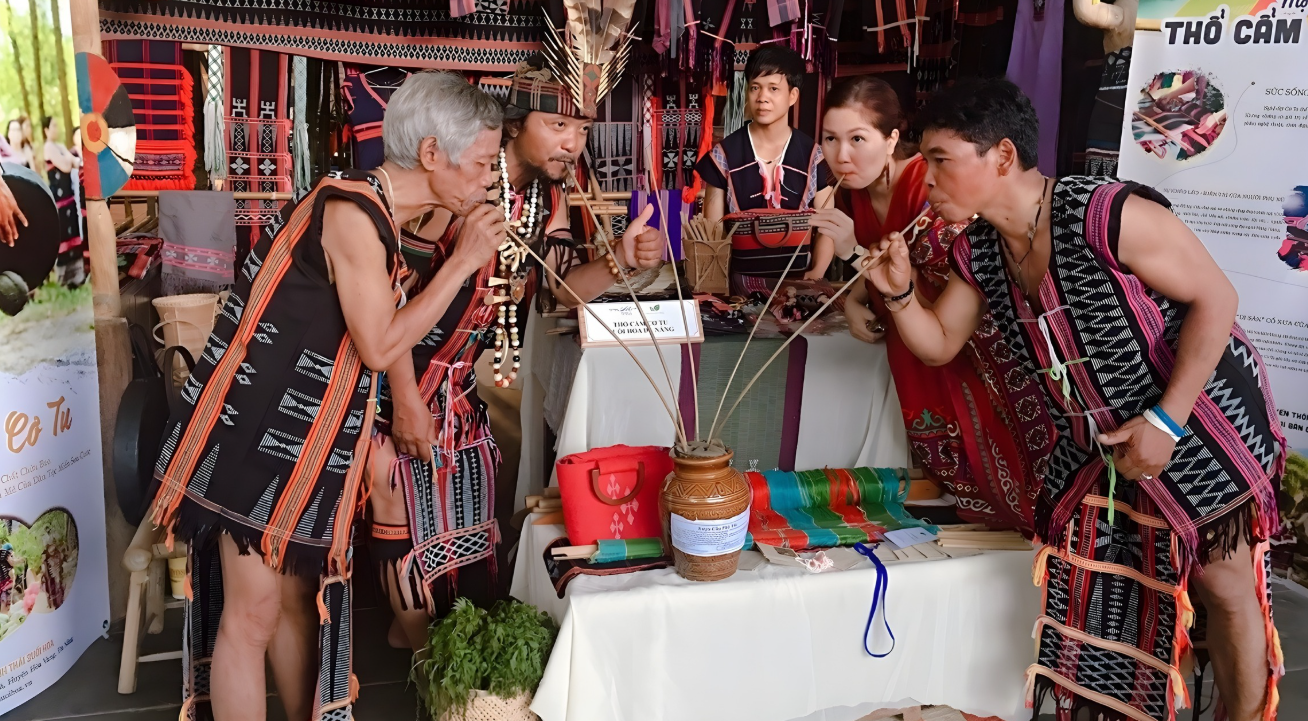
Handicrafts, especially basket weaving, are common within the community. In the past, goods were often exchanged directly between households or villages rather than through formal markets.
27. Gie Trieng Ethnic Group – Cultural Heritage Around Ngoc Linh Mountain
History
The Gie Trieng people are believed to have originated from Laos, but their ancestors have lived for a long time in the region surrounding the Ngoc Linh Mountain range in central Vietnam. Over generations, the community gradually established villages in mountainous areas, mainly in Kon Tum and Quang Nam provinces. The Gie Trieng people have remained closely connected to this land and have contributed to its exploration, settlement, and development.

Besides the name Gie Trieng, this ethnic group is also known by several other names such as Catang, Doan, Xop, and Brila in Kon Tum Province, and Monoong or Ponoong in Quang Nam Province. The Gie Trieng community includes several related subgroups such as Gie, Trieng, Ve, and Bhnoong.
Language
The Gie Trieng language belongs to the Mon–Khmer branch of the Austroasiatic language family. It shares similarities with the languages of nearby ethnic groups such as Xo Dang and Ba Na, reflecting long-standing cultural exchanges in the Central Highlands.

Before 1975, the Gie Trieng people used a writing system based on Latin letters, but today this script is rarely used, and Vietnamese is widely spoken in education and public communication.
Geographic Distribution
The Gie Trieng people mainly live in the provinces of Kon Tum and Quang Nam, particularly in mountainous areas near the Ngoc Linh range. Their villages are often located in forested regions where natural resources support agriculture, hunting, and traditional livelihoods.

Most Gie Trieng communities still live in rural areas, maintaining close connections with their traditional environment.
Religion And Beliefs
The Gie Trieng people follow polytheistic beliefs, believing that many spiritual forces influence human life and nature. Their rituals often involve offerings to various spirits and deities. Every few years, entire villages organize ceremonies to pray for peace, prosperity, and good harvests.

Traditional spiritual practices may also include forms of ritual healing and magic, which are associated with sacred objects and community ceremonies.
Festivals
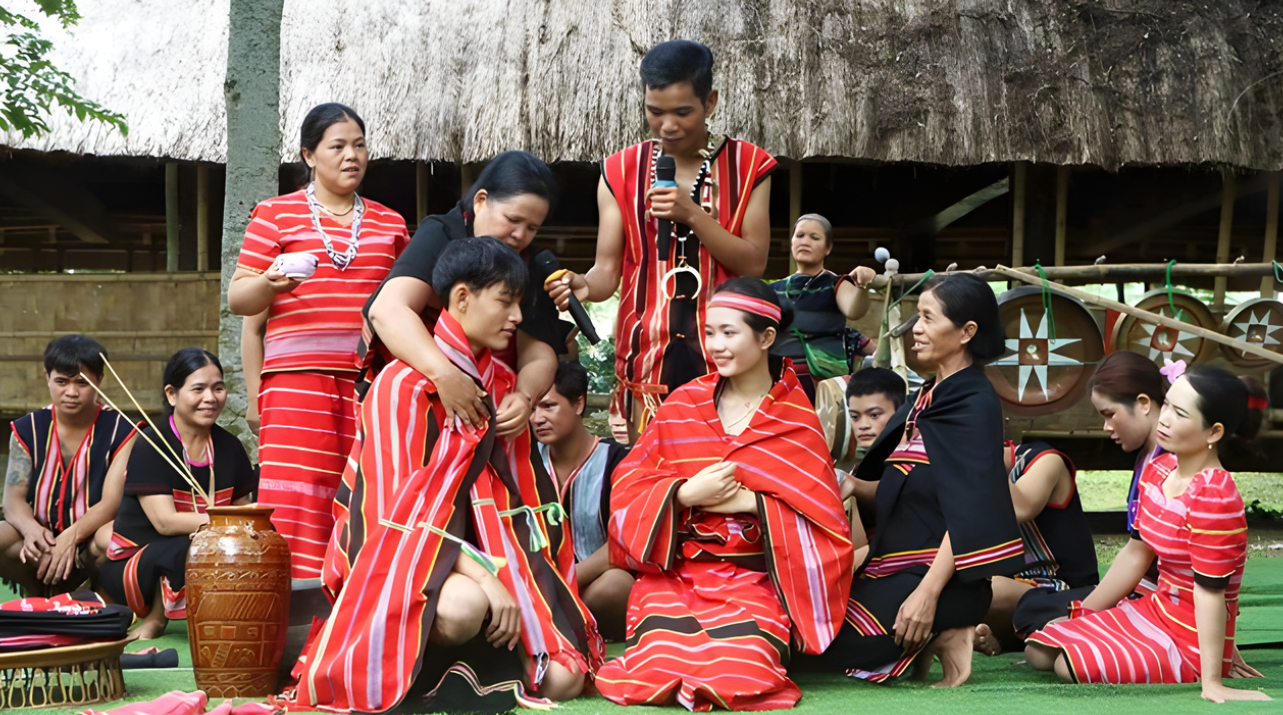
Festivals of the Gie Trieng people are closely connected to agricultural activities and community life. Important rituals are held during key stages of farming, such as selecting land, clearing fields, sowing seeds, praying for good weather, harvesting, and storing rice. Some ceremonies are organized when a household achieves a large harvest.
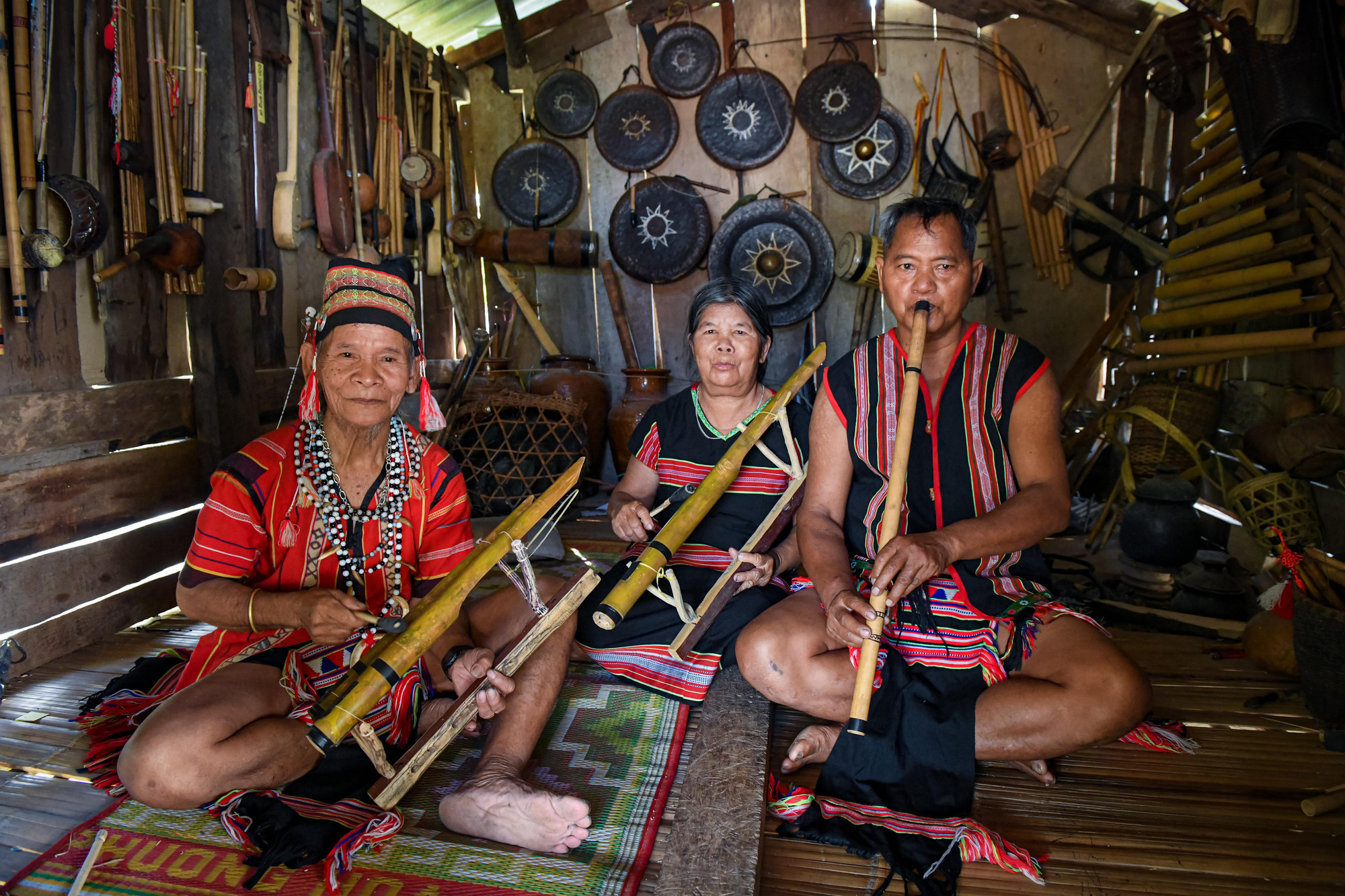
Village festivals often involve animal sacrifices, especially buffalo sacrifices, which are considered sacred offerings to the spirits. The Gie Trieng people also celebrate rituals related to important life events such as birth, naming ceremonies, marriage, illness, and funerals. Their New Year celebration usually takes place earlier than the Lunar New Year of the Kinh people.
Costumes
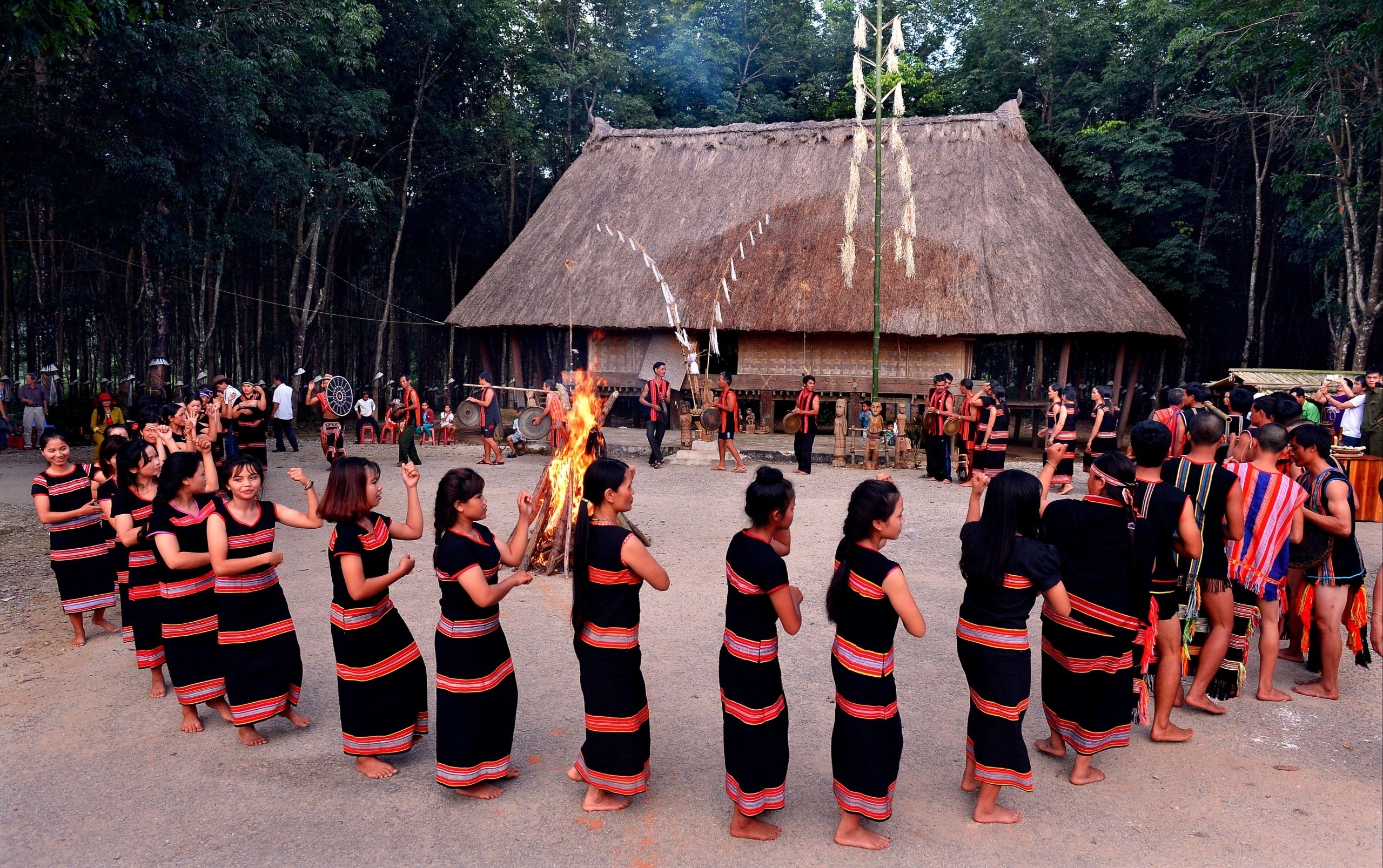
Traditional clothing of the Gie Trieng people reflects the cultural style of many Central Highlands communities. Men traditionally wear loincloths and may have long or short hair. During colder seasons, they wear woven robes and white scarves.

Women wear various types of dresses decorated with distinctive patterns and symbolic designs. Both men and women enjoy wearing jewelry and decorative accessories, which are important elements of traditional attire.
Economic Conditions
The Gie Trieng people traditionally rely on agriculture, especially the cultivation of rice. In the past, glutinous rice was the main crop, but today many communities grow more ordinary rice along with crops such as corn, cassava, and potatoes. Families also raise livestock including chickens, pigs, buffaloes, and dogs, often used in rituals.
Handicrafts such as weaving, basket making, and simple pottery are also practiced within the community. In trade activities, the Gie Trieng people now commonly use money for exchange, although traditional forms of barter once played an important role.
28. Ta Oi Ethnic Group – Traditional Culture in the Truong Son Region
History
The Ta Oi people are considered one of the long-standing communities living in the Truong Son mountain range. With a population of more than fifty thousand people, they have preserved many distinctive customs and cultural traditions. Most researchers believe that the Ta Oi originally came from Laos and migrated to Vietnam several hundred years ago. However, some elderly members of the community believe that their ancestors have always lived in the region.

The Ta Oi ethnic group is also known by several other names, including Pa Co, Ta Uot, Kan Tua, and Pa Hy. Within the community, there are local groups such as Ta Oi, Pa Co, and Pa Hy.
Language
The Ta Oi language belongs to the Mon–Khmer branch of the Austroasiatic language family.
Several decades ago, a writing system based on Latin letters was developed for this language, using the Pa Co dialect as the standard. Today, Vietnamese is widely used in education and daily communication, while the traditional language continues to be spoken within the community.
Geographic Distribution
The Ta Oi people mainly live in the mountainous districts of Dakrong and Huong Hoa in Quang Tri Province, and A Luoi District in Thua Thien Hue Province. Their villages are usually located in forested areas along the Truong Son range, where natural resources support farming, weaving, and traditional livelihoods.

Most Ta Oi people still live in rural communities and maintain close connections with their natural environment.
Religion And Beliefs
Traditional beliefs of the Ta Oi people are based on animism, which holds that all elements of nature possess spiritual power. They believe that spirits exist in the sky, earth, mountains, forests, rivers, trees, crops, animals, and humans. Because of these beliefs, many rituals are held to honor these spiritual forces.
Some villages also worship a sacred object, such as a stone, copper ring, gong, or jar, which is believed to protect the entire community.
Festivals
The Ta Oi people organize many rituals and festivals related to health, agriculture, and community life. Important ceremonies are held to pray for good harvests and favorable weather, especially in connection with rice cultivation. Large festivals may include buffalo sacrifices, which are considered sacred offerings.
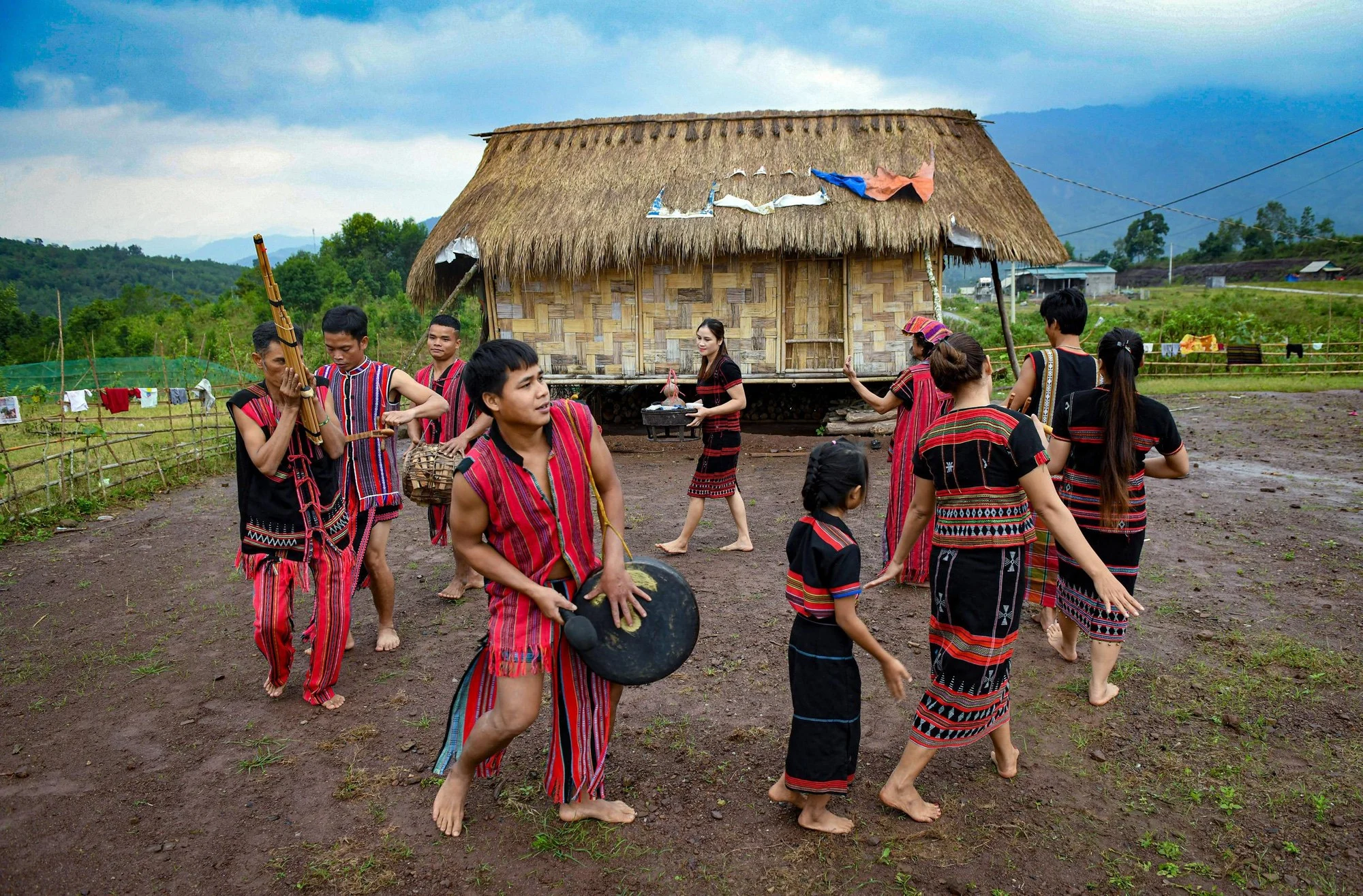
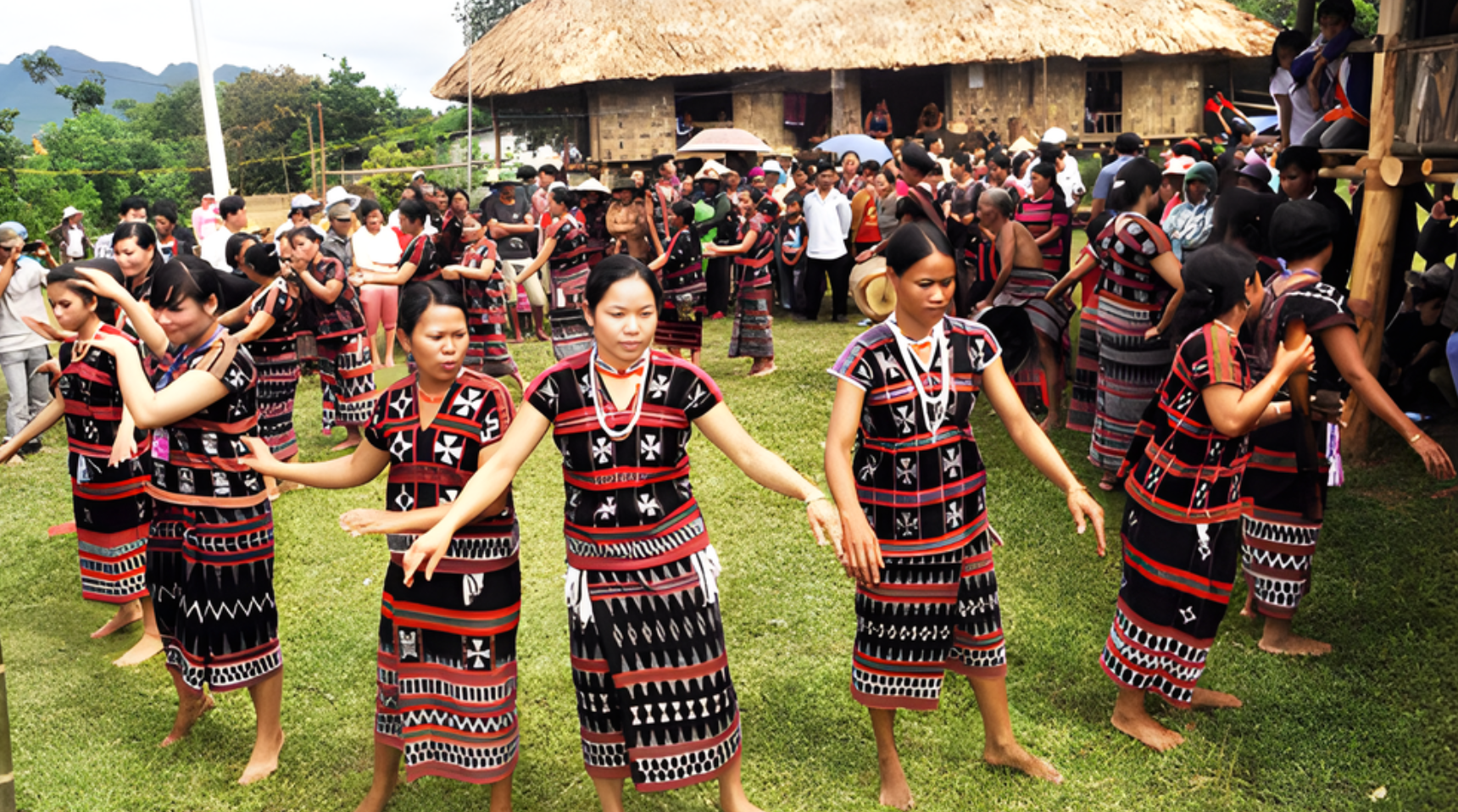
Their traditional Lunar New Year celebration usually takes place after the rice harvest and before the start of the new farming season. During festivals, villagers often participate in music, dance, and traditional singing performances.
Costumes
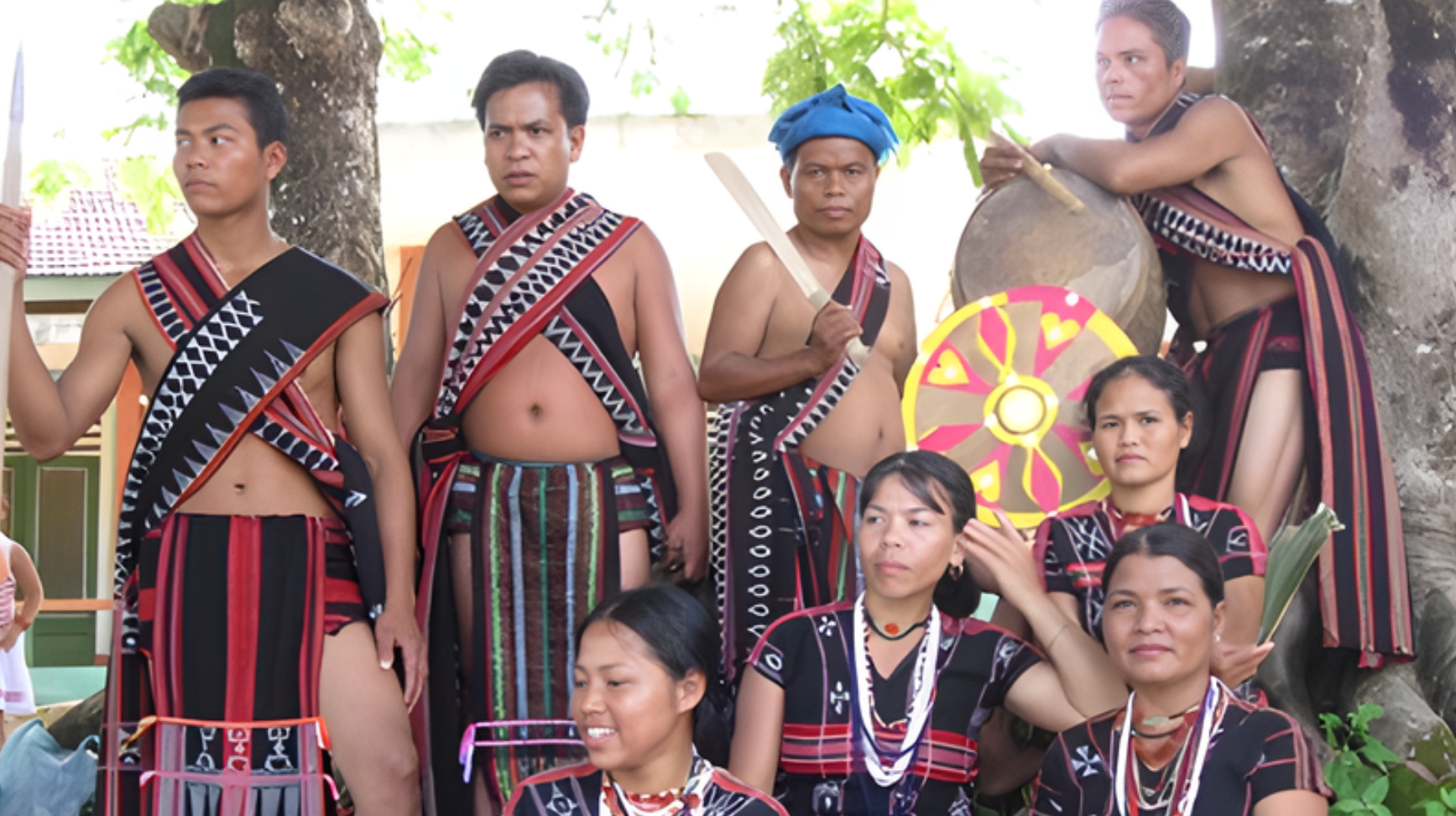
Traditional Ta Oi clothing reflects the cultural identity of the Truong Son communities. Men traditionally wear loincloths and simple shirts, although in the past they sometimes went bare-chested. Women wear skirts and blouses, or long dresses that cover the body from the chest downward and are sometimes tied with woven belts.

Jewelry and decorative accessories are also important parts of traditional attire. Some older members of the community still keep customs such as tattooing or stretching earlobes. Today, traditional clothing is mainly worn during festivals and cultural events.
Economic Conditions
Agriculture is the primary livelihood of the Ta Oi people, especially rice cultivation using both upland and wet rice farming methods. In recent years, some communities have begun growing additional crops such as coffee, bamboo, rattan, and acacia. Many families also raise livestock and poultry or farm fish in ponds.

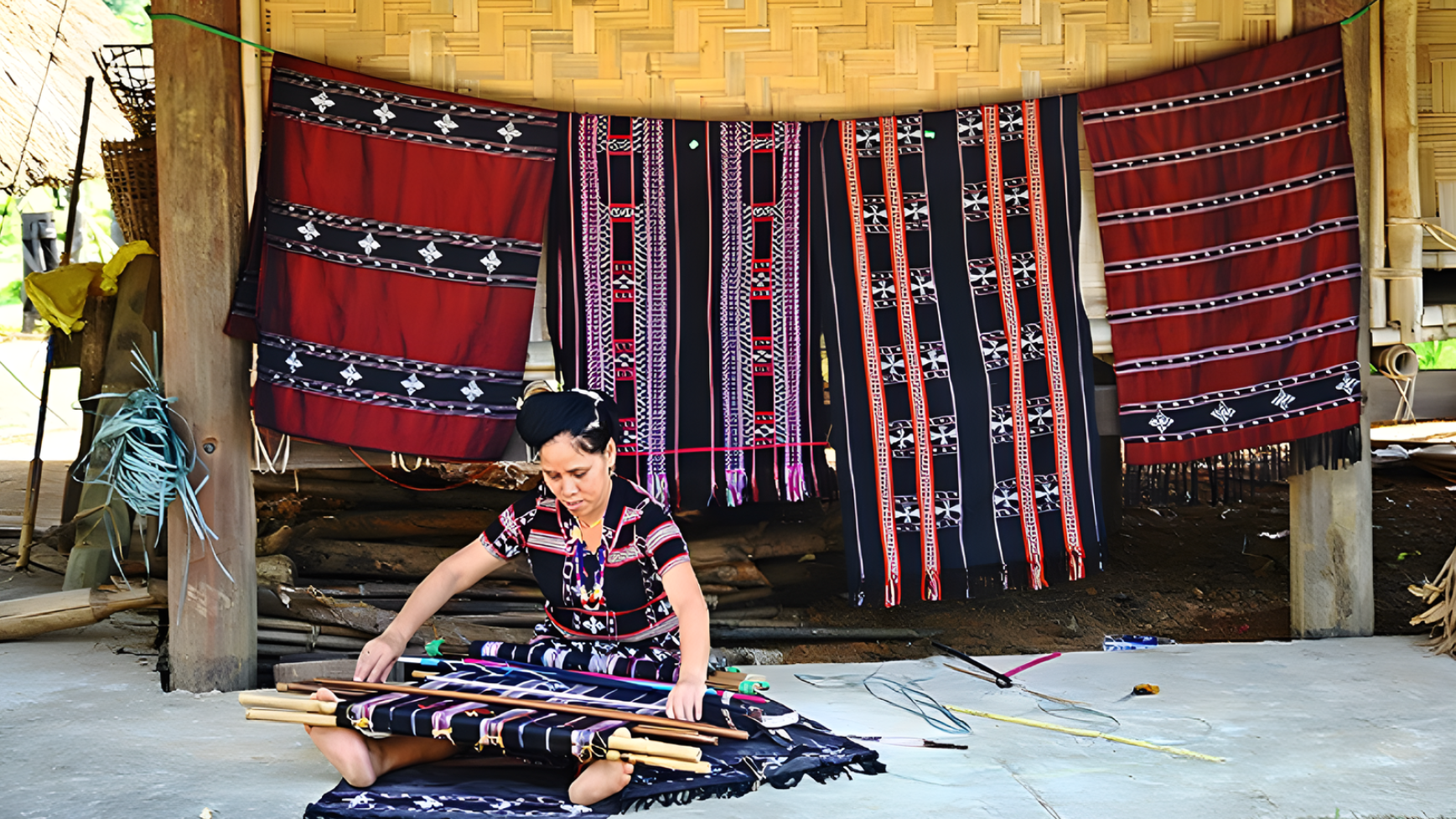
One of the most important traditional crafts of the Ta Oi people is brocade weaving. Their woven products are well known and widely traded among neighboring ethnic groups. Trade relationships with communities in Laos also play an important role in their local economy.
29. Ma Ethnic Group – Indigenous Culture of the South-Central Highlands
The Ma people are long-time residents of the Central Highlands of Vietnam. Most Ma communities rely mainly on farming for their livelihood, which has helped preserve many traditional customs, beliefs, and cultural practices that reflect their ethnic identity.
History
The Ma people are a long-standing ethnic minority in the South-Central Highlands of Vietnam.Within the community, the Ma people distinguish themselves according to their residential areas. Some of the common self-names include Ma Blao, Ma Da Dong, and Ma Da Huoai. There are also several local subgroups such as Ma Ngan, Ma Xop, Ma To, and Ma Krung.
These distinctions reflect the strong connection between the Ma people and the regions where their communities have developed over generations.
Language
The Ma language belongs to the Austroasiatic language family and is part of the Mon–Khmer language group. It is closely related to the languages spoken by neighboring ethnic groups such as Mnong, Choro, Xtieng, and especially Coho. Traditionally, the Ma people did not have their own writing system.
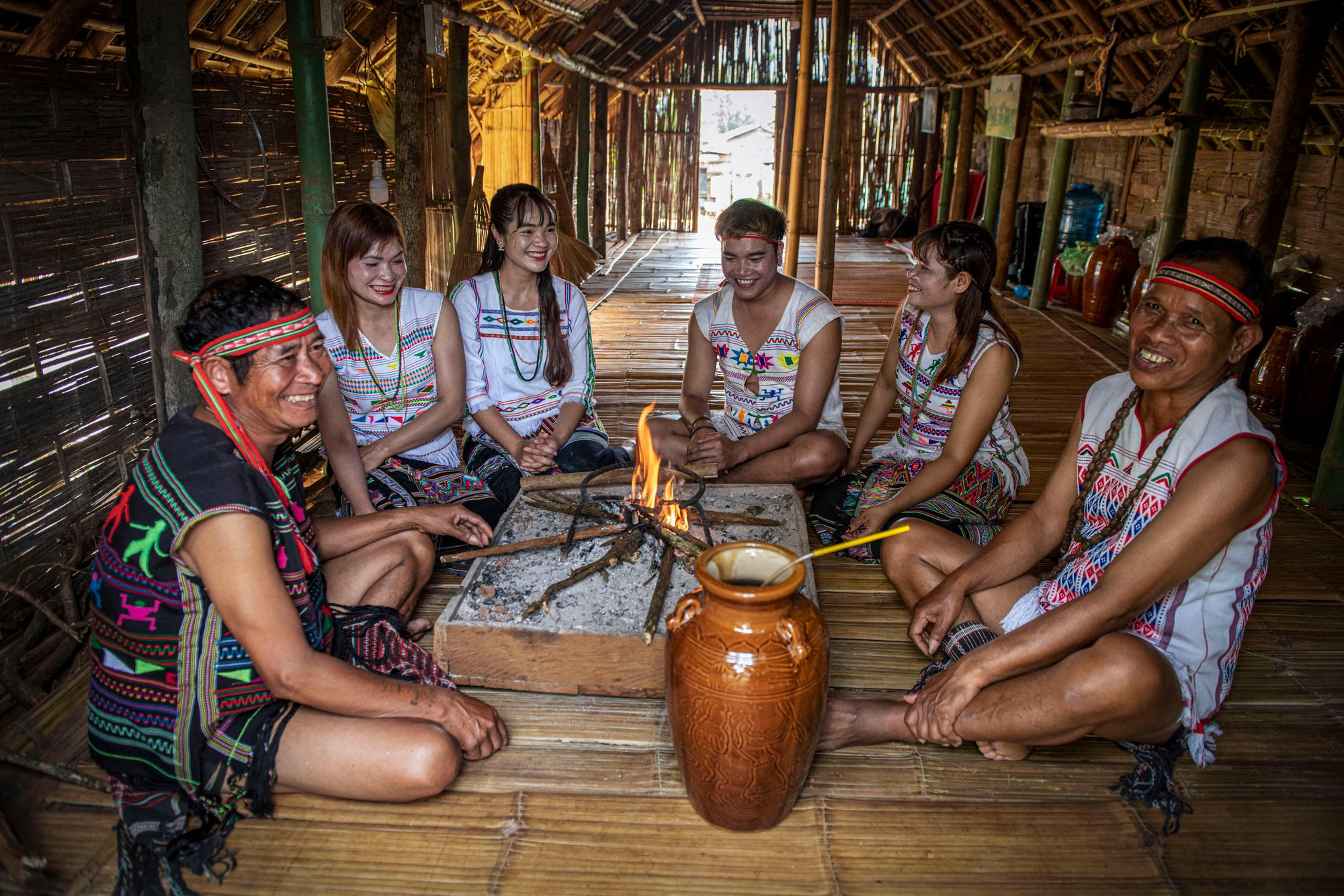
After 1975, children of the Ma community gained greater access to formal education and began learning Vietnamese in schools. According to the 2019 census on ethnic minorities, the literacy rate among Ma people aged 15 and older reached about 70.8%.
Geographic Distribution
The Ma people mainly live in the southern part of the Central Highlands. Their main residential areas are located near the Da Lat Plateau, particularly in Bao Lam, Bao Loc, Da Huoai, Duc Trong, and Di Linh districts of Lam Dong Province.
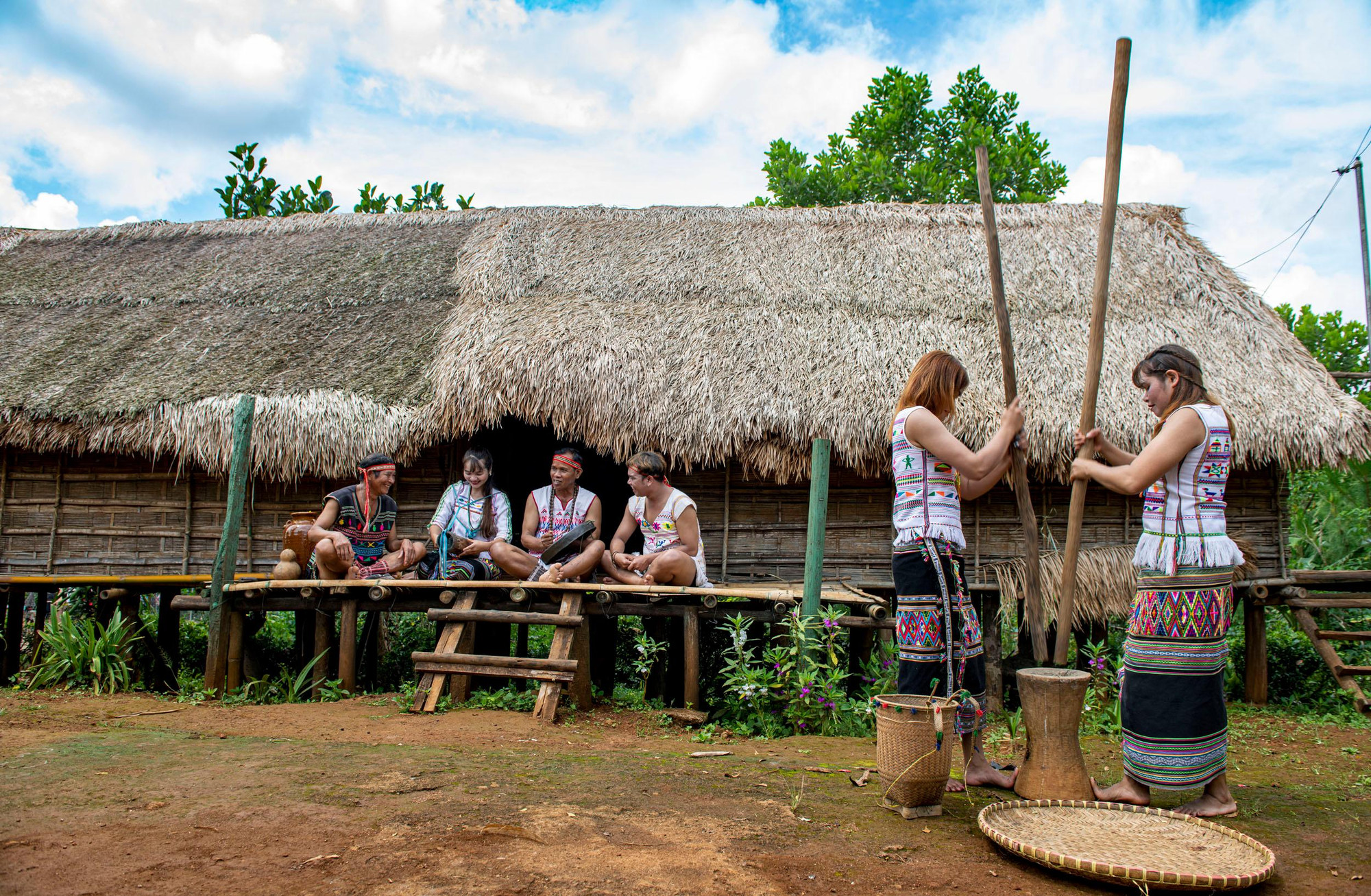
Some communities also live in areas near the buffer zone of Cat Tien National Park and extend toward neighboring provinces such as Binh Phuoc and Dong Nai. Most Ma villages are located in mountainous or forested regions where natural resources support agriculture and traditional livelihoods.

Religion and Beliefs
Traditionally, the Ma people follow polytheistic beliefs. They believe that supernatural forces called Yang govern many aspects of human life and the natural world. Different spirits are associated with various elements of nature, including the Mountain God (Yang Bo Nam), the House God (Yang Hiu), the Rice God (Yang Koi), and the River God (Yang Da).
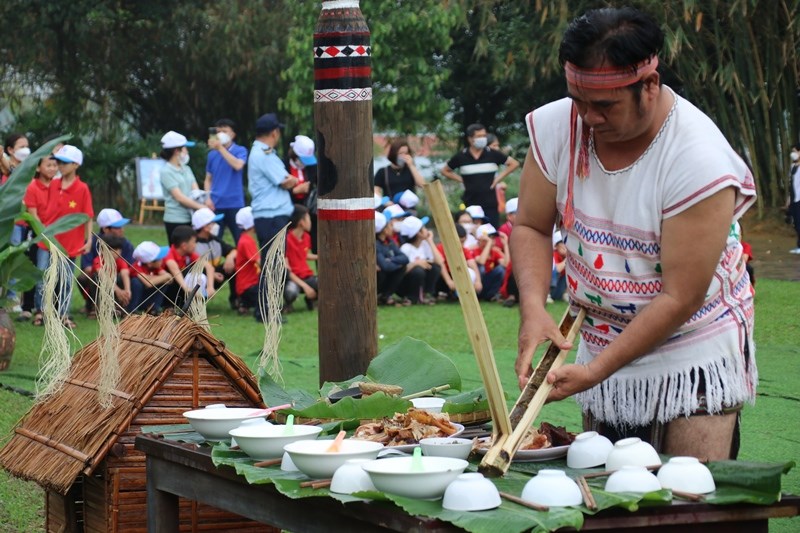
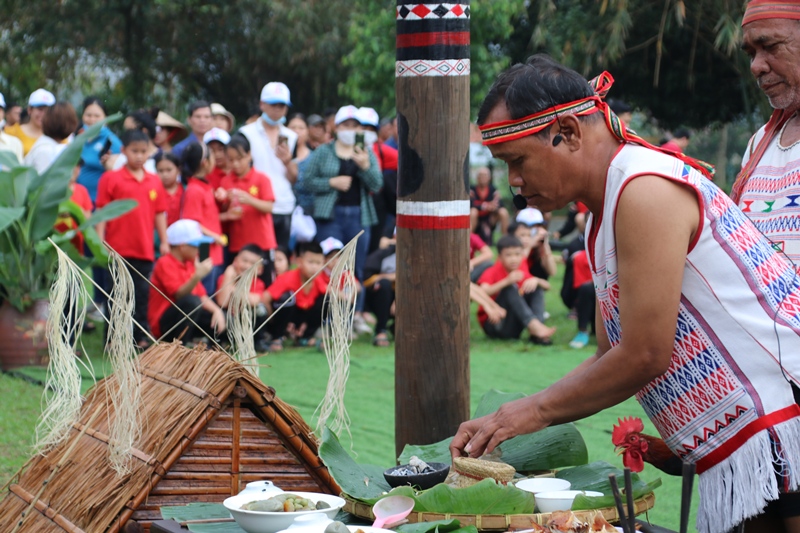
To honor these spirits, the Ma people organize rituals and offer animal sacrifices during important events such as harvest celebrations, births, illnesses, and funerals. One of the most important ceremonies is the buffalo sacrifice ritual, usually performed at the end of the farming season to thank the gods for a good harvest and pray for favorable crops in the following year.
Festivals
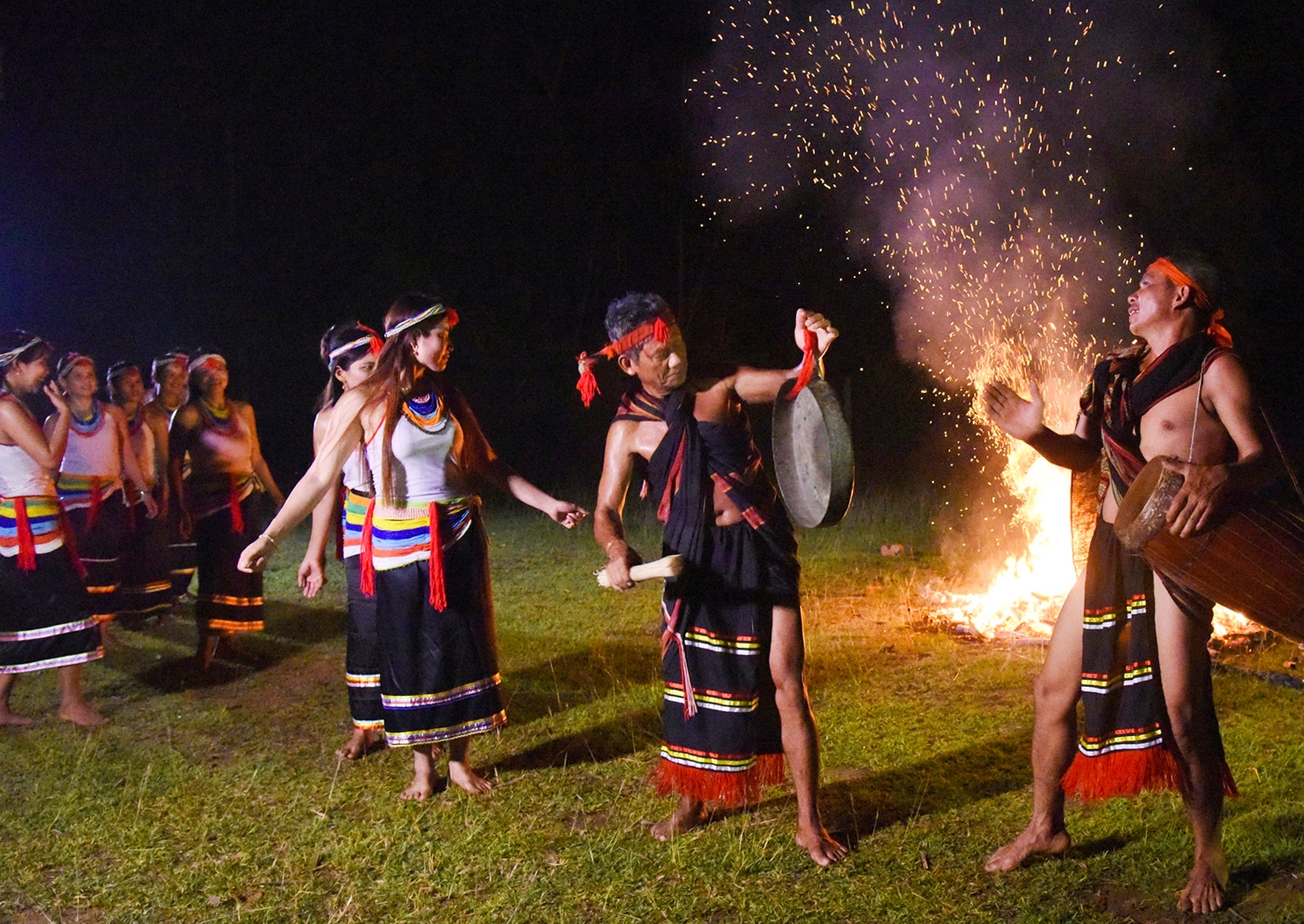
Traditional ceremonies of the Ma people are closely connected with agricultural activities and community life. Music, storytelling, and folk performances often appear during these ceremonies. The Ma community preserves many forms of oral tradition, including legends, fairy tales, epics, and folk songs known as yal yau.
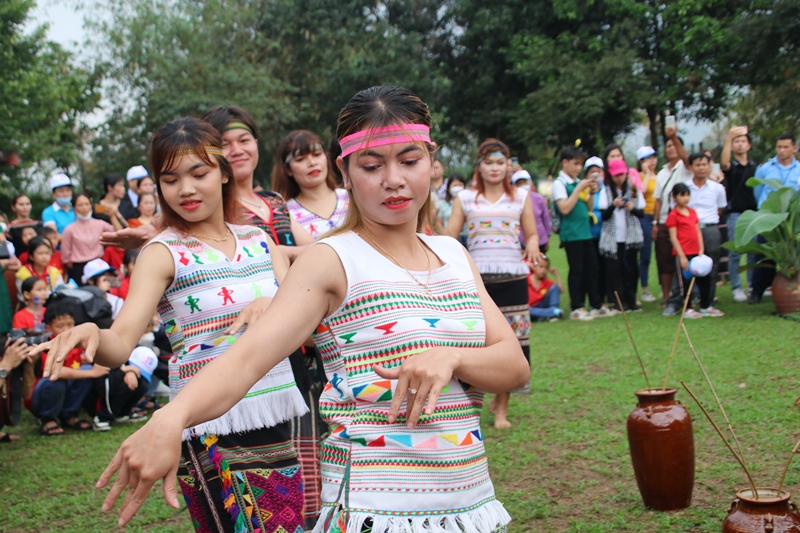
Traditional songs and ritual dances are important parts of cultural celebrations, although today only a small number of people still know how to perform them.
Costumes
Traditional clothing of the Ma people reflects their cultural identity and local craftsmanship. Men traditionally wear loincloths, usually dark indigo in color with simple decorative stripes along the edges. They also wear loose pullover shirts.

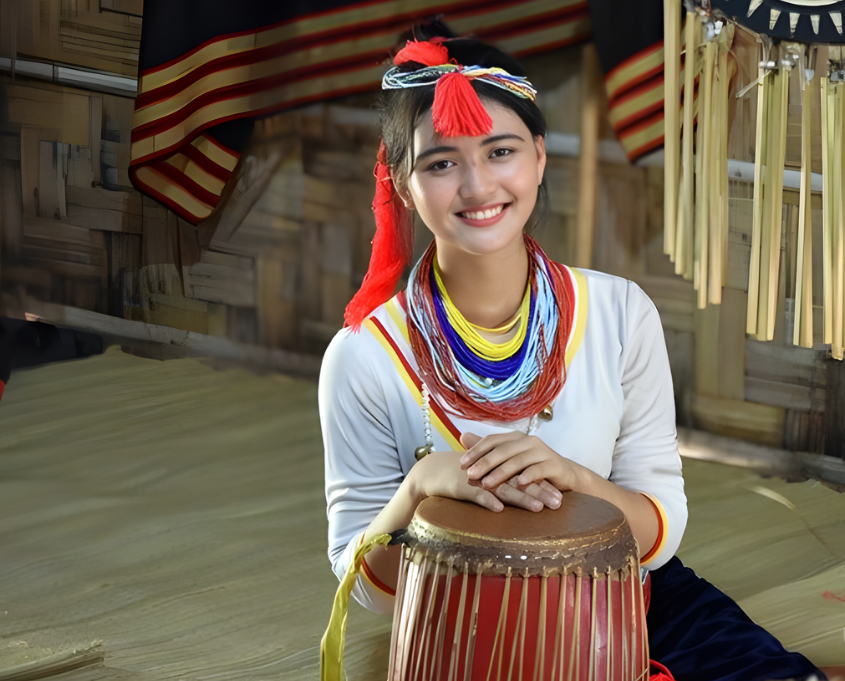
Women commonly wear long, close-fitting dresses. Colorful bead necklaces and decorative accessories are popular among women. In the past, the Ma people practiced customs such as tooth blackening and stretching the earlobes. However, these traditions have gradually disappeared in modern times. Today, traditional costumes are mainly worn during festivals and cultural events.

Economic Conditions
In the past, shifting cultivation played an important role in the livelihood of the Ma people.
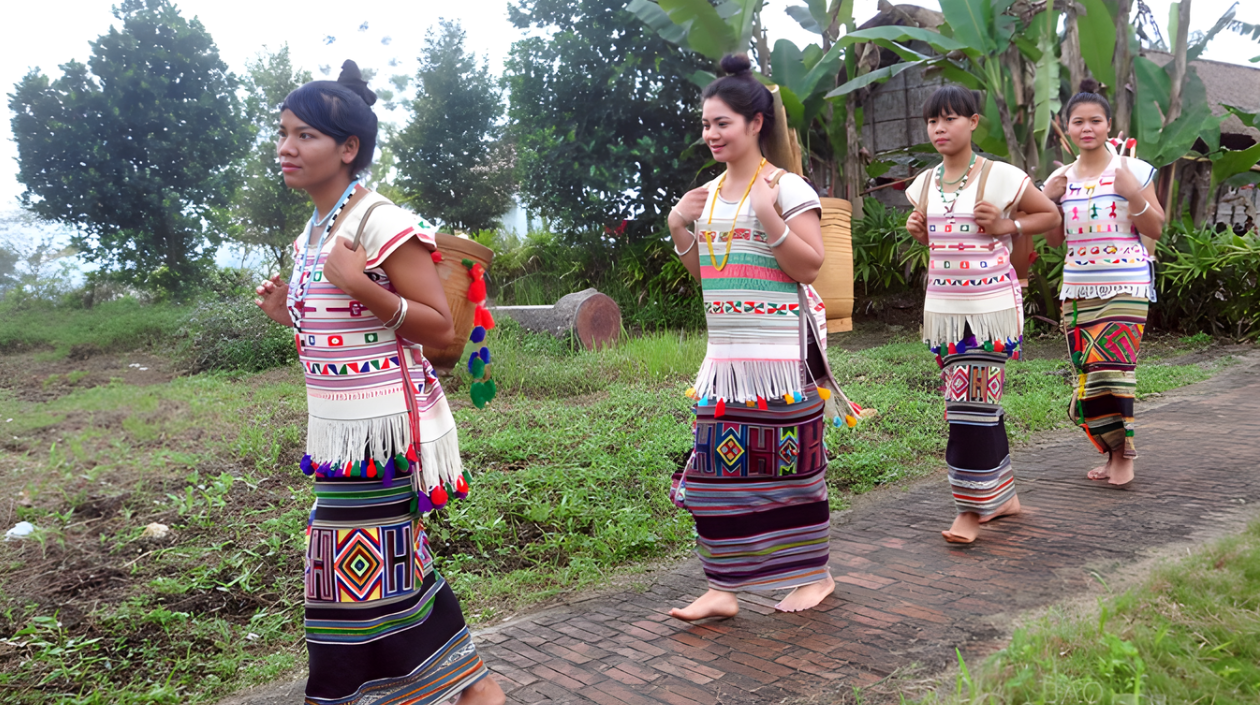
Today, agricultural production has gradually changed with the introduction of new crop varieties, modern farming techniques, and market-oriented production. Besides growing crops, many Ma communities now raise livestock, poultry, and fish. The Ma people are also known for growing cotton and weaving traditional textiles.
30. Co Ethnic Group – Indigenous Community of the Central Truong Son Region
The Co ethnic minority group has a population of more than forty thousand people and lives mainly in the provinces of Quang Ngai and Quang Nam. In recent decades, thanks to the policies of the Vietnamese government, the living conditions of the Co people have gradually improved and become more integrated with those of other ethnic communities.
History
Most researchers believe that the Co people are one of the indigenous communities living in the Truong Son mountain region of the Central Highlands. The Co people use the self-names Cor and Col to refer to themselves. In historical records, they are also known by other names such as Cua and Trau.

These different names reflect variations in pronunciation and the interaction between the Co people and neighboring ethnic groups in the region.
Language
The language of the Co people belongs to the Mon–Khmer branch of the Austroasiatic language family. It is closely related to the languages of several ethnic groups living in the northern Central Highlands and surrounding areas, such as Hre, Xo Dang, and Ba Na.
A writing system using Latin letters was developed before 1975, but it is not widely used today. In areas near Hre communities, some Co people are also able to speak the Hre language. Vietnamese is commonly used in education and communication today.
Geographic Distribution
The Co people mainly live in mountainous areas in the northwestern part of Quang Ngai Province and the southwestern region of Quang Nam Province. Large communities are concentrated in Tra Bong District and Tra Mi District. Smaller groups of Co people can also be found scattered in provinces such as Kon Tum, Gia Lai, Dak Lak, and Thua Thien Hue.
Most Co villages are located in upland areas surrounded by forests and mountains, where agriculture remains the primary economic activity.
Religion and Beliefs
Traditional beliefs of the Co people are closely connected with nature. They believe that high mountains are sacred and often refer to them as Ong (grandfather) mountains or Ba (grandmother) mountains, where powerful spirits are believed to reside.

The spiritual world of the Co includes many types of supernatural beings such as ordinary spirits, forest spirits, water spirits, and fire spirits. These spiritual forces are believed to influence the health, harvest, and well-being of the community. To honor these spirits, ritual ceremonies are often performed by shamans during important community events.

Festivals
The Co people celebrate several traditional festivals related to agriculture and village life.
The most important festival is the buffalo sacrifice ceremony, which is organized to worship the gods and pray for prosperity and good harvests. This event is also the largest communal celebration in the village.
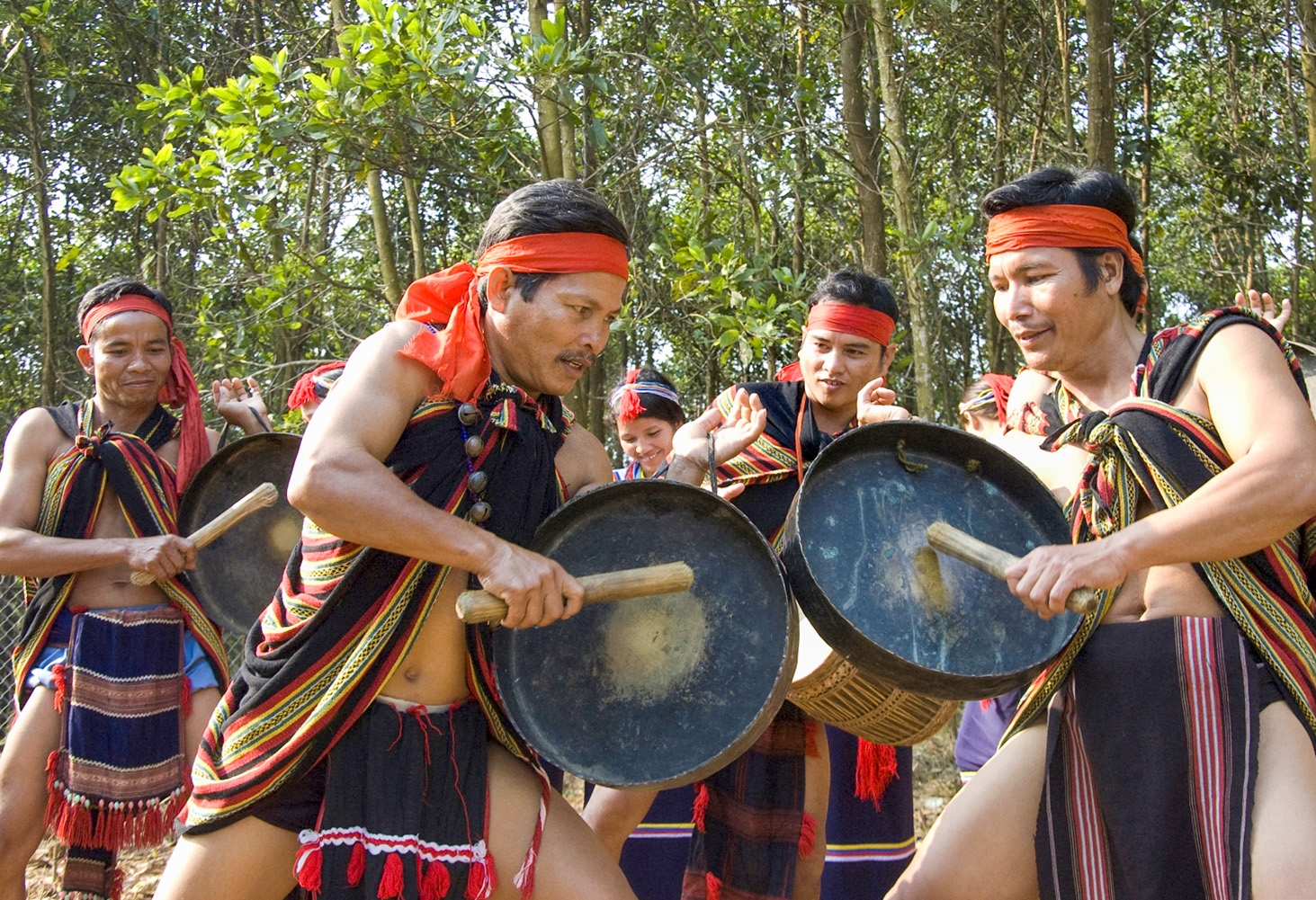
Another important occasion is the festival marking the end of the upland rice harvest season. During these celebrations, villagers participate in communal meals, music performances, and traditional cultural activities.

Costumes
Traditional clothing of the Co people reflects cultural influences from neighboring ethnic groups. Men traditionally wear loincloths and often go bare-chested. Women wear skirts and blouses, and in colder weather they may also use shawls.
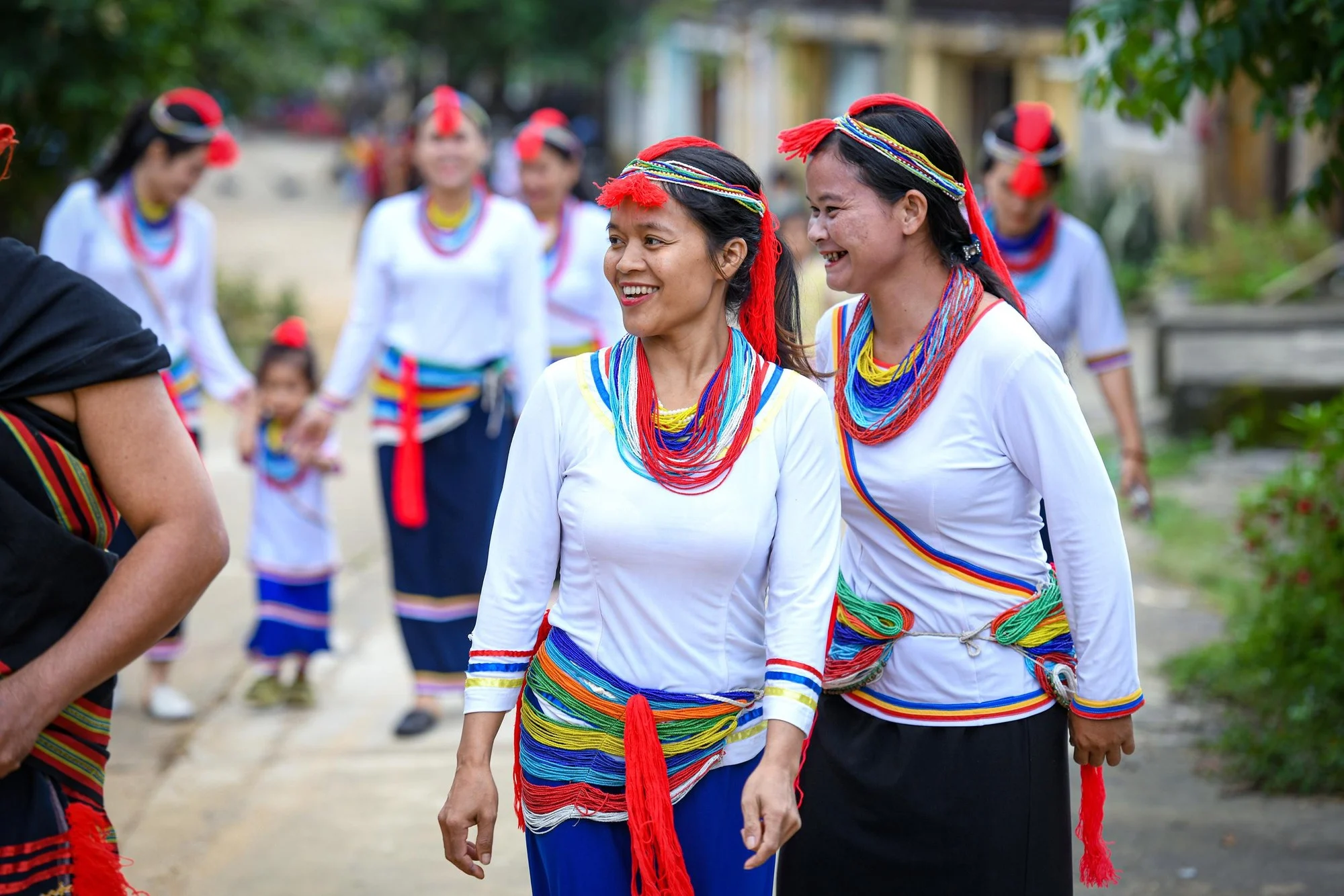
In the past, wealthier elders sometimes wore long robes and turbans imported from lowland areas during festivals and ceremonial occasions. Today, traditional costumes are mainly worn during festivals and cultural celebrations.
Economic Conditions
The traditional economy of the Co people is based mainly on upland agriculture. Upland rice is the main staple food. Farming methods traditionally include clearing forests, burning vegetation, planting seeds in small holes, and harvesting rice manually.

The Co people are also well known for cultivating betel nut and cinnamon. In addition to crop production, they raise livestock such as buffaloes, pigs, and chickens, which are often used for rituals and ceremonies. Although weaving and blacksmithing are not highly developed, the Co people are known for producing various woven household items.
Explore more related content at Fanpage DaNang 365!